Mastering the First Five Minutes to Impress Clients in the Makati Business District

The Critical Window: Why the First Five Minutes Determine Success
In high-stakes business, especially within prestige markets like the Makati Business District, securing a client’s trust isn’t a slow build—it’s an immediate sprint. The first 300 seconds of any client meeting represent the most valuable, non-negotiable window for establishing credibility.
Psychological studies show that people form fundamental, lasting judgments about a company and its representatives within the first seven seconds of contact. This brief, critical timeframe triggers as many as 11 decisive impressions, covering everything from competence and professionalism to reliability and quality of service. Specifically, clients assess your perceived socioeconomic status, educational background, trustworthiness, emotional stability, and overall potential for success—all before a single official word of business has been exchanged.
The goal of the first five minutes is simple: trigger the Halo Effect. When you present one or two powerful positive traits—impeccable preparation, organizational professionalism, or genuine warmth—the client’s brain generalizes that positive judgment, attributing other desirable qualities to your entire firm. This positive perception creates a beneficial bias that helps smooth over minor disagreements later on.
Conversely, a shaky start—tardiness, a cluttered environment, or a fumbled presentation—activates the Fundamental Attribution Error. The client instantly generalizes that single slip-up to indicate broader flaws in your operational standards, making recovery exponentially harder. This error doesn’t just cost the meeting; it costs future revenue, as the client attributes the failure not to an external factor (traffic), but to your innate incompetence (poor planning). The cost of this error can be astronomical, justifying obsessive focus on these initial moments.
Furthermore, these first minutes are governed by Emotional Contagion. Your own calm, confident, and enthusiastic demeanor acts as a signal, subtly influencing the client’s mood and lowering their innate sense of caution.
To ensure a flawless debut and secure a robust business relationship, we must implement a structured, three-pronged strategy covering every dimension of the client encounter:
- Behavioral Mastery (Etiquette): Perfecting non-verbal cues and structured communication.
- Environmental Flawlessness (Setup): Using the meeting space as a silent ambassador for your brand.
- Logistical Excellence (Makati Sourcing): Strategically selecting a high-status venue in Makati.
Pillar 1: Strategic Etiquette & Behavioral Mastery
Non-verbal communication is the “silent salesperson,” immediately conveying confidence and enthusiasm. Mastering these cues accelerates the trust-building process.
The Psychology of Instant Rapport
- The Genuine Smile: A sincere facial expression instantly signals safety and trustworthiness, laying the foundation for constructive dialogue. It should convey genuine pleasure at meeting the client. Remember, a smile is often the first thing the client sees when you make eye contact.
- The Firm Handshake and the Triangle of Trust: Confidence is communicated when you are the first to extend your hand. The handshake must be professional, brief, and balanced. Before the meeting, ensure your palms are dry—a clammy hand immediately signals anxiety. Pair this with active eye contact. The “Triangle of Trust” involves maintaining eye contact, using open hand gestures, and leaning slightly forward to convey engagement.
- Open Body Language: Adopt an open, engaged posture. Avoid closed-off signals like crossed arms or using materials as a shield. A simple non-verbal sign of willingness to collaborate is visibly unbuttoning a jacket before sitting down. Always position your body toward the client to signal acceptance and support.
- Eye Contact and Digital Presence: Direct eye contact is fundamental. In hybrid or video meetings, consciously look directly into the camera lens to simulate active eye contact with remote participants, rather than looking at your notes or their image on the screen.
The Prescriptive 5-Minute Agenda (The Command Framework)
The initial five minutes must be tightly controlled and structured to establish immediate alignment and leadership.
| Time (Approx.) | Action | Objective |
|---|---|---|
| Minutes 0–2 | Warm Welcome & Personality Integration | Professional welcome (“Thank you for being here on time”), followed by one to two minutes of integrated, approachable small talk. This is where you connect personally, perhaps complimenting the view or referencing a shared industry event. |
| Minute 2–3 | Establishing Credibility and Purpose | Clearly state your identity, relevant background, and the definitive objective of the meeting (e.g., “Our aim today is to finalize the scope of work and align on key performance indicators.”). Use this minute to reinforce why they chose you. |
| Minutes 3–5 | Framing, Roles, and Transition | Deliver a formal “framing statement” that summarizes the shared goal and clarifies the expected contribution of each participant. Take command by setting clear ground rules to prevent “ramblers” and maintain schedule integrity (“We have exactly 45 minutes, with 10 set aside for Q&A at the end.”). |
- Scripting the Framing Statement: This is the most critical element. It should sound confident and structured: “We are here to discuss [Client Goal X]. My team will spend the next 20 minutes outlining the proposed strategy, and then we will dedicate 15 minutes to refining the action plan based on your feedback. Does that sound like a productive use of our time?” Gaining this early buy-in solidifies your command.
Active Listening: The 70:30 Rule and Note-Taking Etiquette
The deepest rapport is built when the client feels heard. Rigorously implement the rule of allowing the client to talk approximately 70% of the time. Your role is to encourage dialogue using open-ended questions, diligently capturing both the content of the message and the underlying emotion driving it.
- Effective Summarizing: Prove you are listening by supplying the client with a precise recap of what they have communicated, confirming accurate reception of information without interruption. Use phrases like, “So, to confirm my understanding: the highest priority is accelerating Q3 revenue growth, but this must be achieved without increasing capital expenditure. Is that accurate?” This technique, known as mirroring, is a powerful trust builder.
- Note-Taking Etiquette: If using a device, inform the client, “I’m taking detailed notes of your priorities to ensure we capture every nuance.” This converts a potentially distracting behavior (looking at a laptop) into a professional asset. Use an elegant notebook for brief check-ins to signal respect over technology dependence.
Pillar 2: Cultural Intelligence in the Makati Context
Success in the competitive Philippine market requires deep sensitivity to Filipino business culture, which is rooted in warmth, respect, and hierarchy.
Navigating Hierarchy, Formal Address, and Seating
In the Philippines, titles and positional authority are exceptionally important. Deference is a non-negotiable step in relationship building.
- Mandatory Formal Titles: Always use formal titles such as “Sir,” “Ma’am,” and professional titles (e.g., Engineer, Architect, Attorney) alongside last names to show explicit respect for the individual’s position and expertise. Informality is only appropriate if explicitly requested by the client.
- Greeting Protocol and The Social Hierarchy: Hierarchy dictates the order of interaction. You must introduce and address the eldest or most senior executive present before engaging with any other attendees. Greetings should commence with a firm handshake and a genuine smile, coupled with formal Filipino salutations such as Magandang umaga po (Good morning formal). When seating, the highest-ranking client should be seated opposite the lead consultant, maintaining the traditional power dynamic. Subordinates sit further down the table.
- Attire as Respect: In the Makati Business District, corporate attire is a sign of respect. For men, a properly tailored suit or the ubiquitous Barong Tagalog (often worn without a tie) is expected. For women, professional, conservative business attire is key. This signals you have invested the time and effort into presenting appropriately for their status.
Punctuality Management and Dignity (Hiya)
Filipino business culture prioritizes harmony (pakikisama) and avoiding confrontation.
- Managing “Filipino Time”: While you and your team must maintain strict punctuality (arrive 15 minutes early), the schedule must incorporate flexibility. Filipino business time can be elastic, and it is not uncommon for meetings, especially with VIPs, to begin later than scheduled. Allow for a minimum of fifteen minutes of leeway, and actively avoid showing frustration or impatience, which is culturally counterproductive. Use the extra time for subtle networking with the client’s support staff or for a final, calm tech review.
- Indirect Communication and Hiya: Filipinos find it difficult to deliver outright negative feedback or an abrupt “No.” Negative sentiments are often conveyed through polite replies coupled with a smile. Be alert for phrases like, “We will study this further,” or “This is quite challenging to implement at this time,” which often mean “No” or “Slow down.” Consultants must develop the skill of reading between the lines to fully grasp the conversation’s subtleties.
- Loss of Face: Public criticism or displays of anger are viewed as extremely disrespectful and constitute a major concern regarding hiya (dignity/loss of face). Any challenge must be couched in soft, collaborative language, always focusing on the objective truth rather than personal failure.
Relationship Focus (Pakikipagkapwa-tao)
- Building Shared Identity: Personal questions, often about family or weekend plans, are common and should be welcomed. They are asked to demonstrate genuine interest and deepen the business bond—a concept known as Pakikipagkapwa-tao (a shared inner identity). Do not rush or dismiss these moments. The relationship always precedes the transaction.
Pillar 3: Executing the Flawless Setup and Venue Selection
The physical setting must act as a seamless extension of your firm’s brand values. The architecture, technology, and ambiance must eliminate distraction and project competence.
Environmental Flawlessness: The Sensory Audit
The architectural features and cleanliness of a space directly inform client judgment regarding trustworthiness.
- The Architecture of Trust: The meeting space must be free of clutter. Organization and attention to detail signal high values regarding guest well-being. Ensure the tabletop is clean, with only essential materials (notebook, pen, water).
- Design for Comfort and Openness: Furnishings must be comfortable, elegant, and ergonomic. Table arrangements that are curvilinear (oval or circular) emphasize equality and collaboration, which is highly effective for relationship building.
- Sensory Cues (Scent and Sound): Conduct a sensory audit. The room should have a neutral, clean scent, avoiding overpowering perfumes or stale air. The sound environment should be controlled—no distracting external noise. If using background music during the initial waiting period, choose a soft, instrumental jazz or classical track and ensure it is turned off immediately when the meeting formally begins.
- Color Strategy: For high-stakes analytical meetings, calming colors like blue promote stability, while dark, precious materials reinforce an atmosphere of class and status.
High-Fidelity Audiovisual (AV) Standards
In premium settings, technology must be invisible but essential—the true luxury of seamless operation.
- The Invisible Luxury: Eliminate visual clutter by routing cables under conference tables and hiding hardware in custom cabinetry, prioritizing wireless setups. The client should not see the “how”—only the perfect result.
- Testing is Mandatory (The 15-Minute Rule): State-of-the-art AV is expected (HD projection, intelligent whiteboards). You must arrive early and perform a full rehearsal, connecting your specific presentation device to the venue’s system. The test must include checking the projection aspect ratio (16:9 vs. 4:3), ensuring audio levels are balanced, and confirming that remote attendees can both hear and see the presentation clearly.
- Redundancy Protocol: Always anticipate technical failure. Bring a charged primary device, chargers, and have a contingency tech-free plan ready (i.e., printed copies of the executive summary). The reliance on basic troubleshooting is minimized by integrating professional, on-site IT support from the venue.
Sourcing Premium Meeting Facilities in Makati City
For firms without a permanent, high-prestige address, or for those requiring scalable capacity, premium serviced office solutions in Makati offer immediate, high-impact logistical excellence.
Choosing a rented space within an established, high-status building (like those in Ayala Triangle Gardens, RCBC Plaza, or Legaspi Village in the Makati Business District) immediately confers an element of status, aligning with the local cultural value placed on prestigious location and financial stability.
| Provider Example | Core Service & Prestige Signal | Key Amenities for Impression |
|---|---|---|
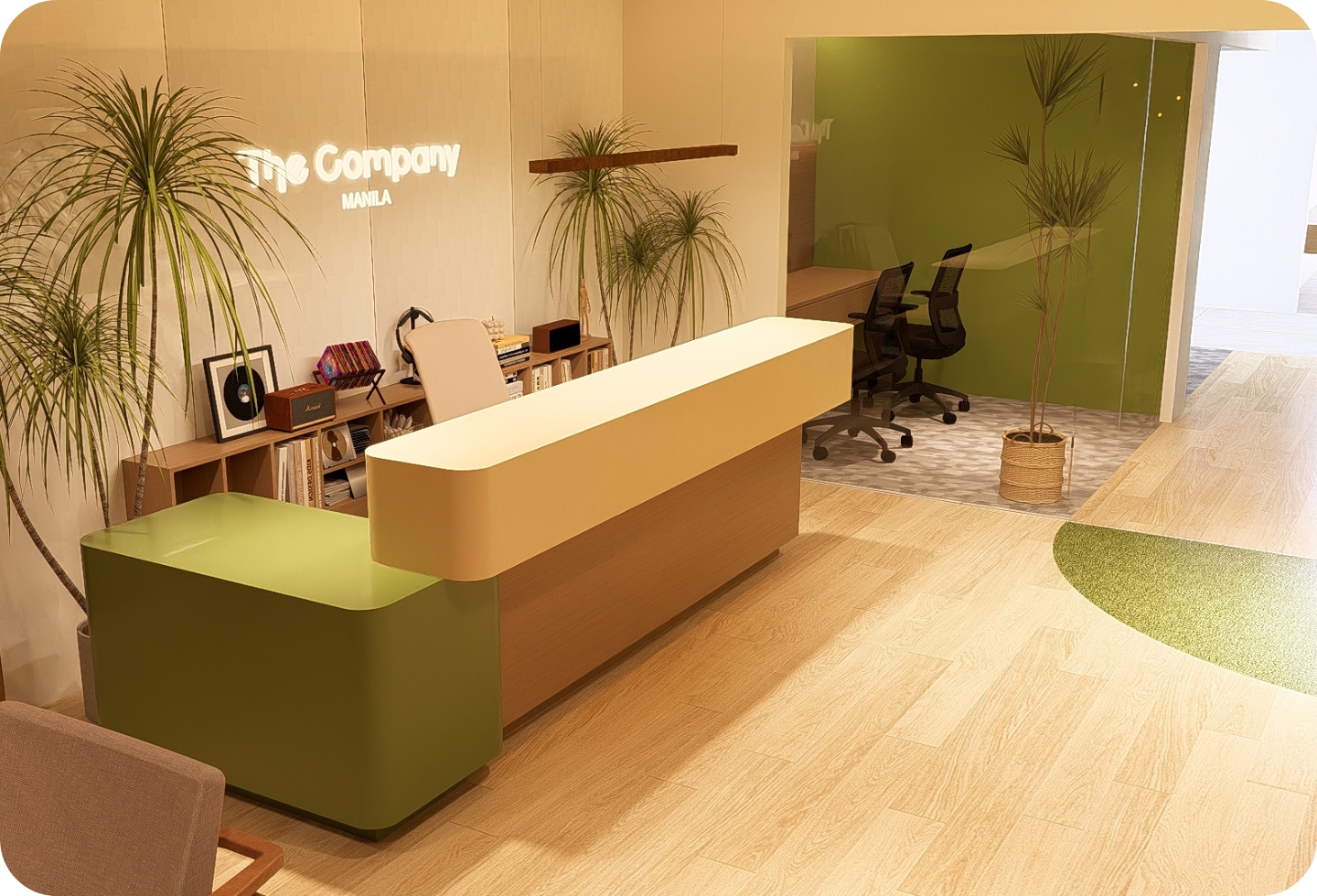
| Zero-Ten Park or The Company Makati | Reliability & Comprehensive Functional Support (Global Standard) | High-speed WiFi, Projector & Screen equipment, On-site support, Global network access |
| The Executive Centre | World-Class Design & Luxury Hospitality (Ayala Triangle) | In-house professional Barista Bar, Professional concierge team, City Skyline Views, State-of-the-art AV, Ergonomic seating |
| Luxury Hotels | Highest Status & Event Management (Shangri-La, Fairmont) | Elegant venues, Full catering, Expert planning staff, Discreet environment, Valet service |
| KMC Solutions | Flexibility & Modern Aesthetics (High-Growth Tech Feel) | Customizable layouts, Cutting-edge IT infrastructure, Bright, contemporary design, Ideal for smaller, dynamic teams |
The Importance of the Lobby Experience: The first impression actually happens in the lobby. Select a building that features high-end security, immaculate marble floors, and fast, modern elevators. Long waits, confusion with security, or a dated entrance can immediately detract from the professional image you are trying to cultivate.
Securing a venue that offers personalized refreshment services, like a specialized Barista Bar, transforms the formal meeting environment into a warmer, more personalized setting. This subtle act of hospitality is an investment in relational capital, strengthening the bond with the client by demonstrating genuine care in line with local business customs.
Conclusion: The Architecture of Trust
Mastering the initial 300 seconds is a focused, simultaneous exercise in psychological priming, cultural deference, and technical perfection. The immediate payoff is the acquisition of crucial client trust. This initial impression is your “down payment” on a long-term professional relationship.
However, the impressive opening is merely the act of raising the curtain. The behavioral and environmental integrity signaled during this short period must be reinforced by consistent, high-quality performance throughout the entire client life cycle. The ultimate objective is to establish a continuous Architecture of Trust, where the organizational excellence projected by a flawless Makati venue and a perfectly executed opening protocol is maintained to solidify the initial positive judgment into a continuous cycle of trust, performance, and commercial renewal. The first five minutes guarantee you are taken seriously; everything that follows determines if you are retained.
✨ READY TO EXPAND YOUR BUSINESS IN MAKATI?
Elevate your local business in Makati City with a secure legal foundation. Our all-in-one Foundation Package simplifies the compliance process so you can focus on growth. Our business registration package starts at just ₱30,000.
You can also get a Virtual Office starting at ₱3,500.00 per month or an office at ₱15,000.00 per month. Complete the form below for more details.
FREQUENTLY ASKED QUESTIONS
The first five minutes activate the “Halo Effect,” where clients form lasting judgments about competence, trustworthiness, and your firm’s professionalism almost instantly.
Use open body language, maintain firm eye contact (or look at the camera lens for hybrid meetings), and ensure your handshake is confident and brief to signal trust and engagement.
Strict adherence to hierarchy and the use of formal titles (“Sir,” “Ma’am,” professional titles) is mandatory to show respect and avoid causing hiya (loss of face).
It means the client should be allowed to speak approximately 70% of the time. Your role is to actively listen, ask open-ended questions, and summarize their key points to confirm understanding.
A full audiovisual (AV) rehearsal is mandatory, ensuring seamless connection to projection and audio systems. Always have a charged device and a non-tech backup plan ready.

GET A QUOTE TODAY
"*" indicates required fields
Ready to level up your business presence and save more every month? Complete the form now and our team will handle the rest.