For many modern businesses, particularly startups and scaling companies in emerging districts like Mandaue, the pressure to reduce overhead is relentless. On a balance sheet, opting for cheap offices with the lowest possible monthly rent seems like an unassailable financial win. It improves immediate cash flow and preserves capital for operational scaling. However, empirical research into office spaces reveals that what looks like a saving on a spreadsheet often manifests as a significant operational loss in practice. How offices improve work is no longer a matter of subjective opinion; it is a measurable science involving cognitive performance, physiological health, and social cohesion. When a workspace is selected solely on the basis of rental price, the hidden “friction” of a poor environment begins to erode the very results the business is trying to fund.
Why Your Brain Feels Tired In A Bad Office
One of the primary ways cheap offices backfire is through “silent” environmental factors that actively impair employee cognition. Research from the Harvard T.H. Chan School of Public Health demonstrates that office air quality has a direct, acute impact on the brain. In many low-cost spaces, inadequate ventilation leads to increased concentrations of carbon dioxide (CO2) and fine particulate matter (PM2.5). Employees in poorly ventilated spaces show slower response times and reduced accuracy on cognitive tests. In fact, impaired cognitive function was observed at CO2 levels that are common in many standard indoor environments, suggesting that the “standard” low-cost office may be actively making its occupants less intelligent throughout the workday.
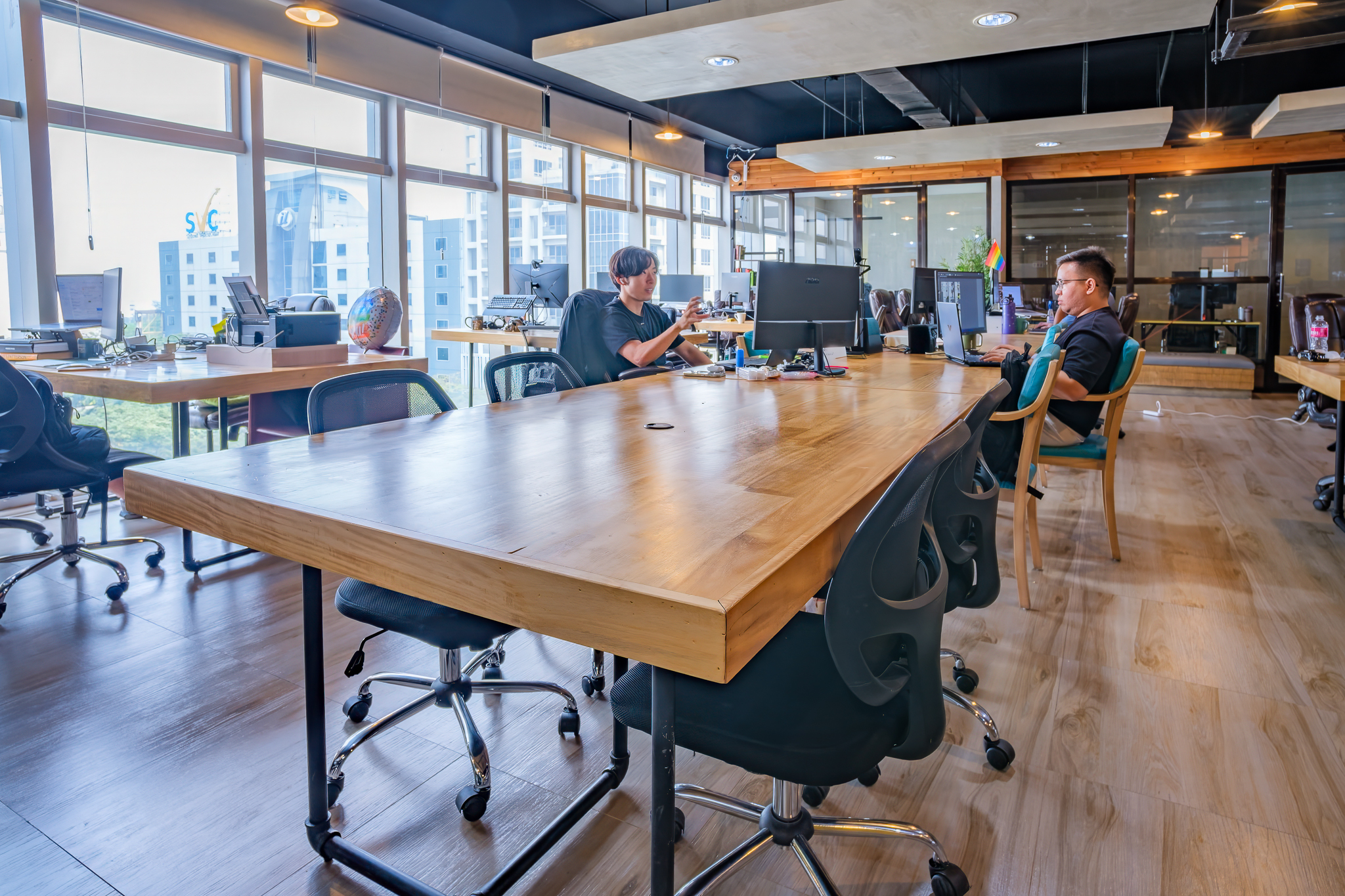
Furthermore, the physical design of the building itself can influence health and vitality. Natural light is often sacrificed in high-density, low-cost office layouts. Yet, studies from Northwestern University indicate that workers with windowed offices receive 173% more white light exposure and sleep an average of 46 minutes more per night than those in windowless environments. This lack of daylight leads to poorer scores on quality-of-life measures related to vitality and physical problems. A business saving on rent in a “dark” office is essentially paying for its employees to be more fatigued, less alert, and less productive.
Cutting Costs or Cutting Back on Productivity?
The global uptake of open-plan office spaces was primarily driven by a cost reduction paradigm. By removing walls and reducing the square meters allocated per employee, organizations achieved clear real estate savings. However, this shift often creates a “relationship-straining” environment. Acoustic discomfort is the most frequent complaint in these environments, particularly overheard speech from neighboring workstations.
For knowledge workers, background speech is particularly disruptive because it interferes with the articulatory rehearsal process in working memory, disrupting cognitive task performance more than any other type of noise. Employees in open-plan offices report a tenfold increase in acoustic complaints and an estimated doubling of time wasted due to noise compared to enclosed offices. Research highlights that this discomfort leads to irritability, which then acts as a mediator that reduces an employee’s “fit” within the workspace and ultimately degrades job satisfaction and work engagement. While the open-plan model was intended to foster collaboration, evidence suggests that communication often actually worsens as employees withdraw into headphones to cope with the lack of privacy.
Biophilia: Value Beyond Aesthetics
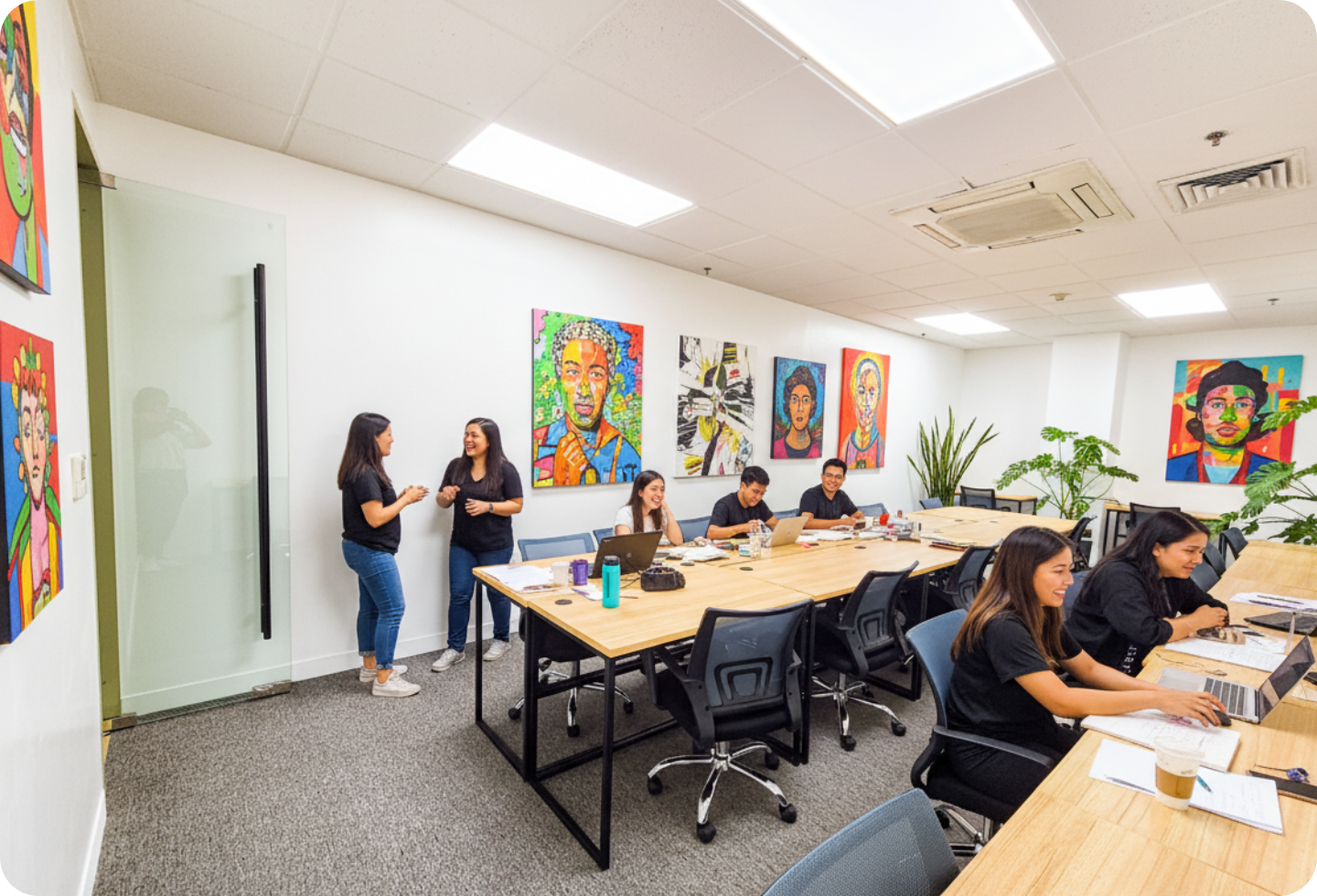
Strategic companies are shifting the conversation from “price per square foot” to “value per occupant.” This is evident in the rise of biophilic design—the intentional integration of nature into the built environment. Biophilic architecture, which includes natural light, indoor plants, and organic materials, is not merely an aesthetic choice; it is a restorative design strategy.
Studies indicate that biophilic workspaces can reduce stress markers like cortisol and blood pressure, enhance creativity, and improve focus. For example, employees in biophilic zones at major corporate campuses reported 25% lower stress scores and a 15% improvement in task completion rates. In contrast, conventional, “cheap” offices often rely on artificial lighting and rigid structures, which lead to “screen fatigue” and declining mental clarity. As urbanization limits our interaction with nature, providing a “nature retreat” at work becomes a competitive advantage for employee retention.
The “Hotelization” of Work: Attracting the Hybrid Workforce
In the post-pandemic landscape, the role of the office has transformed. With 83% of the workforce operating in a hybrid model by late 2024, the office must compete with the comfort of home. Employees now spend about 55% of their week in the office, but they report needing to be there closer to 65% to perform at their best—provided the space is usable.
This has led to the “hotelization” of the office: incorporating hospitality-inspired amenities to make the transition back to the workplace more attractive. Cheap offices often lack these “secondary spaces”—kitchenettes with sitting areas, wellness rooms, and social zones—that employees now value more than their actual desks. Research into hybrid preferences shows that social and eventful spaces stand out over purely functional desk areas. On days when employees have the autonomy to choose their location, they are drawn to offices that offer social events, wellness activities, and gaming zones. A stripped-down office that offers “only a desk” provides no incentive for a hybrid worker to endure a commute, leading to empty spaces and a fragmented company culture.
Conclusion: The Strategic Evaluation of Value
Choosing an office in growing business districts like Mandaue requires a move away from the “cost reduction” trap. The data is clear: quality matters. Leaders who cite quality as a serious factor in their real estate strategy are 62% more likely to retain high-performing talent. A poorly chosen workspace quietly compounds into higher workplace fatigue, reduced morale, and operational inefficiencies.
How offices improve work is by acting as an engine for performance and loyalty. By prioritizing natural light, air quality, acoustic control, and social amenities, companies can transform the office from a fixed expense into a strategic asset. What initially looks like a saving in a cheap office will eventually be paid for through employee burnout and lost productivity. In the modern economy, the most expensive office is the one where nobody wants to work.