Why Your First Task is to Stop Trying So Hard

The light in Makati at 4:00 PM has a predatory quality. It catches the glass of the skyscrapers and turns the street-level humidity into a visible, golden weight. From our newest floor in Makati—opened in the third quarter of 2025—I watch the ritual of the “hustle.” Below, in the cafes and the lobbies of aging towers, people are leaning into their laptops as if they are trying to push them through the table. They are performing work. They are sweating, they are caffeinated, and they are, for the most part, failing.
As a a general overseer of co-working spaces, I am effectively an anthropologist of the professional ego. I manage the fiber optics and the ergonomics, yes—but what I really manage is entropy. I spend my days observing the friction between a human being and their ambitions.
There is a fundamental misunderstanding in the modern co-working space in the Philippines—a lingering ghost of the industrial age that suggests if you are not suffering, you are not producing. We have made a fetish of the “grind.” But after years of watching startups bloom and wither in these rooms, I’ve come to realize that mastery is not a product of grit; it is a product of alignment.
Your first task is to find what feels effortless to you. Your second task is to put maximum effort into it.
The Anthropology of the "Right Room"

Ursula K. Le Guin once wrote that “the creative adult is the child who survived.” In a professional context, the “productive adult” is the one who found the right ecosystem. We like to believe that we are independent of our surroundings—that a “high performer” can work anywhere. This is a comforting lie, but a lie nonetheless.
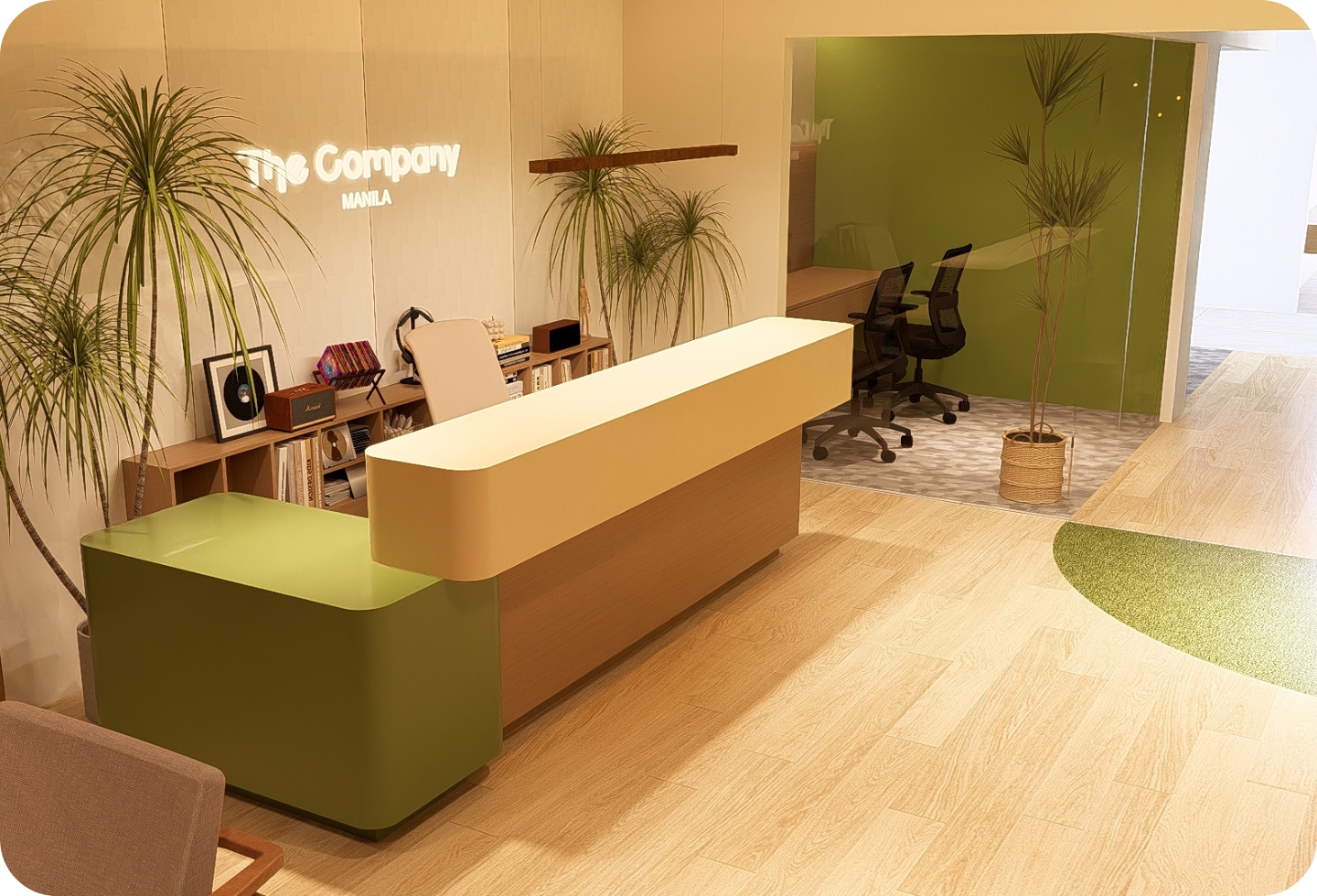
In our facilities, I see the “Geography of Focus” play out daily. We began this journey as The Company Philippines, a name that felt like a placeholder for the collective. We started in Mandaue City with exactly 5,597.23 square feet of space. I remember that number because it felt like a laboratory. It was small enough to observe every micro-interaction: the way a developer’s posture changed when the air conditioning hit a certain temperature, or the way a writer’s output tripled when they moved from a communal table to a quiet corner.
That Mandaue branch still exists, a testament to the fact that once you build a sanctuary for effortless work, people don’t want to leave. But we have grown. We are now Zero-Ten Park Philippines, anchored in our Japanese heritage and part of an international network that continues to expand from Tokyo to Fukuoka. This transition from “The Company” to “Zero-Ten Park” wasn’t just a rebrand; it was a realization of what a co-working space in the Philippines should actually be. “Zero” is the state of effortless beginning. “Ten” is the maximum output. The “Park” is the ecosystem that makes the journey between the two possible.
We are seeing a shift. As of early 2026, the market has matured. The “Return-to-Office” (RTO) mandates of previous years have settled into a “Hybrid Necessity.” Professionals in Makati and Cebu are no longer looking for just an office; they are looking for “Focus-as-a-Service.” Our growth mirrors this national realization: the home is too soft, the corporate HQ is too rigid, and the standard co-working space in the Philippines is often too chaotic.
The Strategy of Relentless Ease: A Diagnostic

In business strategy, Eliyahu M. Goldratt’s Theory of Constraints (ToC) teaches us that any manageable system is limited by a very small number of constraints. In the system of “You,” the bottleneck is rarely your intelligence. It is your Cognitive Load.
Finding what is “effortless” is not about being lazy. It is a surgical diagnostic. It is about identifying the one thing you do where the “internal resistance” is zero.
I remember a young woman in our Cebu IT Park branch, a regular at our co-working space in the Philippines. She was trying to build a logistics platform, but she spent her first three months obsessing over her “brand aesthetic”—the colors, the logo, the “vibe” of her LinkedIn. She was miserable. She was trying to be a “Creative Director” because she thought that’s what founders did.
One afternoon, I saw her looking at a spreadsheet of delivery routes. Her face changed. The tension in her shoulders vanished. She was a natural architect of systems, but she was forcing herself to be a poet. The logistics were “effortless” to her; the branding was a “grind.”
This is what psychologist Mihaly Csikszentmihalyi identified as “Flow”—a state that occurs only when the environment provides a clear goal and immediate feedback while minimizing irrelevant stimuli. The typical co-working space in the Philippines is often flooded with stimuli. But once she shifted her focus—once she accepted that her “ease” was in the data—she began to apply maximum effort. She didn’t work less; she worked harder, but the work didn’t feel like a weight. It felt like a descent into flow.
Hell is a Loud Milk Steamer

Let’s be skeptical for a moment. Camus argued that the struggle itself toward the heights is enough to fill a man’s heart. But Camus was writing about Sisyphus, and Sisyphus was in Hell. You are not in Hell; you are in a mid-market subscription-based co-working space in the Philippines. You have a choice.
The most common complaint I hear from people who have “tried co-working and hated it” is that the people around them are annoying. They are right. People are annoying. But “annoyance” is a symptom of a mismatched environment.
If you are a deep-thinker sitting in a “networking-first” co-working space in the Philippines, every “How’s it going?” from a stranger is an act of aggression. It is an interruption of your effortless state. At Zero-Ten Park, we have leanings toward the Japanese principle of Shizuka (serenity). We filter the room so you don’t have to.
This relies on the behavioral science concept of Choice Architecture. Thaler and Sunstein (2008) argue that “defaults” dictate behavior. In a loud cafe, the default is distraction. In a poorly managed co-working space in the Philippines, the default is social friction. At Zero-Ten Park, the default is productivity. You don’t have to choose to focus; the room chooses it for you. When we expanded to our third branch in Makati in Q3 of 2025, we didn’t just add desks; we added layers of silence. We provide the “Quiet Ocean” so that the “Maximum Effort” part of your day isn’t wasted on social defense.
The Flywheel of Intent: Moving from 0 to 10

Once you find the “effortless” channel, the real work begins. This is where the hope lies.
Maximum effort in the wrong direction is a tragedy. Maximum effort in the “effortless” direction is a Flywheel Effect. Jim Collins famously described the flywheel as a massive disk that takes immense effort to get moving, but eventually, its own momentum takes over.
If you are fighting your natural aptitude, you are trying to turn the flywheel in a vat of molasses. If you find your “Ease”—whether that’s in coding, sales, or strategic planning—you are turning it on the well-oiled bearings of a Zero-Ten Park facility.
However, we must address the “Effort-Justification Bias” (Aronson & Mills, 1959). This cognitive bias suggests that humans value goals more if they suffer for them. This is the psychological trap that keeps the bad co-working space in the Philippines in business; people think that if the environment is hard to work in, their work must be “important.”
But let’s look at the data. A 2024 McKinsey study on high-performance teams found that while suffering creates a sense of pride, alignment creates a 2.4x increase in actual market value. We are here for the value, not just the pride of being tired. The best co-working space in the Philippines is the one that removes the suffering so you can focus on the output.
The Hopeful Skeptic

I am skeptical of “easy” success. But I am hopeful about “easy” beginnings.
As the General Manager of Zero-Ten Park Philippines, I don’t want to sell you a desk. I want to sell you the end of the “Grind” and the beginning of the “Effort.” This is the new standard for a co-working space in the Philippines.
Our journey from The Company in Mandaue to our latest Japanese-anchored expansion in Makati was born from a simple truth: Work should not be a fight against your environment. Whether you are looking for a co-working space in the Philippines to launch a startup or to escape the noise of a corporate floor, the answer is the same.
Find the thing that feels like breathing. Then, come sit with us, and do it until you’re out of breath. Everything else is just noise. The future of the co-working space in the Philippines is here, and it is beautifully, relentlessly quiet.
TL;DR: The Executive Summary
-
The Problem with “Hustle”: The modern workplace fetishizes “grind” (friction) over output. Most professionals waste cognitive load fighting their environment (cafes, loud offices).
-
The Diagnostic: Stop trying to be good at everything. Identify the one task where your internal resistance is “Zero.” That is your competitive advantage.
-
The Zero-Ten Philosophy: Zero represents the effortless start (alignment). Ten represents maximum output. Park is the ecosystem that connects them.
-
The Evolution: From our original 5,597.23 sq ft lab in Mandaue (formerly The Company Philippines) to our Q3 2025 expansion in Makati, we have engineered spaces specifically to induce Flow State.
-
The Solution: You need a co-working space in the Philippines that functions as “Focus-as-a-Service”—using Japanese principles of serenity (Shizuka) to eliminate the “annoying neighbor” problem and maximize unit economics.

GET A QUOTE TODAY
"*" indicates required fields
Ready to level up your business presence and save more every month? Complete the form now and our team will handle the rest.