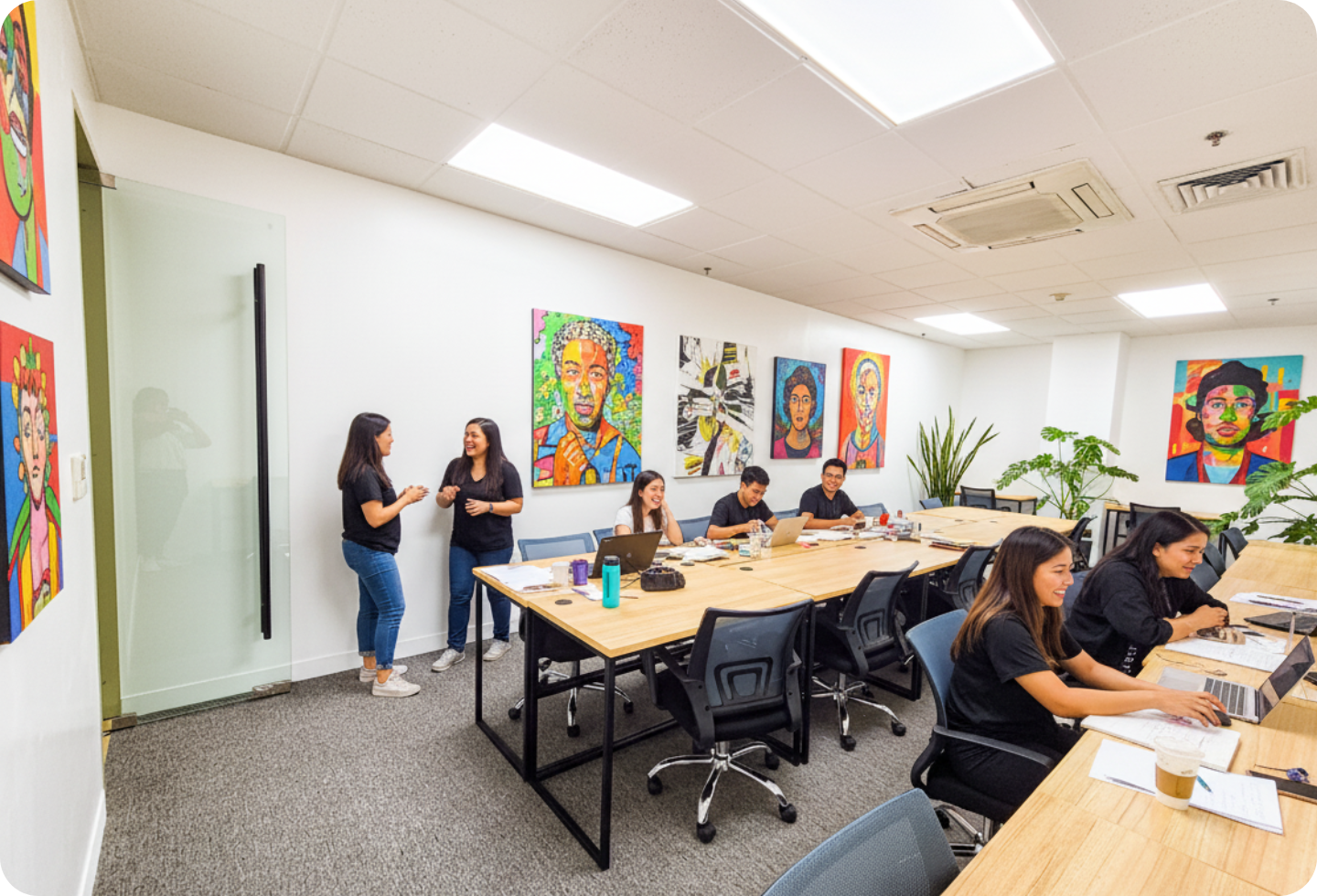
Coworking Community Makati: How Founders Learn Best (2026)

A desk gets you a place to work. A coworking community Makati founders can lean on gets you the person two seats over who already fixed the problem you are stuck on, and who asks on Friday whether you shipped. This guide covers what that community can give you, why it does not form on its own, and how to join without working a room.
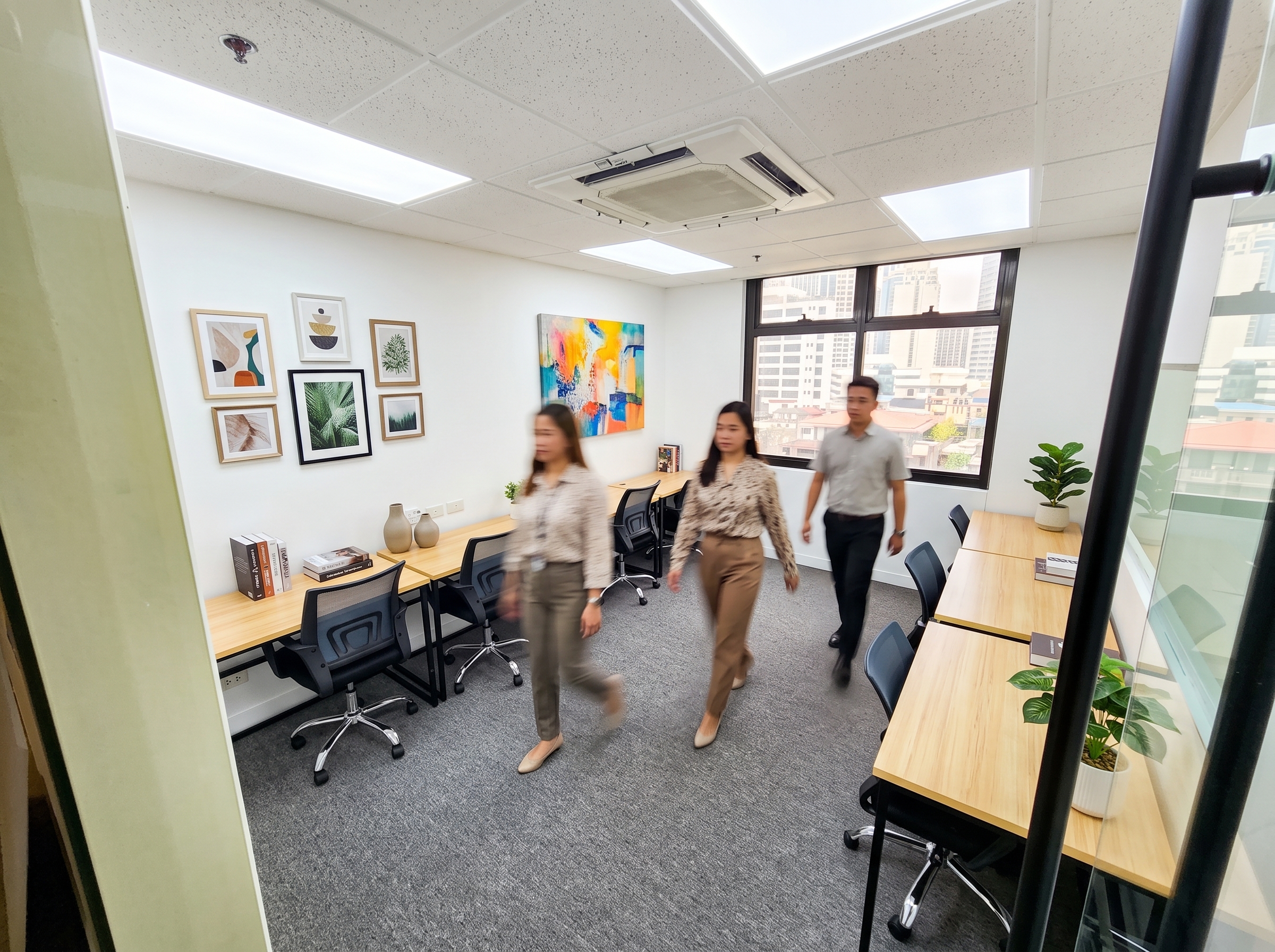

Swipe or scroll sideways for the next photo.
Key takeaways
- A coworking community Makati founders can use starts with seeing the same people often enough to talk. Sharing a floor gives you only acquaintances.
- The value is practical: answers from peers, someone who notices your progress, introductions, and a view into other industries.
- You can join without networking. Come in on the same days, ask one good question a week, and follow up.
- The coworking community Makati offers at Zero-Ten Park includes founder events, and events access starts with Flexi plans (₱2,000, tax included, as of 18 Nov 2026).
- Passes and coworking plans have no contracts by default, so you can test the room with a ₱450 day pass.
Coworking community Makati: what counts as a community?
Two people who share an elevator and a drink station are neighbors. They become a coworking community Makati members can rely on when they talk often enough that one starts to know what the other is building, and starts to help.
That takes repetition. A fit-out, fast internet, and a good address describe the product. They say nothing about whether the person at the next desk will ever say more than hello.
Mark Granovetter’s 1973 paper “The Strength of Weak Ties” (American Journal of Sociology, 78(6), 1360 to 1380) studied how weak ties between people affect the spread of information and mobility opportunities. For a founder, the takeaway is that contacts outside your closest circle matter. Read the paper’s text.
What does a coworking community Makati offer a founder?
Few founders get the movie scene, with the investor at the next desk. In a startup community Makati founders join, the value shows up in smaller ways.
Answers from people one step ahead
You hit a registration snag, a late-paying client, or a proposal that keeps stalling. Someone nearby may have been through it last quarter. A two-minute chat at the drink station can save an afternoon of searching.
Someone who notices
When you work alone, no one sees whether you shipped this week. In a community, a neighbor who knows your launch date will ask how it went. A question from a peer carries a different weight than a status check from a manager.
Introductions with a reason behind them
An introduction from someone who has watched you work carries more credibility than a cold email. It takes weeks of honest contact to earn one, so do not expect it in your first month.
A look at other industries
A designer who lunches with a logistics consultant learns what a delivery cutoff does to a launch plan. A developer who talks to a marketer starts to think about how users find the product. Working from home rarely gives you either conversation.
Ignasi Capdevila’s 2013 paper “Knowledge dynamics in localized communities: coworking spaces as microclusters” treats coworking spaces as microclusters. It argues that the communities forming in them gather people from different professional and cognitive backgrounds, and create knowledge dynamics like those described in the cluster literature.
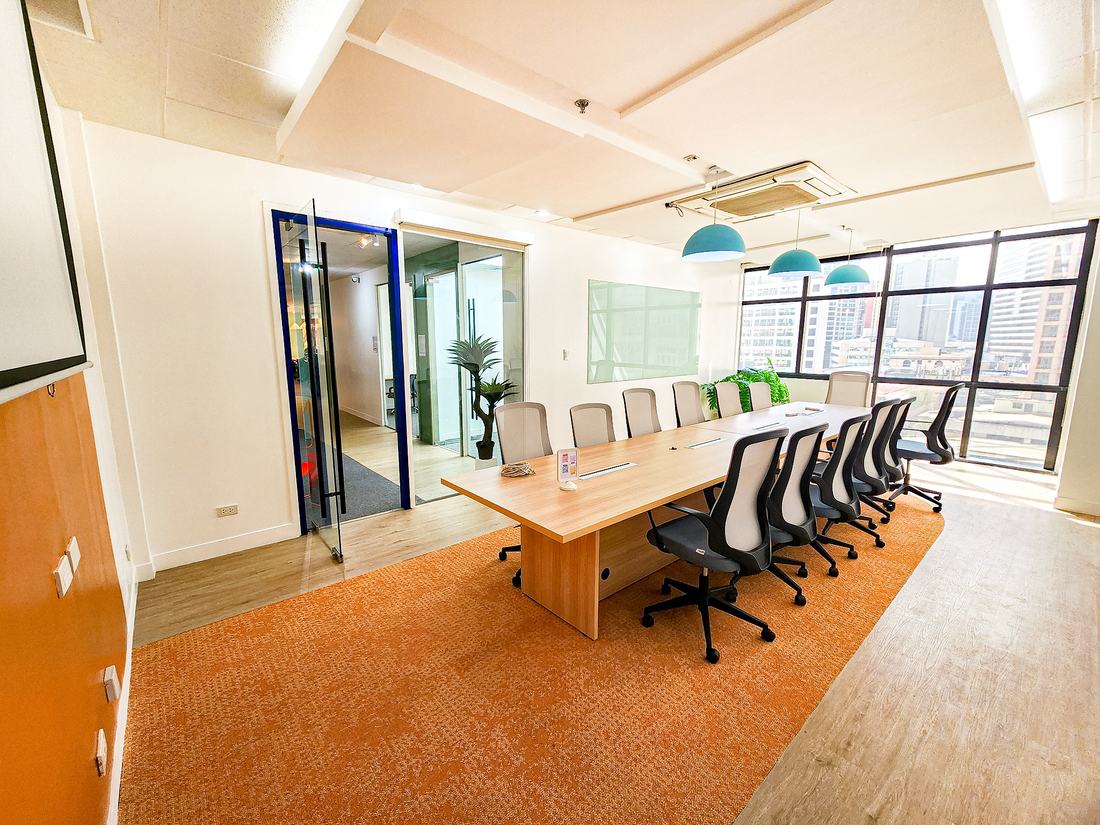
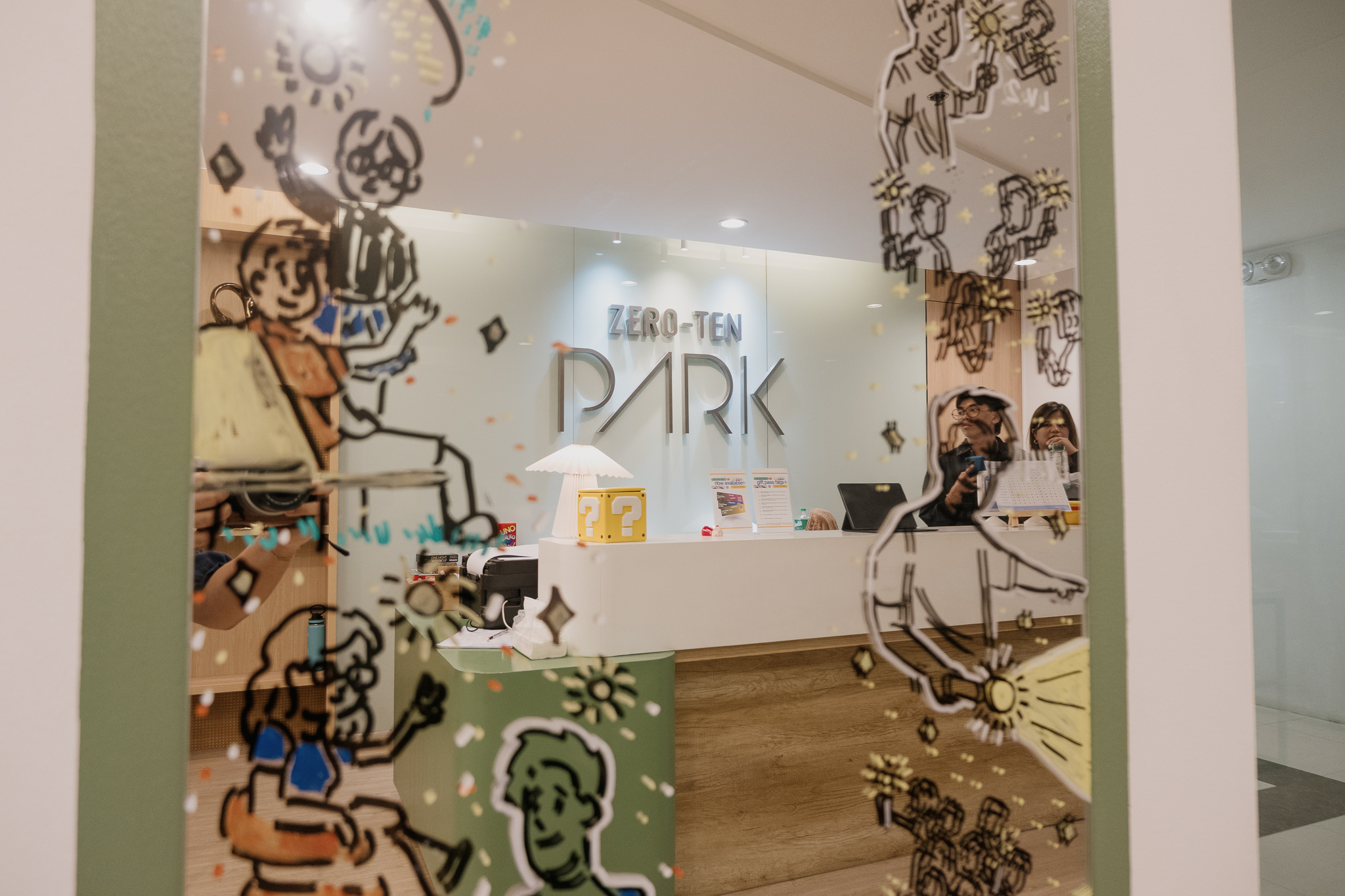
Swipe or scroll sideways for the next photo.
Why do people sit side by side and never talk?
Shared space lowers the barrier to talking. It does not remove it. In any coworking community Makati offers, three conditions decide whether a hello turns into a working relationship.
You see each other often
One chat at one event rarely leads anywhere. The same face at the drink station every Tuesday and Thursday for a month becomes someone you know.
You have something in common to talk about
A fintech founder and a ceramics artist may enjoy each other’s company and never need each other’s work. That is fine. In a varied room, a few contacts will turn out to matter in ways you could not predict.
You say what you are working on
Early-stage founders often hide the stuck sales pipeline or the hire that fell through. The people around you cannot help with a problem they never hear about.
Mayer, Davis and Schoorman (1995), “An Integrative Model of Organizational Trust” in the Academy of Management Review (20(3), 709 to 734), propose that trustworthiness has three parts: ability, benevolence, and integrity. In a coworking room, that means doing good work, showing interest in other people’s work, and following through on what you said you would do. None of it needs an outgoing personality.
Networking for entrepreneurs Makati style: how do you join a coworking community without forcing it?
Treat your first month as a small project. Networking for entrepreneurs Makati offers works best when you are a familiar, useful face by week four. You do not need to pitch anyone.
Week 1: pick your days
Come in on the same two or three days. The people who sit near you on those days will start to recognize you. Respect headphones and quiet-floor signs, and do not start conversations with someone deep in a screen.
Week 2: ask one question
Ask a neighbor what they are building and what is hardest at their stage. Then listen. Do not pitch. People remember a good question far longer than a business card.
Week 3: give something away
Send an article that fits last week’s chat, or offer to introduce someone who can help with the problem a neighbor mentioned. Say what you are stuck on yourself. The best conversations often start with “I have no idea how to do this.”
Week 4: follow up and show up
Mention something specific from an earlier conversation. If your plan includes events access, go to one event and sit near someone you already know.
If a conversation goes nowhere, move on. Not every neighbor needs to become a contact.
How do you judge a coworking community Makati offers before you join?
Some spaces are serviced offices with desks. Others work at building a coworking community Makati members want to stay in. When you shop for a coworking space for founders, find out which kind you are visiting before you pay.
Questions to ask on your visit
- How long have the member events been running, and how many people attend?
- Who are the members? A mix of industries and stages gives you more to learn from than one type of professional.
- Can you decline? You should be able to put on headphones without feeling watched.
- Do events teach something, or do they only collect business cards?
- What does the provider promise? A space that guarantees investors or clients is overselling.
- Does the team know the members by name?
Visit during working hours, not only on a scheduled tour, and talk to a current member if you can. A real coworking community Makati offers shows in how members describe it without being asked. For the full list of what to compare, read how to choose the best coworking space in Makati. See coworking space vs coffee shop in Makati if you are weighing a café.
What does the coworking community Makati offers at Zero-Ten Park look like?
Zero-Ten Park Makati is a coworking space for founders, freelancers, and teams at 11F Frabelle Business Center, 111 Rada Street, Legazpi Village. Walk-in and regular plan hours are 9 a.m. to 7 p.m. Access outside those hours is a paid option: the 24/7 day pass, or the 24/7 hot desk and dedicated desk plans.
Every plan includes unlimited internet, phone booth access, drink station access, and multi-location access. There is power at every workstation and quiet-floor signage, so focus time stays protected.
Zero-Ten Park’s coworking page lists founders, professionals, startups, freelancers, businesses, community partners, and creatives among the people it brings together.

Founder events
Events access starts with Flexi plans. A member with events access can follow Zero-Ten Park’s lu.ma calendar, join the events, and list themselves as part of the Zero-Ten Park community. The page above also links to a Facebook community group.
Zero-Ten Park’s own posts describe these founder-led and community events for the startup community Makati has around it. The accounts are self-reported, and the events ran with outside organizers.
| Event | When | What happened |
|---|---|---|
| Dream Bigger Manila | An evening event. The post is dated 12 Dec 2025 and gives no event date. | Held inside Zero-Ten Park Makati by Dream Bigger Manila. Founders, creators, and investors joined panel discussions with investors, founders, and operators. |
| DAOS 2025 | 14 to 16 Nov 2025 | A three-day hybrid summit for Filipino agency owners, curated by MK Bertulfo. Day 3 was an ecosystem tour with a stop at Zero-Ten Park Makati. |
| Echelon Philippines 2026 | 25 to 26 Aug 2026, at SMX Aura, Taguig (not at the Makati space) | Zero-Ten Park joined as an ecosystem partner. It took part in founder Office Hours with QBO Innovation and IdeaSpace Ventures, and in a future-of-work panel. |
Swipe sideways to see all columns. Source: Zero-Ten Park’s own blog posts, linked above. The posts give no attendance figures.
What it costs to try
Tax included, as of 18 Nov 2026. Plans are priced per person. A hot desk is ₱6,500 (21 credits in 21 business days) and a dedicated desk is ₱8,500. See the coworking plans in Makati page for current rates.
Passes and coworking plans have no contracts by default, and you can extend a plan when it ends. If you cancel, there are no refunds, so use all your credits first. The team asks members why they leave so it can improve. Zero-Ten Park also runs spaces at Cebu IT Park and Mandaue, and multi-location access is included in every plan, so the coworking community Philippines founders join can span Makati and Cebu.
For help picking a plan, read hot desk vs dedicated desk. To see the space, start at the Zero-Ten Park Makati page.
Ready to work somewhere that works back?
Try the coworking community Makati offers at Zero-Ten Park with a day pass at ₱450, tax included, with no contract. Come in on the days you plan to work and see whether the people and the space suit you.
Ask Zero-Ten Park about your workspace
Share what you need and when. The ZTP team will reply with options.
Frequently asked questions about coworking community Makati
Yes. In a coworking community Makati offers, peer answers, informal learning, and soft accountability build through repeated low-pressure contact. They do not depend on high-energy networking events. Showing up on regular days and being honest when a chance comes up is enough for most people.
Possibly, over time, but do not make it your main goal. A community creates conditions for relationships to develop, and some may lead to referrals or collaborations. Those depend on trust built through consistent contact, not on a single meeting. Treat it as a long-term working environment, not a lead channel.
An accelerator usually offers structured mentoring, set programming, and a cohort with a fixed timeline, often with funding or equity terms. A coworking community is more open-ended. Taking part is voluntary, and the value builds informally over time. The two can complement each other.
Ask how long recurring events have run and how many people attend. Visit during working hours, not only on a scheduled tour, and talk to a current member if you can. Plain, consistent answers to practical questions are a good sign.
Zero-Ten Park has hosted founder events such as Dream Bigger Manila at the Makati space. Events access starts with Flexi plans, and members with it can follow the Zero-Ten Park lu.ma calendar, join events, and list themselves as part of the Zero-Ten Park community. Ask the team what is on now, and visit during working hours to see the space in use.
Both have a role. Industry events give broad exposure and first introductions. A startup community Makati founders build in a shared space gives the repeated, low-pressure contact that lets those introductions turn into working relationships. Many founders use both.
Yes. Passes and coworking plans have no contracts by default, and you can extend a plan when it ends. A day pass is ₱450, a Flexi plan starts at ₱2,000, and a hot desk is ₱6,500, tax included, as of 18 Nov 2026. If you cancel a plan, there are no refunds, so use all your credits first.