Coworking Space for Hybrid Teams: Best Flexible Guide (2026)

Hybrid work is an operating model, not just a schedule. It needs decisions about where each type of work happens, how employees reach workspace, and how costs are managed. This guide helps HR leaders and operations managers decide whether a coworking space for hybrid teams belongs in that model.

Key takeaways
- Decisions about a coworking space for hybrid teams should follow actual attendance patterns, not assumptions.
- Coworking suits employees who need a professional place to work, teams that meet in person now and then, and companies that want flexibility before a lease.
- It has limits: dedicated infrastructure, controlled access, and guaranteed seating for large groups need a closer look.
- Example: 10 employees who each come in 8 days a month pay ₱25,000 on Flexi Regular plans, against ₱36,000 in day passes at Zero-Ten Park Makati (tax included, as of 18 Nov 2026).
- Treat the first 60 to 90 days of a coworking space for hybrid teams as a test. Measure usage, ask employees, and review total spend before you commit longer.
What does a coworking space for hybrid teams need to support?
Hybrid work means different people work from different places on different days. The decisions behind that are more involved than a calendar. A joint ILO-Eurofound report (15 Feb 2017) found that telework can improve work-life balance, cut commuting time, and raise productivity, and that it can also lead to longer working hours and work intruding on personal life. A later WHO and ILO technical brief (2 Feb 2022) gives guidance on organizing telework to protect health and wellbeing. Both point to the same lesson: structure matters.
Four questions define a hybrid workspace model. Where does each type of work happen: focused tasks, collaboration, client meetings, sensitive conversations? How do employees get workspace on the days they need it: a company location, a reimbursed membership, or their own choice? How do teams coordinate when they are not in the same place? How does the company track workspace cost across a spread-out workforce?
Companies that answer these four questions can compare specific options against real requirements. Those that skip this step often overspend on unused space, or under-provide for people who need a professional place to work.

Coworking space for hybrid teams: when does it work?
A coworking space for hybrid teams works well in four situations: employees need a professional place that is not home, teams need occasional in-person time without a permanent office, a company needs a flexible location during growth or change, or a business wants to test attendance before signing a lease.
Employees need a professional place near where they live
Not every employee can work well from home. Limited space, shared households, unreliable internet, and no professional setting all affect output. A membership in a central location, such as a coworking plan in Makati, gives employees a consistent alternative without a full-time company office.
Teams need occasional in-person collaboration
Some work benefits from the same room: onboarding, quarterly planning, client presentations, workshops. Meeting hours and the day office let a company pay for collaboration space when it needs it, not all year.
A company needs a flexible or temporary location
Entering a new city, covering a project, or bridging a lease gap all call for workspace without a long commitment. A flexible workspace for employees gives immediate cover while you decide whether a permanent office is warranted.
A business wants to learn its attendance pattern first
Signing a multi-year office lease before you know how often people come in, and on which days, is a large financial risk. A short coworking period generates real attendance data to size and place a later lease.
When is a coworking space for hybrid teams not enough?
A coworking space for hybrid teams is flexible, with limits. Assess the following with any provider directly, instead of assuming a yes or a no.
Dedicated infrastructure
A company that needs its own servers, specialized equipment, or a controlled network will usually find a standard coworking floor does not fit.
Confidential work
Legal files, medical records, and regulated financial data call for controlled access and enclosed space. A shared hot desk is not suited to them. Read how to work productively in shared office space in Makati for the privacy checks.
Guaranteed seating
If every employee who arrives must have a seat, a hot desk carries real uncertainty on peak days. Dedicated desks or a private office address this, and they move closer in cost and commitment to a traditional lease.
Very large groups
When 30 or more employees arrive on the same day, access, meeting room bookings, and logistics get complex. At Zero-Ten Park Makati, bulk booking is available for up to 60 to 80 seats. For a stay of one day to a week, book ahead. Overnight or 24/7 access is possible for bulk bookings.

Comparing workspace arrangements for hybrid teams
Each coworking space for hybrid teams arrangement fits a different use, and most hybrid teams combine two or three of them. The table shows what each costs at Zero-Ten Park Makati, tax included, as of 18 Nov 2026.
| Arrangement | Best for | Privacy | Coordination | Cost at Zero-Ten Park Makati |
|---|---|---|---|---|
| Home-based work | Focused solo tasks, little client contact | Varies | Needs async tools | Lowest for the employer |
| Hourly or day pass | Occasional days or a single call | Shared floor, phone booth | Per visit | ₱90 an hour, ₱450 a day |
| Flexi plan | Employees in 1 to 3 days a week | Shared floor | Credits set in advance | ₱2,000 (5 days), ₱2,500 (8 days), ₱5,000 (10 days) |
| Hot desk or dedicated desk | Employees in most weekdays | Shared floor, or your own area | Low, access is set in advance | ₱6,500 (hot), ₱8,500 (dedicated), 21 credits each |
| Day office | Team workshops, client sessions, reviews | Private room for up to 4 | Booked ahead | ₱1,100 per person per day |
| Private office | Teams needing a fixed, enclosed space | Enclosed office | Low, the team is always in one place | ₱11,000 to ₱15,000 per seat per month (examples), from 3 months |
Swipe sideways to see all columns. Private office rates fall with lease length, and each private office gets 6 free meeting hours a month. Ask the team for a quote. Both examples are all-in rates, tax included. See the coworking plans in Makati page for current rates.
A planning framework for a coworking space for hybrid teams
A coworking space for hybrid teams works best when it follows a set sequence. These seven steps are for HR managers and operations leads to apply before launch, not after problems appear.
Estimate weekly attendance
Ask employees how many days a week they expect to work in person. Separate roles that benefit from presence, such as client-facing, collaborative, and onboarding work, from roles that work equally well remotely. Use this to project baseline and peak headcount.
Find your peak days
Look at your own team’s pattern, because it differs by company. Peak-day headcount decides whether passes, Flexi plans, desks, or a private office make the most financial sense.
Define booking procedures
Decide how employees reserve workspace: through the provider, a shared calendar, or a named operations contact. Zero-Ten Park can arrange company bookings and billing, and access cards carry a ₱400 security deposit each. Agree the process with the team before you write internal guidelines.
Set employee guidelines
Write down expectations on etiquette, call handling, equipment, and what the company will and will not reimburse. First-time users benefit from clear guidance. A one-page reference is enough.
Plan meeting room use
List recurring meetings that need a private room: sensitive stand-ups, client calls, performance reviews, workshops. Book them ahead. Count included meeting hours (Flexi Premium 1, hot desk 2, dedicated desk 3 a month, and 6 per private office), and budget extra hours separately (₱600 to ₱900 an hour, depending on the number of people).
Set a monthly workspace budget
Add up plans per user, an allowance for meeting rooms, and day passes for irregular visitors. Compare the total against a traditional office, including fit-out, utilities, and administration.
Review after the trial
At the 60-day mark, pull the actual numbers: days used per person, the busiest days, meeting hours used, and total spend. Compare them with your estimates, then decide whether to continue, adjust, or move to a more permanent arrangement.
A worked budget example
Take a team of 10 employees who each come in 8 days a month, about 2 days a week. The figures use Zero-Ten Park Makati rates, tax included, as of 18 Nov 2026.
| Arrangement | Calculation | Per month |
|---|---|---|
| Day passes | 10 × 8 × ₱450 | ₱36,000 |
| Flexi Regular (8 credits each) | 10 × ₱2,500 | ₱25,000 |
| Hot desk (Regular) | 10 × ₱6,500 | ₱65,000 |
Swipe sideways to see all columns. At this attendance, Flexi Regular saves ₱11,000 a month against day passes. A hot desk only pays off at higher attendance, from about 15 days a month against day passes.
How should a company test a coworking space for hybrid teams before committing?
Before a longer coworking space for hybrid teams membership or a private office, treat the first period as an experiment. A 60 to 90 day trial gives enough data to decide without a multi-year commitment based on assumptions. At Zero-Ten Park Makati, plans run for 10 to 30 days and have no contracts by default, so you can start with day passes and a Flexi plan and extend as your data comes in. If your team wants it on paper, a 6-month term is possible.
Measure actual usage, not intended usage
Plan around how often people come in, not how often they say they will. Use booking confirmations, any usage records the provider can supply, or a simple internal attendance log.
Gather structured feedback
At the midpoint, ask employees three questions. Does the workspace help you do your job? Are there days or times when access is hard or the environment is unsuitable? What would make it work better? Short, targeted questions give more useful answers than a general satisfaction survey.
Track meeting room availability
Meeting rooms are often the first friction point. If your team often cannot book a room when needed, adjust scheduling habits or consider an option with guaranteed room access. Log each time a needed room was unavailable.
Count total workspace spend
Include plans, day passes, meeting room hours, equipment the company supplies, and operations staff time. Compare the total with a traditional office, with rent, fit-out, utilities, maintenance, and administration included. This shows whether coworking is cost-efficient for your team size and usage. See coworking spaces in the Philippines if your team spans cities.
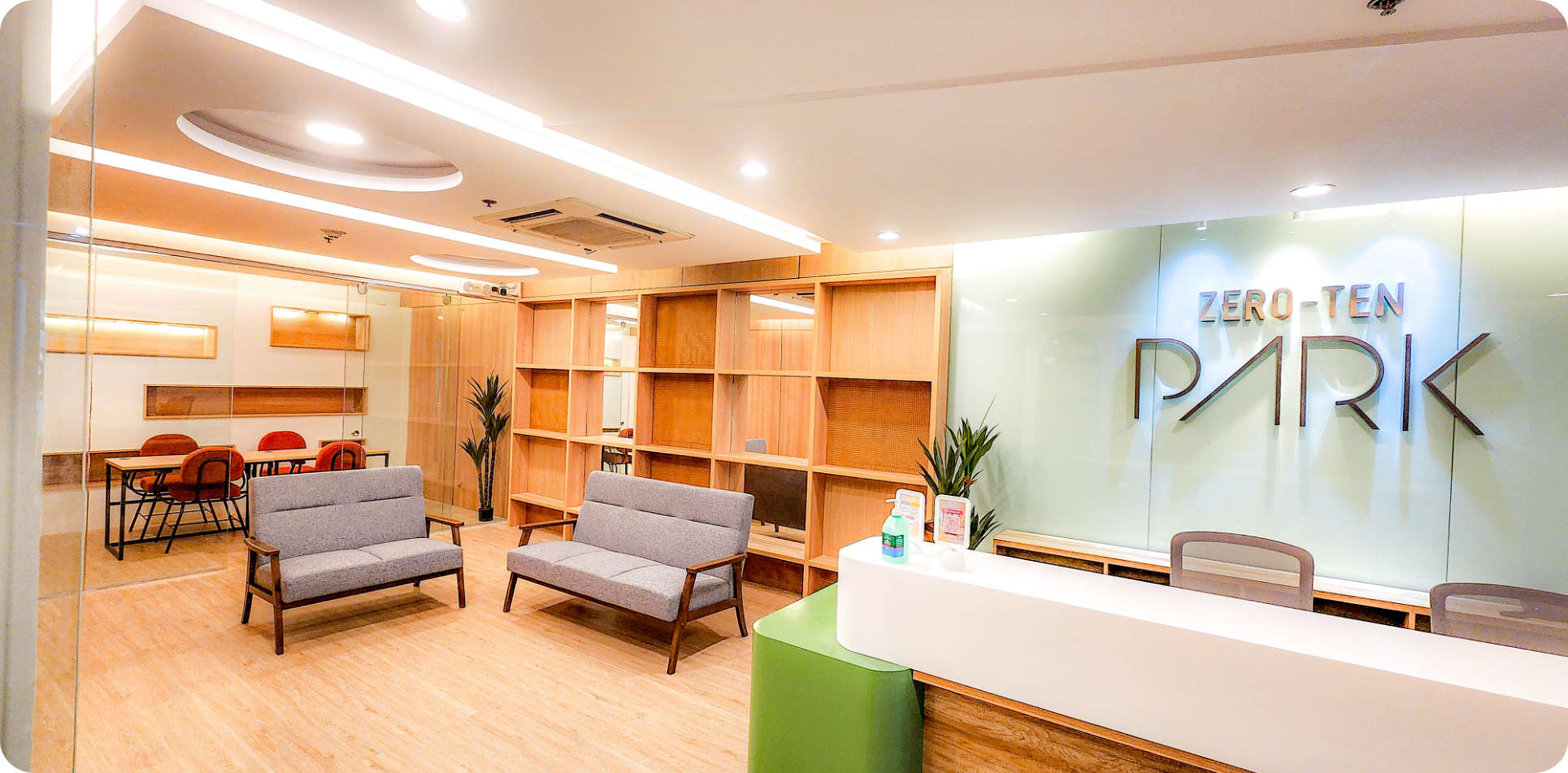
What does Zero-Ten Park offer as a coworking space for hybrid teams in Makati?
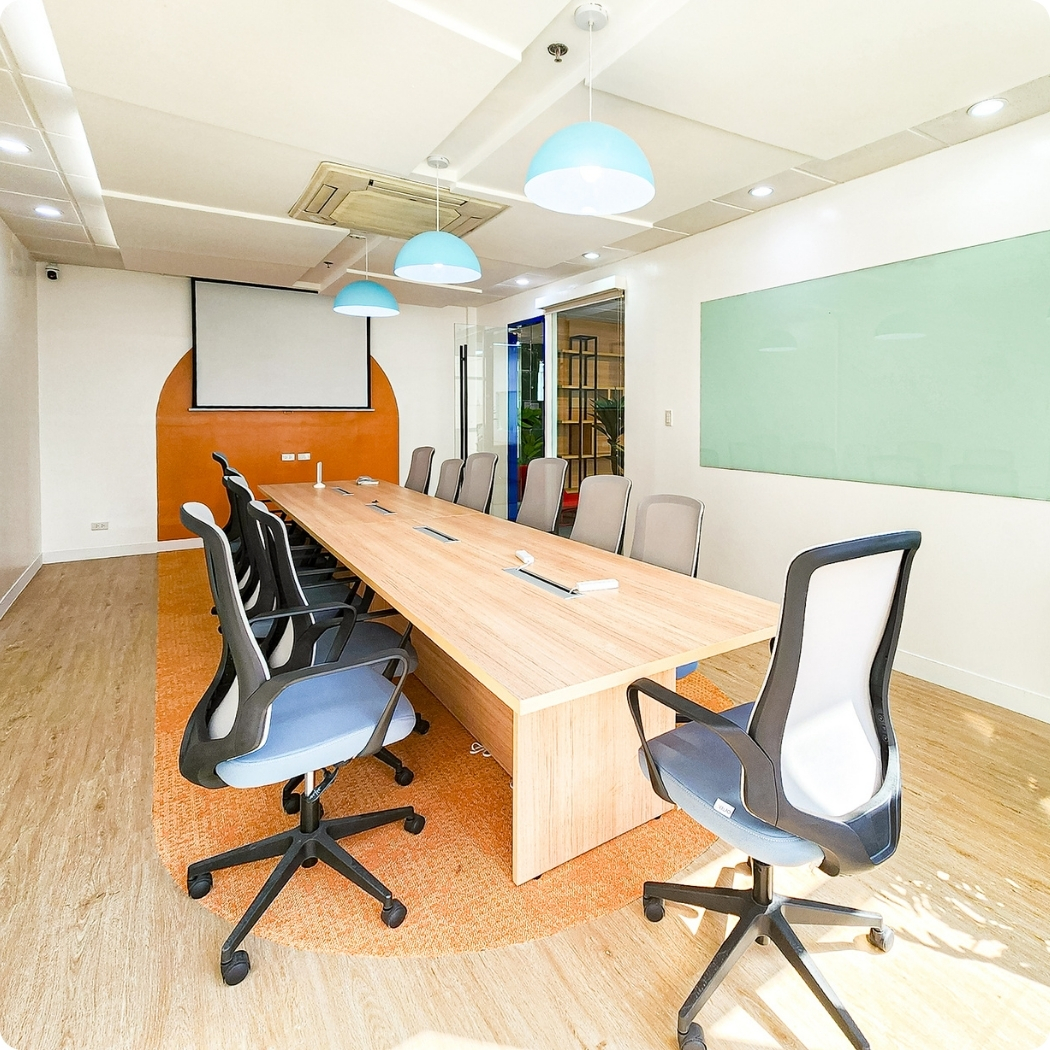
Zero-Ten Park Makati is at 11F Frabelle Business Center, 111 Rada Street, Legazpi Village. It offers hourly and day passes, Flexi plans, hot desks, dedicated desks, a day office for up to 4 people, and private offices. Walk-in hours are 9 a.m. to 7 p.m. Every plan includes unlimited internet, phone booth access, and drink station access.
For a coworking space for hybrid teams, the range of options lets a company match spend to attendance. Plans are priced per person, so for a team you multiply the rate by the number of people. Coworking passes and plans have no contracts by default, and you can extend a plan when it ends. A team that wants certainty can agree a term in writing, such as 6 months, and this varies by client. If you cancel, there are no refunds, so use all your credits first. Private offices are leased from 3 months, with rates that fall as the lease gets longer.
Company bookings and billing can be arranged. Bulk booking is available for up to 60 to 80 seats. For a stay of one day to a week, book ahead, and overnight or 24/7 access is possible. Access cards carry a ₱400 security deposit each. Ask the team which plan fits your headcount, peak days, and meeting needs. For help choosing, read hot desk vs dedicated desk and when small teams should move into a coworking space.
Zero-Ten Park also provides Employer of Record and Contractor of Record services, which help businesses hire in the Philippines without setting up a local entity. If your hybrid team includes your first local employees, those services are worth a look next to the workspace question.
Ready to choose a coworking space for hybrid teams in Makati?
To try a coworking space for hybrid teams, start with a day pass at ₱450, tax included, or talk to the team about headcount, peak days, meeting rooms, and budget before you pick a plan.
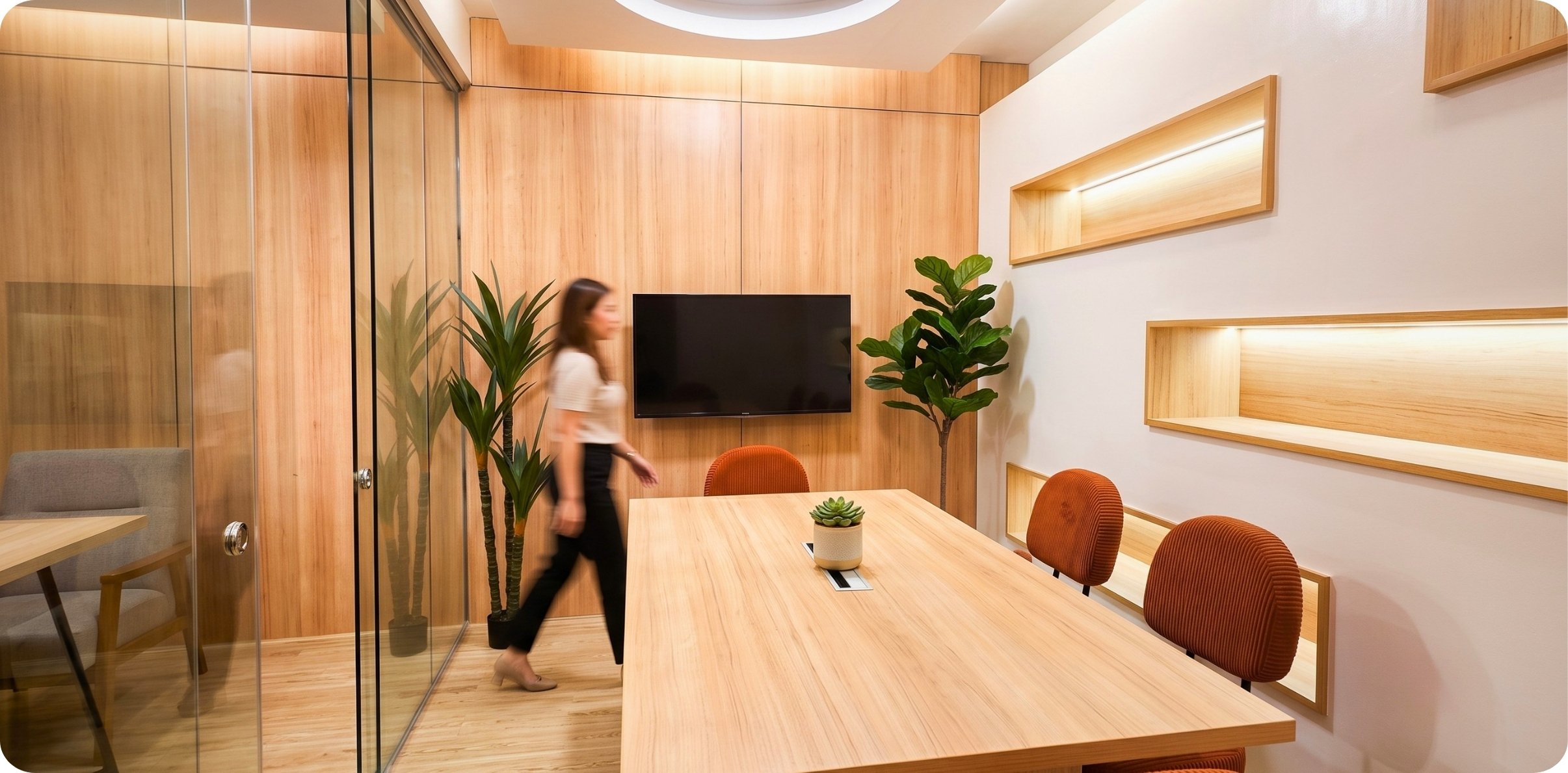
Ask Zero-Ten Park about your workspace
Share what you need and when. The ZTP team will reply with options.
Coworking space for hybrid teams: frequently asked questions
A hybrid model expects employees in a physical workspace on some days and remote on others. A remote-first model treats remote work as the default and in-person gatherings as deliberate exceptions. Hybrid models need reliable, recurring access to space. Remote-first models need occasional, higher-quality venues for group events.
A company can choose to pay for or reimburse coworking as a workplace provision. The tax treatment depends on how the arrangement is set up under Bureau of Internal Revenue rules, so confirm it with a local accountant or HR adviser before you adopt a company-wide policy. This is general information, not tax advice.
It depends on peak-day attendance and days used per person, not total headcount. If 20 people never have more than 10 in on one day, you may need fewer plans than people. At Zero-Ten Park Makati, 10 people who each come in 8 days a month pay ₱25,000 on Flexi Regular plans, against ₱36,000 in day passes (tax included, as of 18 Nov 2026).
It depends on the work and the space. Open hot-desk areas are not suited to highly sensitive documents or regulated data. Private offices and enclosed rooms give much more privacy. At Zero-Ten Park Makati, the day office is a private room for up to 4 people, and private offices are leased from 3 months. Check access rules and network setup before you place confidential work anywhere.
Cover who is eligible, how they book access, what the company will and will not reimburse, expected behavior in a shared space, how to book meeting rooms, and who to contact when there is a problem. A one-page reference is usually enough, and more likely to be read than a handbook section.
At Zero-Ten Park Makati, plans are priced per person, so for a team you multiply the rate by the number of people. Company bookings and billing can be arranged with the team, so a team arrangement is workable. A team that wants certainty can agree a 6-month term in writing, which varies by client. Bulk booking is available for up to 60 to 80 seats, and access cards carry a ₱400 security deposit each.
Three signals point that way: the team is often at or over capacity on peak days, the total of plans and meeting hours is close to the cost of a private office, or you need dedicated infrastructure, guaranteed seating, or stricter access. At Zero-Ten Park Makati, private offices are leased from 3 months, with examples of ₱15,000 per seat per month (all-in, tax included) on a 1-year lease and ₱11,000 on a 3 to 4 year lease, also all-in.