Coworking Space Philippines: Productivity, Community & Flexible Work

Coworking space Philippines solutions are transforming how Filipino professionals work, collaborate, and support their families.
The Myth of the Solo Entrepreneur in the Philippines
Western business culture often celebrates the self-made entrepreneur—the founder who succeeds through individual grit alone. But in the Philippines, that narrative rarely reflects reality.
Here, professionals operate within strong family ecosystems. A career decision is rarely individual; it’s connected to a broader household structure that shares responsibility, risk, and reward.
A recent report by Boston Consulting Group highlighted a defining trend: in the Philippines, the household—not the individual—is the primary economic unit.
This means when someone chooses a workspace, they’re not just renting a desk. They’re investing in stability for the people who depend on them.
At Zero‑Ten Park Philippines, we see this dynamic every day. A coworking membership in Makati or Cebu often represents something deeper: a professional buffer that protects family life and financial security.
The Filipino Sandwich Generation and Entrepreneurial Risk
Why Risk Looks Different for Filipino Founders
Many Filipino professionals belong to the Sandwich Generation—supporting both children and aging parents.
For founders and freelancers, business setbacks affect more than revenue. They may impact:
- tuition payments
- household expenses
- parents’ healthcare
- extended family support
This reality changes how professionals approach risk.
The Problem with Traditional Office Leases
Traditional commercial leases often require:
- long-term commitments (3–5 years)
- large security deposits
- high upfront capital
For startups and small businesses, this ties up money that families might need for emergencies.
Flexible Workspaces as “Liquid Infrastructure”
Coworking spaces offer a more adaptable model.
Instead of heavy capital commitments, businesses can scale month-to-month. This flexibility allows founders to grow cautiously while maintaining financial security for their families.
For many Filipino entrepreneurs, this agility becomes a form of economic insurance.
Why Working From Home Isn’t Always Productive
The Productivity Gap in Filipino Households
One of the most common searches among remote workers in the Philippines is:
“How can I be more productive working from home?”
For many professionals, the challenge isn’t tools—it’s the environment.
Filipino homes are culturally open and communal. Family members often expect accessibility throughout the day. While this strengthens relationships, it can make deep, uninterrupted work difficult.

The 3-2-1 Productivity Framework
Many Filipino professionals thrive with a simple daily structure:
3 Hours – Deep Work
No messaging apps or family coordination.
2 Hours – Meetings and Collaboration
1 Hour – Administrative Tasks or “Ambag”
This structure balances focused output with necessary coordination across work and family responsibilities.

The Science Behind Focus-Driven Workspaces
Purpose-built coworking environments create conditions for deep work.
At facilities like Frabelle Business Center and Mabuhay Tower, workspaces are designed around behavioral cues that support focus.
Key productivity features include:
Acoustic Privacy
Professional soundproofing reduces interruptions common in home environments.
Environmental Cues
Entering a dedicated workspace signals the brain to switch into “work mode.”
Professional Infrastructure
Stable internet, meeting rooms, and collaboration zones enable high-quality work output.

The Global Filipino Workforce and Digital Collaboration
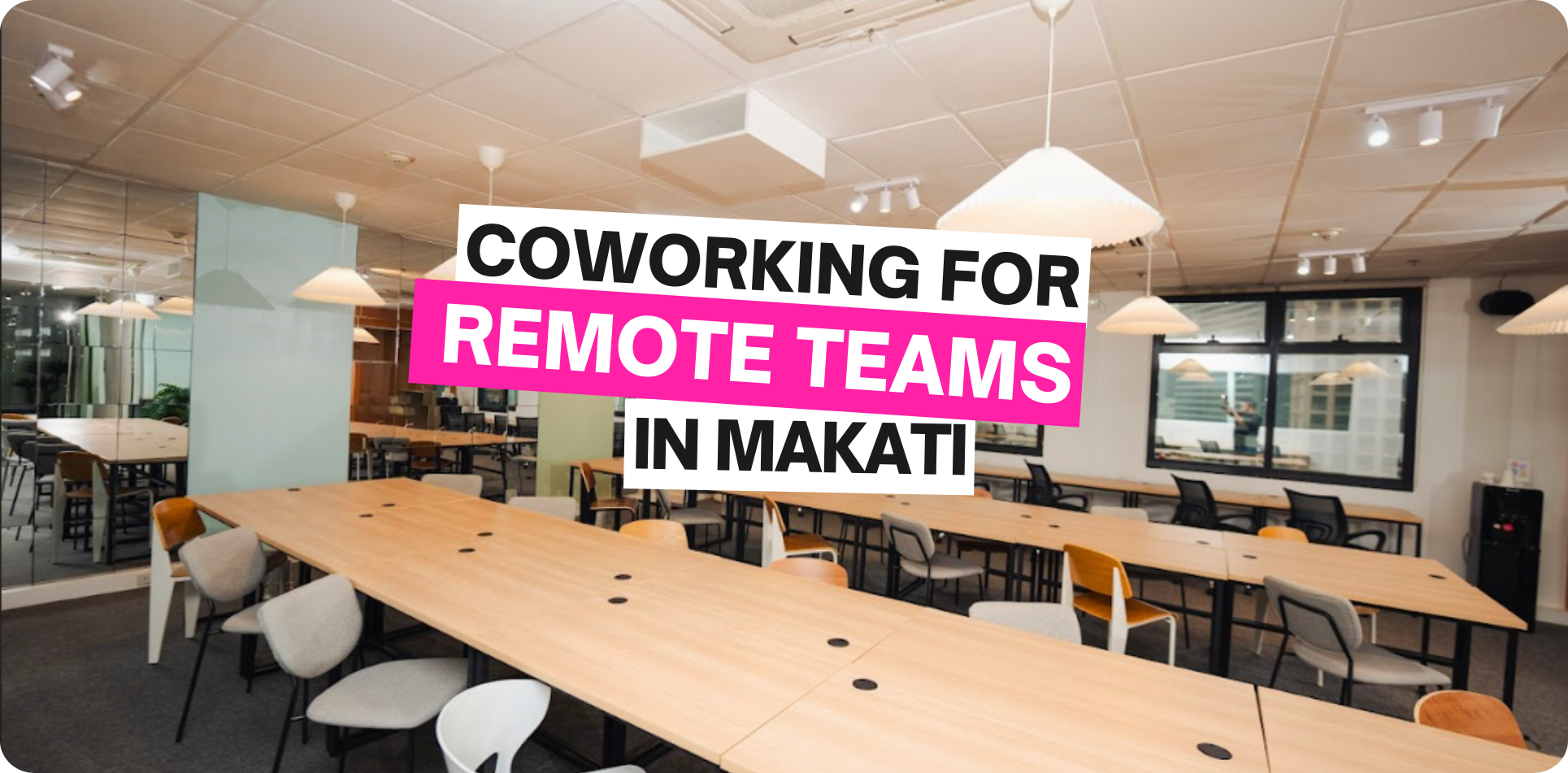
Space Feature at Zero-Ten Park Makati


The Rise of the Distributed Family Business
The Philippine economy is deeply influenced by Overseas Filipino Workers (OFWs). Families often operate across multiple countries, contributing resources through an informal system of shared support.
Business decisions may involve relatives in:
- the Middle East
- North America
- Europe
- Southeast Asia
This creates what some entrepreneurs call a “global family boardroom.”
Why Coworking Communities Matter for Filipino Professionals
In the absence of strong social safety nets, Filipinos traditionally rely on community networks.
Modern coworking spaces replicate this dynamic for professionals.
Communities such as UXPH and CebuXD create environments where founders and creatives can collaborate, mentor each other, and build talent pipelines.
These ecosystems provide:
- peer mentorship
- collaborative learning
- trusted hiring networks
- shared growth opportunities
Success becomes collective rather than individual.
The Future of Work in the Philippines
From Work-Life Balance to Work-Life Integration
The traditional idea of work-life balance suggests constant tension between professional and personal responsibilities.
But Filipino professionals often operate differently.
A more accurate framework is work-life integration, where systems are built to support both.
Modern workspaces contribute to this by providing:
- concierge services
- community events
- flexible work schedules
- professional infrastructure
These elements reduce operational friction and allow professionals to focus on strategic work.
Building Collective Success
Entrepreneurship in the Philippines rarely happens in isolation.
Behind every founder, freelancer, or professional is a network of people who share in both the risks and the rewards.
Choosing the right workspace is not just a logistical decision—it’s a strategic one.
At Zero‑Ten Park Philippines, the goal is simple: provide environments where Filipino professionals can focus, collaborate, and build sustainable momentum.
Whether you’re looking for a private office in Makati or a coworking desk in Cebu, the right workspace can help transform individual ambition into collective progress.
FREQUENTLY ASKED QUESTIONS
Filipino culture values pakikisama—maintaining harmony and accessibility within family relationships. A dedicated workspace helps establish boundaries that allow uninterrupted focus.
Yes. Flexible coworking models reduce upfront costs and allow startups to scale without committing to long commercial leases.
Professional workspaces enable remote collaboration through high-quality video conferencing and shared digital tools, making cross-border business management easier.
Key factors include:
- reliable internet infrastructure
- meeting rooms
- flexible lease terms
- access to business communities
READY TO SIGN UP?