How to Manage Infrastructure and Connectivity Hurdles with a Remote Filipino Team

Expanding your operations by building a Remote Filipino Team is one of the most strategic moves a high-growth startup or multinational corporation (MNC) can make. The value proposition is clear: you gain access to a highly literate, English-proficient, and culturally adaptable workforce while realizing operational cost savings of up to 80%.
However, for a foreign entity, the primary risk isn’t talent—it’s environmental volatility. To succeed, leadership must move away from a “reactive mindset” (scrambling to fix issues as they arise) and adopt a “design mindset.”
THE "DESIGN MINDSET": WHY PROACTIVE PLANNING WINS
Defining the Core Terminology
Before diving into the strategy, it is important to align on two foundational concepts:
- Design Mindset: In this context, it refers to the intentional engineering of a worker’s environment to ensure business continuity. Instead of assuming a standard home office is sufficient, you treat the remote workspace as a mission-critical node of your global infrastructure.
Infrastructure Resilience: This is the ability of a system (in this case, your team’s connectivity and power) to absorb a shock—such as a typhoon or a grid failure—and return to a functional state with minimal downtime.
Moving Beyond “Hope” as a Strategy
Many foreign startups enter the Philippine market with a “business as usual” approach, assuming that a stable internet connection is a given. While urban centers in the Philippines have world-class fiber optics, the archipelago’s geography and tropical climate mean that infrastructure is inherently fragile.
A reactive mindset assumes that if a team member’s power goes out, they will simply “make up the hours later.” For an MNC with tight SLAs (Service Level Agreements) and global dependencies, this is not an option.
A design mindset acknowledges three specific realities of the Philippine landscape:
- Climate Impact: With an average of 20 typhoons per year, localized flooding and wind damage to utility lines are predictable seasonal events.
- Grid Instability: Power fluctuations and “brownouts” (temporary drops in voltage) can occur even in fair weather due to high demand on the national grid.
- The “Last Mile” Challenge: While the backbone of the internet is strong, the physical cables connecting a home to the main hub are often the first to fail during a storm.
The Strategic Advantage of Pre-Emptive Engineering
By designing for these hurdles from day one, you transform a potential liability into a competitive strength. When your competitors’ teams go offline during a monsoon, your Remote Filipino Team remains operational because you mandated and funded the necessary redundancies.
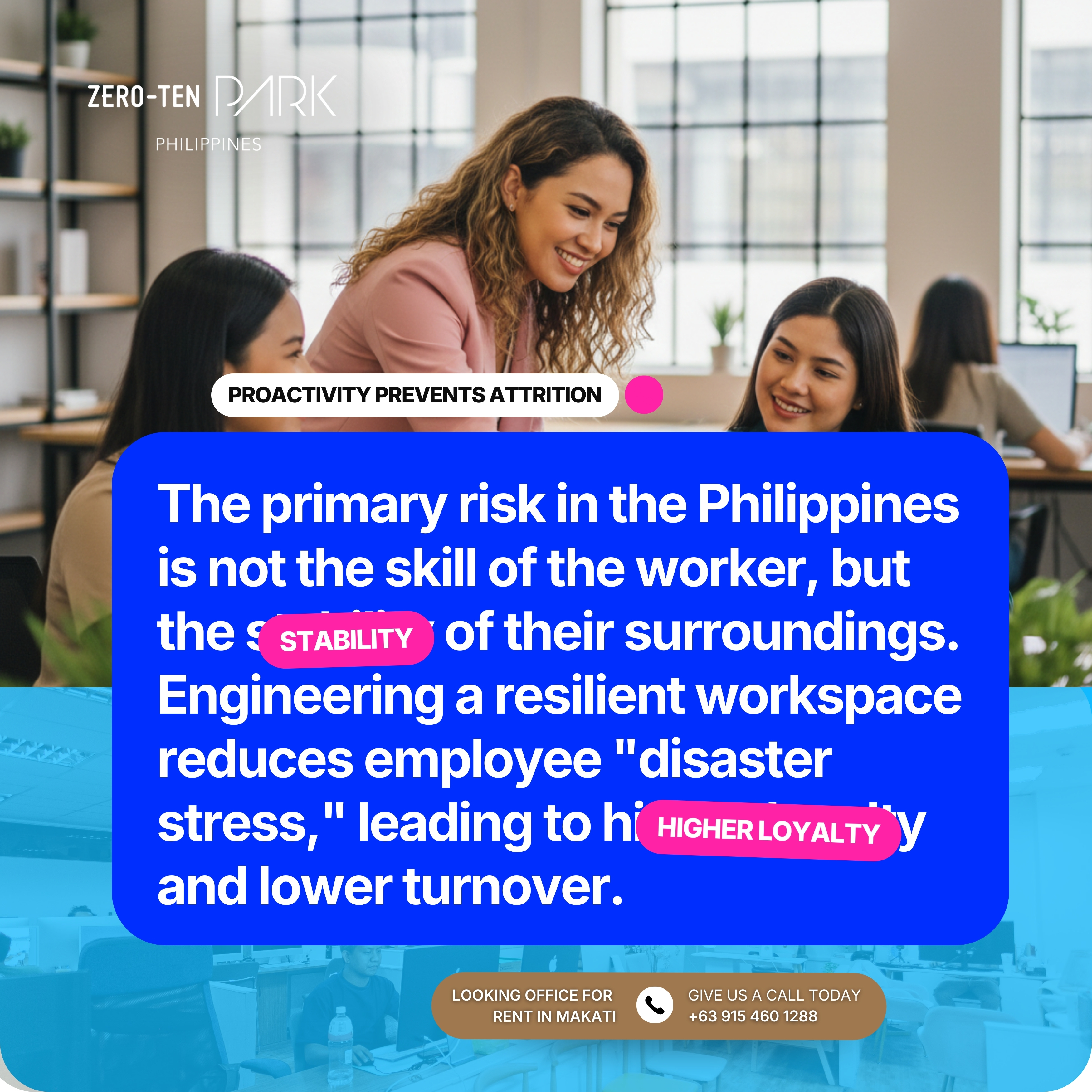
This approach does more than protect your uptime; it protects your talent retention. High-performing Filipino professionals often feel immense “disaster stress” when they cannot fulfill their duties due to circumstances beyond their control. By providing the framework for a resilient home office, you alleviate this anxiety, fostering deep loyalty and long-term commitment to your organization.
The Bottom Line: You are not just hiring people; you are building a distributed network. If you wouldn’t build a data center without a backup generator, you shouldn’t build a remote team without a structured infrastructure protocol.
TIERED POWER REDUNDANCY: BEATING THE "BROWNOUTS"
When managing a Remote Filipino Team, the most frequent infrastructure hurdle you will encounter is the instability of the electrical grid. For a foreign startup or MNC, a loss of power at a remote node isn’t just a minor inconvenience—it is a break in the “24/7 productivity engine.” To maintain seamless operations, you must implement a tiered power strategy that addresses everything from a momentary flicker to a multi-day outage.
Defining the Core Terminology
To communicate effectively with your local team and procurement departments, it is vital to distinguish between these technical terms:
- Brownout vs. Blackout: In the Philippines, a “brownout” is a common term used for any power interruption. However, technically, a brownout is a temporary drop in voltage that can damage sensitive electronics, while a blackout is a total loss of power.
- UPS (Uninterruptible Power Supply): A device that provides near-instantaneous protection from power interruptions by using a specialized battery to “bridge” the gap between the main power failing and a backup source kicking in.
- LiFePO₄ (Lithium Iron Phosphate): A type of battery chemistry used in modern power stations. It is significantly safer for indoor home-office use than lead-acid batteries or fuel-powered generators and has a much longer lifespan (often up to 10 years).

The Three-Tier Redundancy Framework
A resilient remote setup does not rely on a single device. Instead, it uses a layered approach to ensure the worker never actually goes “offline.”
Tier 1: The Immediate Bridge (UPS)
The first few seconds of a power failure are the most critical. Without a UPS, a desktop computer will shut down instantly, potentially causing data corruption, and a router will take several minutes to reboot even if backup power is applied later.
- Goal: Zero-second failover.
- Requirement: Every team member must have their router and primary computer plugged into a UPS to maintain a live connection during the transition to secondary power.
Tier 2: Sustained Productivity (Portable Power Stations)
For outages lasting longer than 15 minutes, a UPS is insufficient. This is where a high-capacity Portable Power Station becomes essential. These silent, emission-free units can power a laptop and a router for 8 to 12 hours.
- Goal: Full-shift continuity.
- Requirement: Mandate a unit with at least 500Wh to 1000Wh capacity. This ensures that even during a scheduled “load shedding” (rotating power outages), your Remote Filipino Team remains productive.
Tier 3: Environmental Resilience (Solar & Alternative Energy)
In the event of a major typhoon, the local grid may be down for days or even weeks. For mission-critical staff or those in provincial areas, integrating small-scale solar panels allows them to recharge their Tier 2 power stations independently of the grid.
- Goal: Long-term survival and recovery.
- Requirement: Foldable solar blankets or permanent roof-mounted panels for key personnel in high-risk zones.
Implementation for MNCs: The Stipend Model
Because the cost of high-quality power redundancy can be significant (ranging from $400 to $1,200), successful foreign entities do not expect employees to bear this burden alone.
The most effective approach is to provide an Infrastructure Stipend. By funding this equipment, the corporation retains the right to set “uptime requirements.” If the company provides the power station, the expectation of 99.9% availability becomes a reasonable and enforceable performance metric for your Remote Filipino Team.
CONNECTIVITY ARCHITECTURE: THE DUAL-WAN STRATEGY
In a globalized economy, “online” is the only state that matters. While the Philippines has seen a massive surge in fiber-optic deployment, the physical reality of an archipelago—complete with mountainous terrain and undersea cables—means that a single internet connection is never enough. For an MNC, the most critical technical investment you can make for your Remote Filipino Team is redundant connectivity.
Defining the Core Terminology
To manage a distributed network effectively, leadership must understand how to architect for failure:
- WAN (Wide Area Network): In this context, it refers to the individual internet connection coming into a home or office (e.g., your fiber line).
- Dual-WAN Failover: A networking configuration where two separate internet sources are connected to a single router. If the primary connection fails, the router automatically switches to the secondary source without dropping the user’s session.
- Latency: The time it takes for data to travel from the user to your server and back. High latency causes “lag” in video calls and slow response times in cloud-based software.
- Throughput: The actual amount of data being moved successfully from one point to another in a given time period.
The Architecture of Redundancy
A Remote Filipino Team that operates on a single connection is a single point of failure. To mitigate this, your infrastructure policy should mandate a “multi-medium” approach. Relying on two different companies using the same physical cable line is not true redundancy; if a utility pole falls, both connections will fail.
Primary vs. Secondary Connectivity
| Connection Type | Medium | Best Use | Resilience Level |
| Primary | Fiber Optic | High-speed daily tasks, large file transfers, and video conferencing. | Medium: Fast but vulnerable to physical line damage. |
| Secondary (Backup) | 5G / Fixed Wireless | Acts as an immediate backup for routine communication and web-based tools. | High: Not dependent on physical ground cables. |
| Tertiary (Crisis) | Low-Earth Orbit Satellite | Essential for workers in provincial areas or during catastrophic infrastructure failure. | Extreme: Operates as long as the user has a clear view of the sky and power. |
Implementing the “Always-On” Protocol
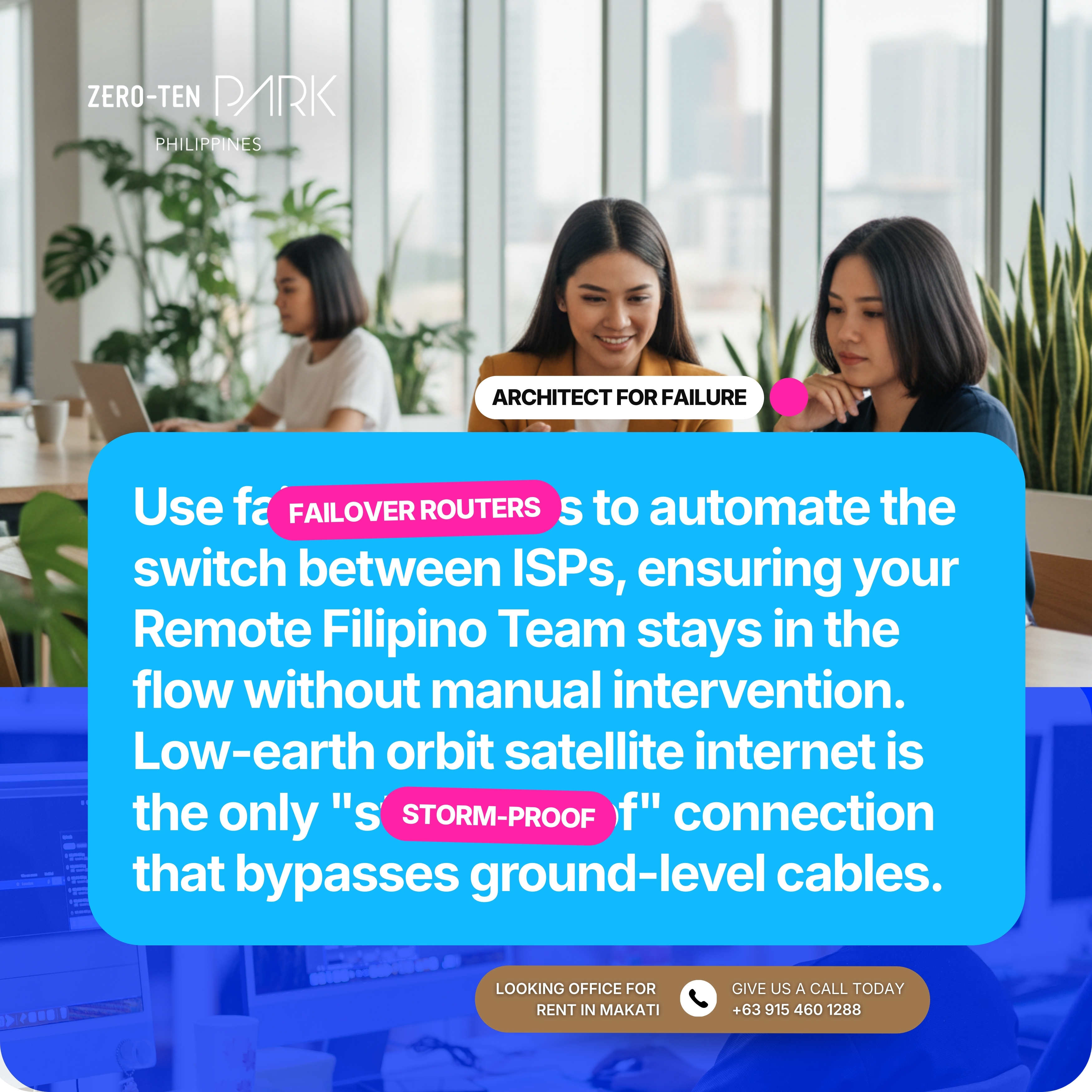
To ensure 99.9% uptime, MNCs should move beyond simple “hotspots.” The gold standard is a Failover Router. This hardware automatically detects when the primary fiber line stops sending data and instantly reroutes all traffic through a secondary mobile or satellite link.
This level of automation ensures your Remote Filipino Team can maintain high-definition video calls and secure VPN access even when a local line is cut by construction or weather. By standardizing this setup, your IT department can manage remote nodes with the same confidence they have in a centralized office.
Technical Note: When setting up a dual-path system, ensure that the two paths do not share the same “last mile” infrastructure. A true redundant setup uses a wired connection (Fiber) as the primary and a wireless connection (5G or Satellite) as the secondary.
GEOGRAPHIC DISPERSION & LOAD SHIFTING
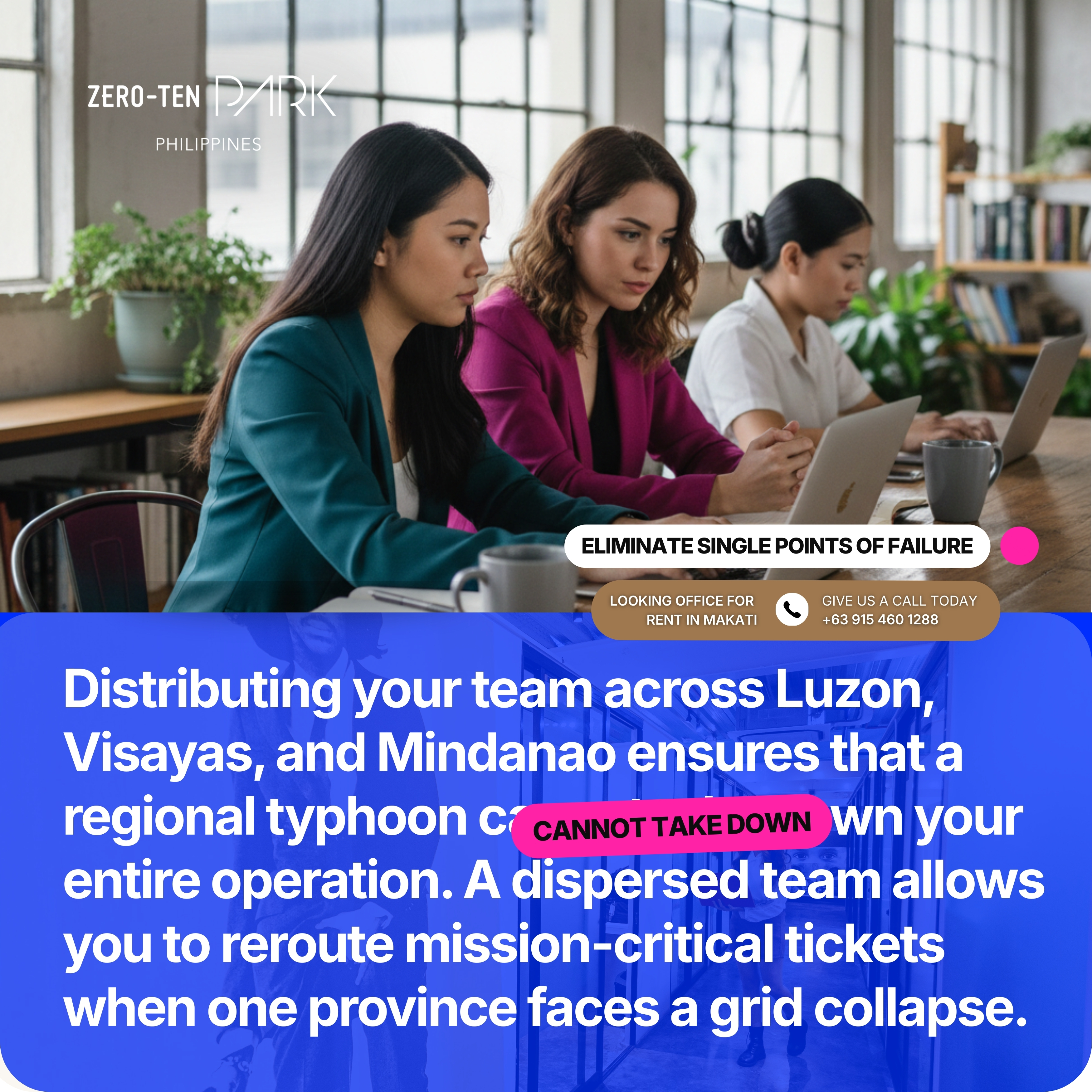
While individual power and internet redundancies are the first line of defense, large-scale environmental events—such as a major typhoon or a regional grid failure—can sometimes overwhelm local infrastructure. For an MNC or a high-growth startup, the most effective way to ensure high availability is to avoid geographical concentration. By strategically distributing your Remote Filipino Team, you ensure that a localized crisis in one province does not become a total operational shutdown for your company.
Defining the Core Terminology
To implement a resilient distribution strategy, it is important to understand these key operational concepts:
- Geographic Dispersion: The practice of hiring talent across different, non-contiguous physical regions to ensure that a single weather event or utility failure cannot impact the entire workforce simultaneously.
- Load Shifting: An operational maneuver where the work volume originally assigned to a team in an affected area is temporarily redirected to a team in an unaffected region.
- Business Continuity Planning (BCP): A documented framework that outlines how the organization will continue to operate during an unplanned disruption in service.
The Tri-Regional Distribution Model
The Philippines is an archipelago of over 7,000 islands, naturally divided into three primary island groups: Luzon (North), Visayas (Central), and Mindanao (South). Each of these regions has distinct weather patterns and independent infrastructure hubs.
A common mistake for foreign firms is to concentrate their entire Remote Filipino Team within a single city, such as Metro Manila. While Manila is the primary economic hub, it is also highly susceptible to heavy monsoon rains and urban flooding. A more resilient model involves a 40/30/30 split across the three regions:
- Luzon (Primary Hub): Access to the largest pool of technical and administrative talent.
- Visayas (Redundancy Hub): Growing tech centers in cities like Cebu or Iloilo provide excellent support when Luzon faces weather disturbances.
- Mindanao (Operational Continuity): Southern cities like Davao or Cagayan de Oro often remain unaffected when typhoons strike the northern and central regions.
Executing the “Load Shifting” Playbook
Geographic dispersion only works if you have a protocol for moving work between regions. When a specific area is placed under a severe weather alert, your BCP should trigger “Load Shifting.”
- Standardized Handover: Ensure all team members use a unified project management system. This allows a team member in Mindanao to pick up a high-priority ticket from a colleague in Luzon who has been forced offline.
- Capacity Buffering: Maintain a small margin of “excess capacity” in each region. If one region goes offline, the other two can absorb the critical tasks without suffering immediate burnout or missing SLAs.
- Regional Monitoring: Management should monitor regional weather reports and infrastructure news. Being aware of a storm 48 hours before it makes landfall allows for a calm, organized redistribution of tasks rather than a frantic scramble.
OPERATIONAL STRATEGY AND WORKFLOW: THE LOW-BANDWIDTH PLAYBOOK
Infrastructure redundancy is the physical foundation of stability, but operational protocols are the software that keeps the engine running. Even with backup power and dual-WAN setups, there will be moments—particularly during peak storm activity or regional maintenance—when your Remote Filipino Team may experience reduced speeds or high latency. Designing your workflows to be “bandwidth-aware” ensures that productivity does not stall when the connection is less than ideal.
Defining the Core Terminology
To manage a high-performing team across oceans, leadership should be fluent in these operational concepts:
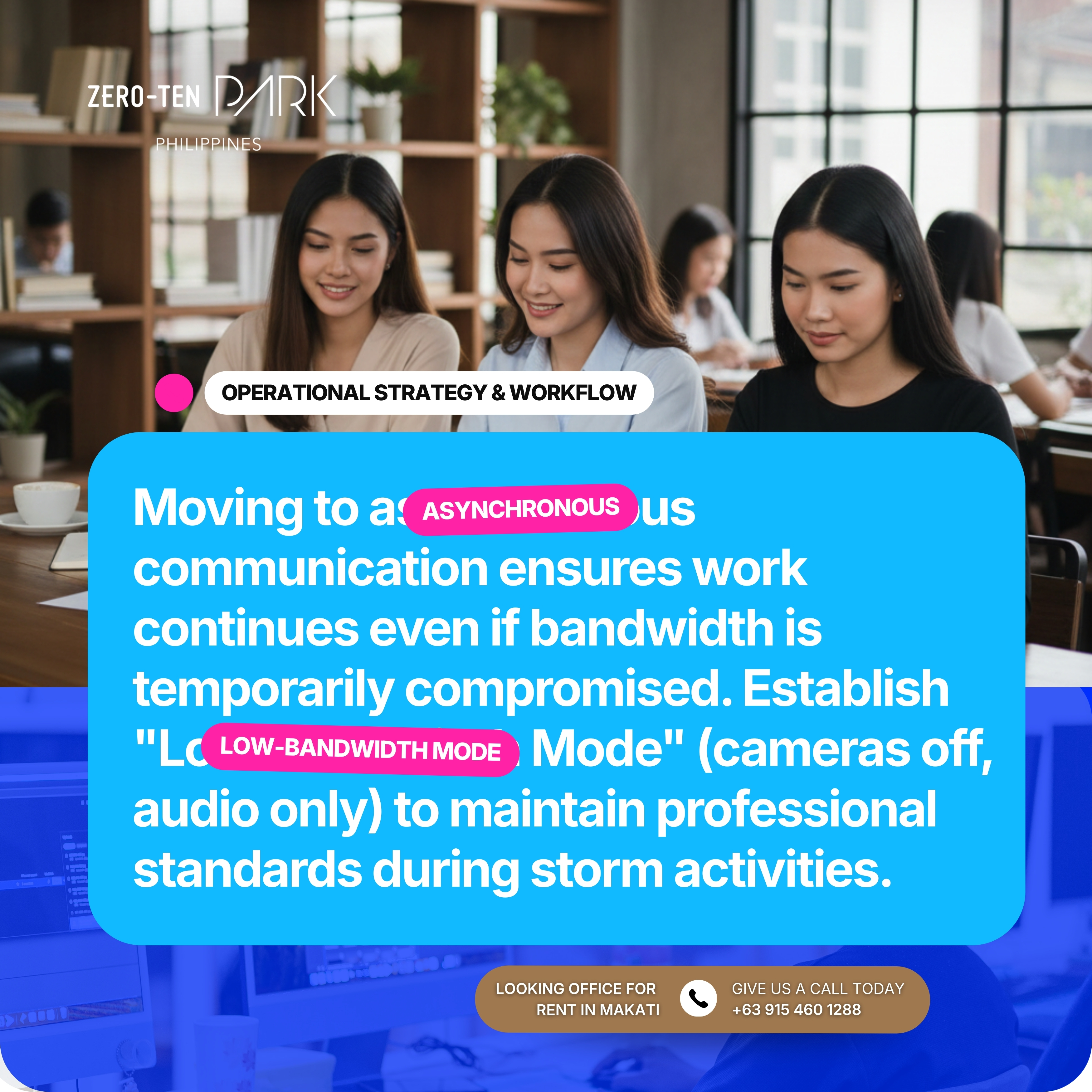
- Asynchronous (Async) Communication: A method of working where a response is not expected immediately. This allows team members to process information and complete tasks according to their local conditions without the pressure of a real-time presence.
- Low-Bandwidth Protocol: A pre-defined set of communication rules triggered during technical strain to reduce the data load on a worker’s connection.
- Synchronous (Sync) Communication: Real-time interaction, such as live video calls or instant messaging “ping-pongs,” which requires high, stable bandwidth.
Implementing the “Low-Bandwidth” Mode
When a team member is operating on a secondary mobile connection or during a period of heavy atmospheric interference, your standard operating procedures must pivot.
- Video-Off by Default: High-definition video is the largest consumer of bandwidth. Establish a culture where, during inclement weather or connectivity issues, cameras stay off. This prioritizes audio clarity and screen-sharing stability, which are more critical for task completion.
- The Triple Documentation Rule: To move away from “meeting-heavy” cultures that drain bandwidth, implement a rigorous documentation standard. Every major decision or update should be:
- Logged in the Project Management Tool (for task tracking).
- Summarized in the Instant Messaging Channel (for immediate awareness).
- Archived in the Internal Knowledge Base (for long-term reference).
- Voice-Note and Video Walkthroughs: Instead of scheduling a live 30-minute sync to explain a task, encourage the use of recorded screen-share videos or voice notes. These files can upload in the background and be viewed by the HQ team at their convenience, seamlessly integrating with your Remote Filipino Team during different time zones.
Handover Protocols for Global Continuity
For MNCs operating with a 12-to-16-hour time difference (such as between the Philippines and the US East Coast), the “handover” is the most vulnerable point of the day.
Instead of relying on a live call at midnight for the local worker, use Standardized Handover Templates. These templates should include:
- Completed Tasks: What was finished during the Philippine shift.
- Blockers: Any infrastructure or technical hurdles encountered.
- Next Steps: What the HQ team needs to do to keep the project moving while the local team rests.
By prioritizing asynchronous documentation, you reduce the “infrastructure anxiety” often felt by talent, empowering your Remote Filipino Team to maintain a high output regardless of temporary local connectivity fluctuations.
BUSINESS CONTINUITY PLANNING (BCP) AND FLEXIBLE WORKSPACES
The final layer of a resilient operations strategy is the Business Continuity Plan (BCP). While individual home-office redundancies are your primary defense, catastrophic events—such as city-wide power grid collapses or major fiber-optic cable cuts—require a more robust solution. For an MNC, integrating professional flexible workspaces into your strategy ensures that your Remote Filipino Team has a “never-fail” destination when home infrastructure is compromised.
Defining the Core Terminology
In the world of global operations, BCP involves specific technical and logistical concepts:
- Business Continuity Planning (BCP): A proactive strategy that outlines the processes and procedures an organization must follow to ensure that critical business functions can continue during and after a disaster.
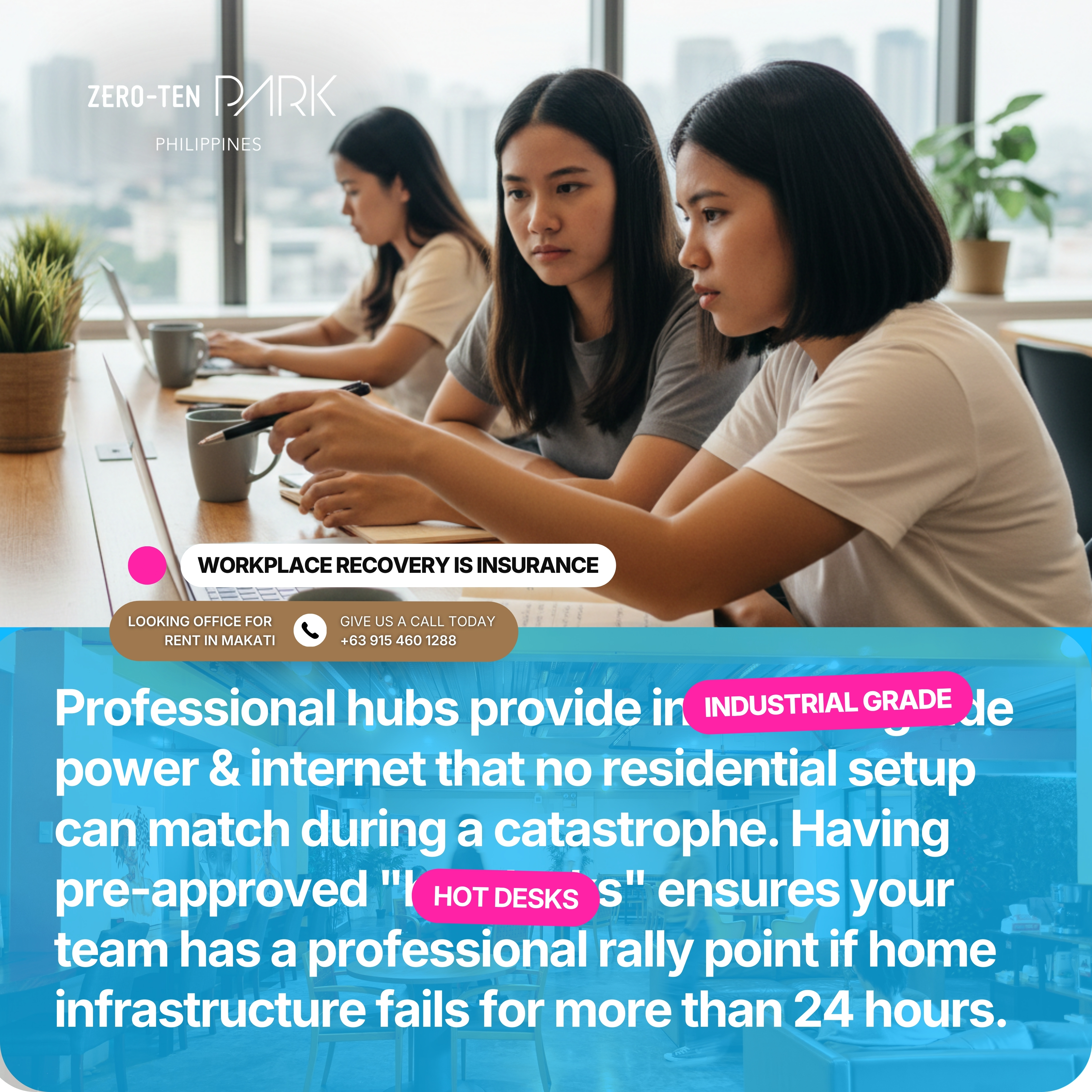
- Workplace Recovery (WR): A specific component of BCP that provides team members with a pre-arranged, fully equipped alternative workspace if their primary location (the home office) becomes untenable.
- Industrial-Grade Redundancy: Infrastructure found in professional office buildings that includes massive diesel-powered generators (capable of running for days) and multiple enterprise-level internet backbones that are far more resilient than residential connections.
The Role of Professional Hubs as a Safety Net
When localized infrastructure fails at the residential level, professional co-working hubs and flexible office providers serve as an essential “Level 4” backup. These facilities are designed for high-stakes business operations and offer stability that a home office simply cannot match during a crisis.
Why Professional Hubs are Non-Negotiable
- Guaranteed Uptime: These spaces are often located in “Information Technology Parks” or Special Economic Zones where the power grid is prioritized. Even during total grid failure, their industrial generators provide seamless transition for lighting, cooling, and hardware.
- Multiple Fiber Backbones: Unlike a home with two ISPs, these hubs often have three or four different enterprise-grade fiber providers coming into the building through different physical routes.
- Crisis Collaboration: In the event of a long-term disruption, having a central “rally point” allows local leadership to coordinate more effectively than they could via struggling mobile networks.
Implementing a “Seat-on-Demand” Strategy
MNCs and startups do not necessarily need to lease a permanent office to gain these benefits. A more cost-effective approach is to utilize “Hot-Desking” or “Pass-based” memberships.
| Strategy | Implementation | Cost-Benefit |
| The “Hot-Desk” Reserve | Pre-pay for a set number of days per month at a nationwide workspace provider. | Low monthly cost; provides an immediate “go-to” location for any staff member. |
| The Regional Hub | Establish a small, permanent “shell” office in a major city like Makati or Cebu. | High stability; serves as the central node for server hardware or local files. |
| Reimbursement Model | Provide a pre-approved “Emergency Workspace Stipend” that allows workers to book a professional desk instantly during a blackout. | Zero fixed cost; highly flexible for geographically dispersed teams. |
By incorporating these professional spaces into your BCP, you remove the “environmental lottery” from your operations. You ensure that even in the face of significant local hurdles, your operations remain steady, secure, and professional.
CULTURAL INTEGRATION AND RESILIENCE: THE HUMAN INFRASTRUCTURE
While power stations and dual-WAN routers provide the physical framework for success, the “human infrastructure” is what ultimately sustains a Remote Filipino Team. In the Philippines, professional resilience is deeply intertwined with cultural values. For a foreign MNC or startup, understanding these nuances is just as critical as managing technical uptime. When a disaster strikes, your response as a leader determines whether your team feels like a disposable resource or a valued part of a global mission.
Defining the Core Terminology
To lead effectively, you must understand the cultural pillars that drive the local workforce:
- Pakikisama: A core Filipino value referring to the tendency to prioritize group harmony and smooth interpersonal relationships. In a remote work context, this translates to high levels of social support within the team.
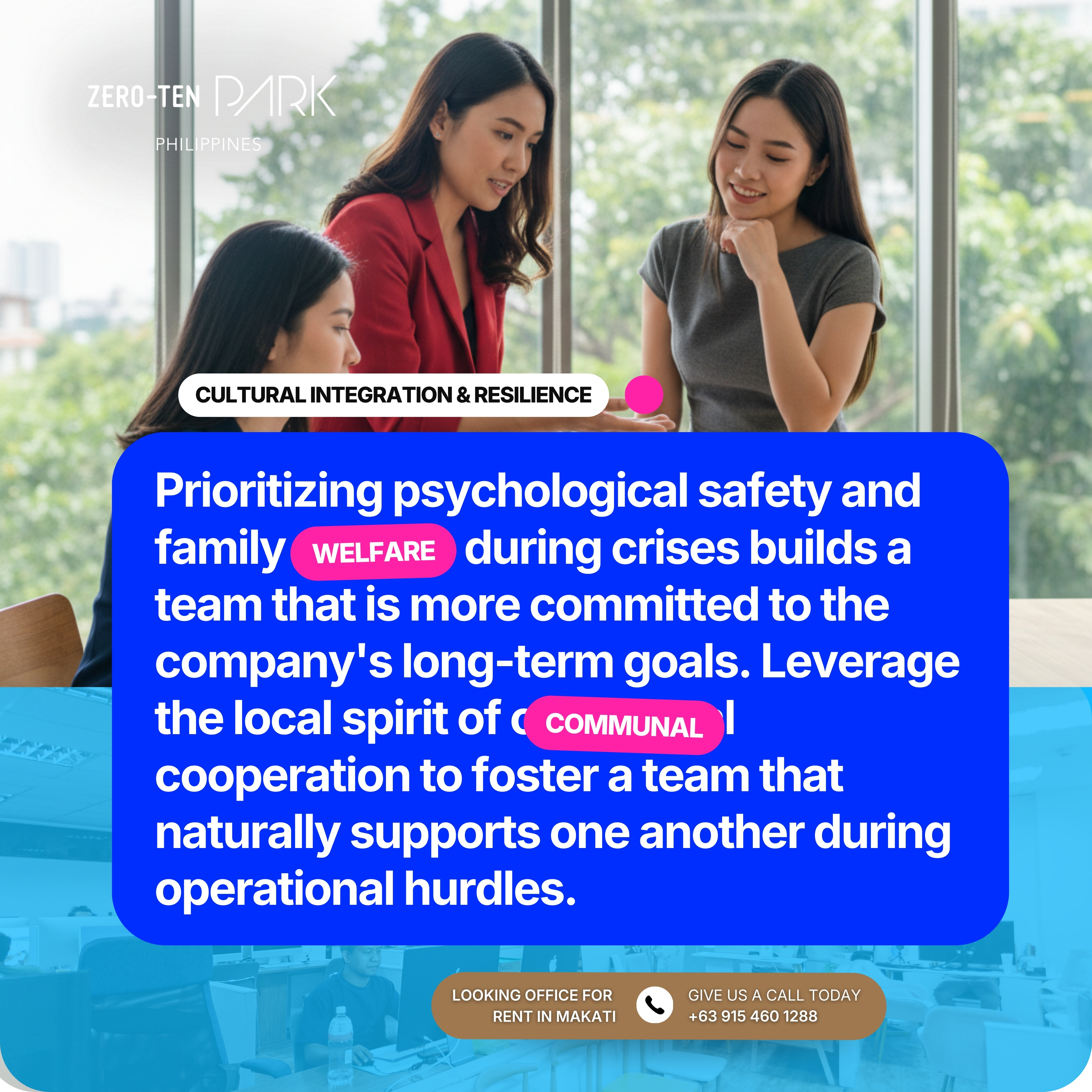
- Bayanihan: The traditional spirit of communal unity and cooperation to achieve a particular goal, especially during times of crisis or hardship.
- Psychological Safety: The belief that one will not be punished or humiliated for speaking up with ideas, questions, concerns, or mistakes—critical when a team member needs to report an infrastructure failure.
Managing Through the “Resilience Paradox”
Filipino workers are world-renowned for their “resilience”—the ability to remain cheerful and productive even in the face of significant personal or environmental adversity. However, for a manager, this can be a double-edged sword. A team member might try to work through a dangerous storm out of a sense of duty, even when their safety is at risk.
Strategies for Cultural Resilience
- The “Safety First” Mandate: Explicitly state that during a “Signal No. 3” typhoon or higher, the safety of the individual and their family takes precedence over immediate deliverables. By giving permission to go offline, you actually build deeper long-term loyalty.
- Micro-Understanding vs. Micromanagement: Rather than intrusive tracking software, practice “micro-understanding.” This means having a pulse on the local weather and regional news. Asking, “I saw there’s a flood in your area, are you and your family safe?” goes much further in the Philippines than it might in other cultures.
- Emergency Check-in Protocols: During a crisis, move communication from a task-based focus to a person-based focus. Use a simple “Green/Yellow/Red” status system in your chat tools so your Remote Filipino Team can quickly communicate their status without needing high bandwidth.
Reward Systems and Retention
Infrastructure stipends aren’t just about equipment; they are a sign of professional respect. When an MNC provides the tools to overcome local hurdles, it signals a commitment to the team’s long-term success.
- The 13th-Month Pay: Beyond being a legal requirement, this is a cultural cornerstone. Paying this early in December helps families prepare for the holidays and reinforces the stability of their employment.
- Health and Wellness Extensions: Consider extending health insurance (HMO) benefits to the team’s dependents. In a region where family is the primary support system, securing the health of the family is the most powerful retention tool available.
Building a “Never-Go-Down” Partnership
Managing a Remote Filipino Team successfully requires a blend of high-tech redundancy and high-touch leadership. By implementing the “Design Mindset”—focusing on tiered power, dual-path connectivity, and geographic dispersion—you eliminate the most common hurdles to productivity. When you pair that with a culture of empathy and “Bayanihan,” you create an offshore operation that isn’t just a cost-saving measure, but a resilient, 24/7 engine of growth for your global enterprise.
HOW ZERO-TEN PARK PHILIPPINES BRIDGES THE INFRASTRUCTURE GAP
For MNCs and foreign startups, providing a resilient environment for a Remote Filipino Team can be a complex administrative burden. Zero-Ten Park Philippines serves as a strategic partner that simplifies this by offering “business-class infrastructure” as a service.
Defining the Core Terminology
- Plug-and-Play Solutions: A business model where office spaces come fully equipped with furniture, high-speed internet, and utilities, allowing a team to begin working immediately without setup delays.
- Employer of Record (EOR): A service where Zero-Ten Park handles the legal employment, payroll, and compliance for your Filipino staff, allowing you to manage their daily tasks without needing a local legal entity.
- Tier-A Infrastructure: A high-standard building classification, such as Zero-Ten Park’s locations in the Frabelle Business Center, which guarantees 100% redundant backup power and enterprise-grade security.
✨ A READY-MADE BUSINESS CONTINUITY HUB
Zero-Ten Park provides more than just a desk; it offers a specialized environment designed to neutralize the infrastructure hurdles discussed in this guide.
- Industrial-Grade Reliability: While home offices may struggle during the typhoon season, Zero-Ten Park locations feature 100% redundant backup power and multiple business-grade fiber internet backbones. This ensures that your Remote Filipino Team has a reliable “safe haven” to maintain 24/7 operations.
- Bilingual Business Support: Through their specialized “Japanese Desk” and international network (spanning Japan, Singapore, and the USA), they act as a cultural and professional bridge, helping foreign leadership navigate local nuances.
- Scalable Compliance and HR: Beyond the physical space, Zero-Ten Park offers Employer of Record (EOR) and payroll services. This means you can scale your team from “Zero to Ten” with full legal compliance, while they manage the mandatory benefits and labor law requirements unique to the Philippines.
By partnering with a global network like Zero-Ten Park, you provide your Remote Filipino Team with a premium workspace that fosters “zero-friction” productivity, ensuring your global operations remain seamless regardless of local environmental challenges.
FREQUENTLY ASKED QUESTIONS
To ensure your Remote Filipino Team is resilient against power and internet failures, a one-time setup stipend of $500 to $1,500 is recommended. This covers a high-capacity portable power station (PPS) and ergonomic furniture. Additionally, a monthly connectivity allowance of $20 to $40 is standard to cover the cost of a secondary backup internet provider.
Metro Manila offers the highest density of specialized talent and premium co-working hubs like Zero-Ten Park. However, to avoid a “single point of failure,” many companies use a Geographic Dispersion strategy. This involves hiring core leadership in Manila while distributing other roles across the Visayas and Mindanao regions to ensure at least one part of the team remains online during localized typhoons.
While you cannot control the weather, you can control the equipment. By providing an Infrastructure Stipend, you can include “Uptime Requirements” in your Service Level Agreements (SLAs). If the company funds the backup power and dual-WAN setup, it becomes a reasonable performance metric to expect the employee to switch to backup systems during an outage.
This is where Workplace Recovery plans come in. Your Business Continuity Plan (BCP) should include a pre-approved list of co-working spaces or flexible offices. If a team member’s home power or internet is out for more than 24 hours, they should be required to relocate to a professional hub that offers industrial-grade redundancy and diesel generators.
Rather than forcing your Remote Filipino Team to work graveyard shifts (which can lead to high turnover), adopt an Asynchronous-First culture. Use the “Triple Documentation Rule” and standardized handover templates. This allows your team in the Philippines to push work forward while you sleep, creating a seamless 24-hour production cycle.

GET A QUOTE TODAY
"*" indicates required fields
Ready to level up your business presence and save more every month? Complete the form now and our team will handle the rest.