The First 90 Days: How to Onboard a Philippine Remote Team Without Losing Them

The first person your new Philippine hire talks to every morning is their laptop screen.
If you haven’t thought carefully about what that experience actually feels like, you’re likely losing people faster than you realise — not to competitors immediately, but to disengagement first. The talent pipeline in the Philippines is genuinely strong. The issue, almost universally, is the gap between “hired” and “actually part of the team.”
Here’s what a solid first 90 days looks like, and where Australian companies tend to get it wrong.
Why Philippine Onboarding Requires a Different Approach
There’s a concept in Filipino culture called pakikisama — a deep, genuine value placed on group harmony and belonging. It shapes how Filipino employees approach work, feedback, authority, and team dynamics in ways that a default Australian onboarding process won’t account for.
This isn’t about making broad generalisations. It’s about recognising that a process designed for someone sitting in your Sydney office won’t land the same way for someone in Cebu who hasn’t met their manager in person and whose cultural instincts about workplace relationships are genuinely different.
A few specific things to understand:
Indirect communication is the norm, not a character flaw. Filipino workplace culture often involves expressing disagreement or confusion indirectly. An employee who says “yes, I understand” in a meeting may actually mean “I don’t want to disrupt this meeting by admitting I’m confused.” If your onboarding relies on people putting their hand up and asking for help, it may not surface the gaps it’s supposed to.
Hierarchy carries genuine weight. Respect for seniority is sincere, not performative. A new hire may feel genuinely uncomfortable pushing back on a manager’s decision even when they have a valid point. This isn’t something to fix — it’s something to design around. Create channels where questions and feedback can be raised without it feeling like a challenge to authority.
Belonging before performance. Most Australian onboarding focuses on tools, processes, and KPIs. That’s necessary. But for many Filipino employees, feeling like they actually belong to the team — that people know their name, that their manager notices how they’re going — comes first. Skip this step and you’ll get compliance without commitment.
The First Two Weeks: Don’t Rush to Output
The instinct in lean teams is to get the new hire producing something useful as quickly as possible. This is understandable and almost always counterproductive.
The first two weeks should be predominantly about connection and context. Delivery can come later — and will come faster if the foundation is solid.
What this looks like in practice: a video call with the direct manager on day one — not an onboarding recording, a real conversation. Individual introductions to every person the new hire will work with directly. A clear explanation of why the company exists and where their role actually matters, not just a job description reread.
And critically: access to everything they need before day one. System credentials, tools, reading materials, a day one schedule. New hires who spend their first morning waiting for laptop access or email login feel useless immediately. That first impression is hard to undo, and it’s almost entirely avoidable.
Days 15–60: Building Real Competence
Once the basics are covered, this phase is about helping your new hire develop genuine confidence in their role — not just following processes, but understanding why those processes exist.
A buddy or mentor within the team. Not a formal performance manager — someone the new hire can ask “stupid questions” without feeling judged. In Philippine workplace culture, admitting you don’t understand something to your direct manager can feel like losing face. A peer removes that barrier entirely.
Deliberately structured early wins. Give your new hire a task they can complete and deliver within their first month — something small enough to succeed at, visible enough to matter. Confidence compounds. People who get an early win engage differently than people who spend their first month waiting to be tested.
Regular one-on-ones. Weekly in the first 90 days isn’t excessive. Keep them to 30 minutes, make the format predictable, and treat them as a two-way conversation rather than a status report.
Honest, careful feedback. Direct feedback matters and shouldn’t be avoided — but how it lands in the Philippine context depends heavily on how it’s delivered. Criticism offered in public, or framed as pointing out failure rather than supporting growth, can damage the working relationship in ways that take months to repair. Private, forward-looking, and specific is the right default.
Days 60–90: From Executing to Contributing
By the end of 90 days, the goal is a team member who can do their job with reasonable independence, who feels genuinely part of the team, and who has enough context to start offering ideas rather than just completing tasks.
Signs you’ve got it right: they’re asking questions proactively, flagging potential problems before they escalate, and have built real working relationships with at least some colleagues.
Signs you haven’t: they only respond when asked, their work is technically correct but context-free, or they’ve gone quiet after an initial burst of activity.
That last one matters. Silence in a remote Philippine employee is rarely a sign of contentment. It more often means disengagement — and disengaged employees who haven’t said anything are usually the ones who resign without warning three months later. If someone has gone quiet, it’s worth a direct, private check-in before it becomes a problem.
The Physical Environment Question
One onboarding element Australian companies consistently underestimate: for many Filipino professionals, being in a physical space with colleagues matters significantly.
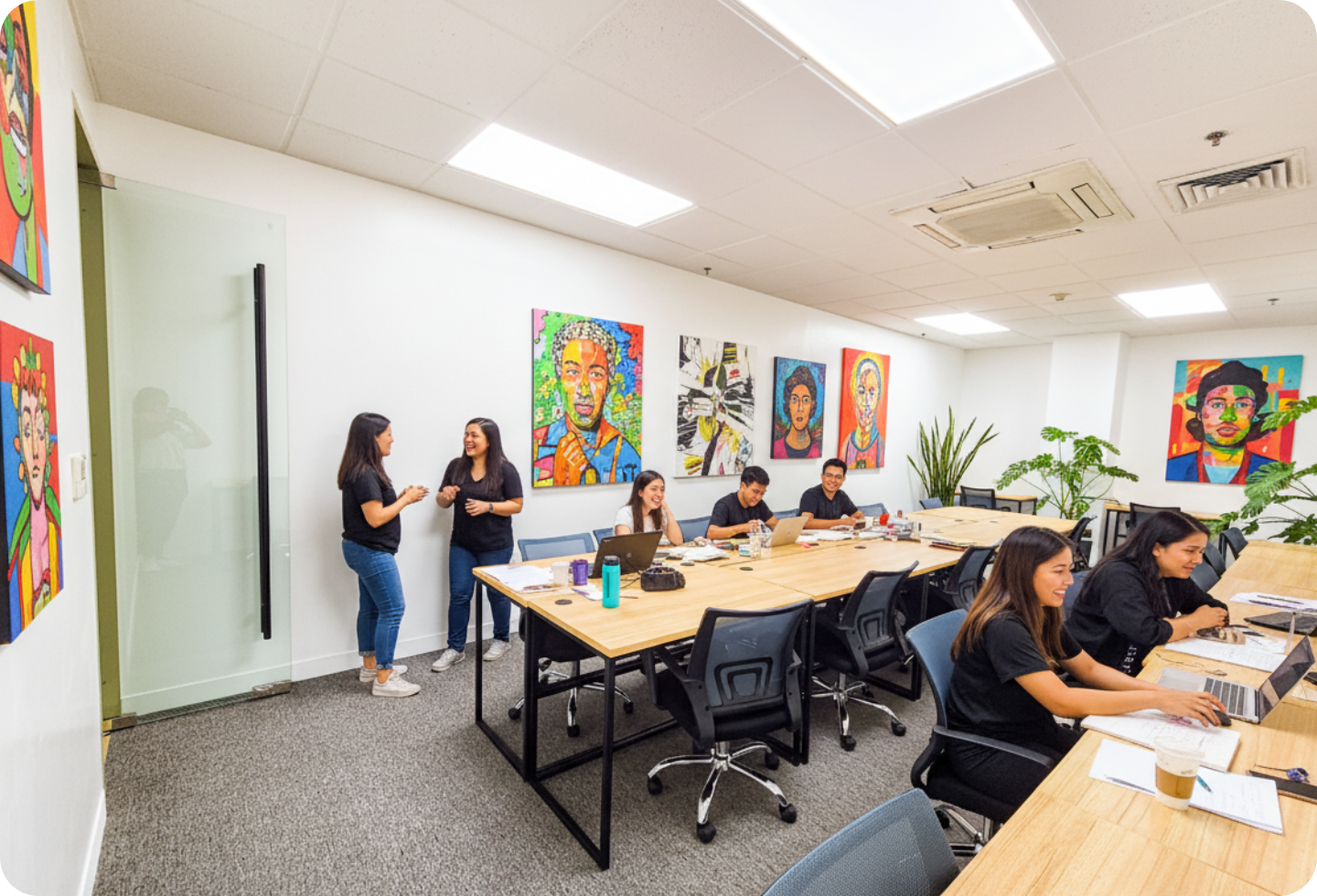
Full remote in the Philippines can be isolating in ways that differ from the Australian remote experience. The alternative — access to a coworking space or a managed office environment — gives your employees a place to go, a professional context to work within, and the kind of incidental collaboration that Slack channels don’t replicate.
Companies that have their Philippine team working from a real office, even part-time, tend to report faster onboarding, stronger team cohesion, and lower early attrition. People who work alongside others pick things up faster, feel more accountable to the team, and generally stay longer.
The 90-Day Conversation
At the end of 90 days, sit down — virtually or in person — for a real check-in. Not a performance review. A two-way conversation about how things have actually gone.
Ask them what was harder than expected. Ask what they wish someone had told them on day one. Ask what would help them do their job better.
Then act on the answers. Philippine employees who see that their feedback results in actual change become genuine advocates for the team and the company. Those who feel their input disappears into a void go quiet and start looking elsewhere.
The first 90 days set the tone for everything that follows. Done well, it produces team members who are invested, capable, and loyal. Done poorly, it produces early turnover and a cycle of rehiring that costs far more than the onboarding investment ever would have.
If you haven’t yet, it’s worth reading our guides on what to pay your Philippine hire and how to structure working hours across time zones. And when you’re ready to hire, our local team can get you started.
 >
>