The “2-Minute Rule” and Other Small Productivity Habits That Actually Work

Most employees do not struggle with productivity because they lack ambition.
They struggle because modern work has become mentally overwhelming.
Unread emails pile up faster than people can answer them. Notifications constantly interrupt focus. Meetings consume hours of the day. Employees switch between tasks so frequently that many finish work mentally exhausted while still feeling unproductive.
This is one reason traditional productivity advice often fails.
Most workplace productivity content focuses on dramatic life changes:
- waking up earlier,
- overhauling entire routines,
- maximizing every hour,
- or becoming endlessly disciplined overnight.

Part 1: Why Small Productivity Habits Work Better Than Extreme Systems
One of the biggest misconceptions about productivity is assuming successful people rely mainly on motivation.
In reality, highly productive professionals usually rely more on systems than emotional energy.
This distinction matters because motivation fluctuates constantly.
Some days employees feel focused and energized. Other days, even simple tasks feel mentally heavy.
Small productivity habits work because they lower the psychological barrier to action.
According to research surrounding habit formation and behavioral psychology from James Clear’s Atomic Habits research, behaviors become more sustainable when they feel easy enough to repeat consistently.
This is where the “2-Minute Rule” becomes powerful.
The concept is simple:
if a task takes less than two minutes, do it immediately.
Examples include:
- replying to a short email,
- organizing files,
- updating a calendar,
- writing down a task,
- or confirming a meeting.
At first glance, this seems almost too simple to matter.
But psychologically, it prevents small tasks from accumulating into mental clutter.
And mental clutter affects focus far more than most employees realize.
Every unfinished task quietly occupies cognitive space. Employees carry mental reminders throughout the day:
“I still need to answer that.”
“I forgot to update that document.”
“I need to schedule that meeting.”
Over time, these unfinished micro-tasks create background stress.
The 2-Minute Rule works because it reduces open mental loops before they become overwhelming.
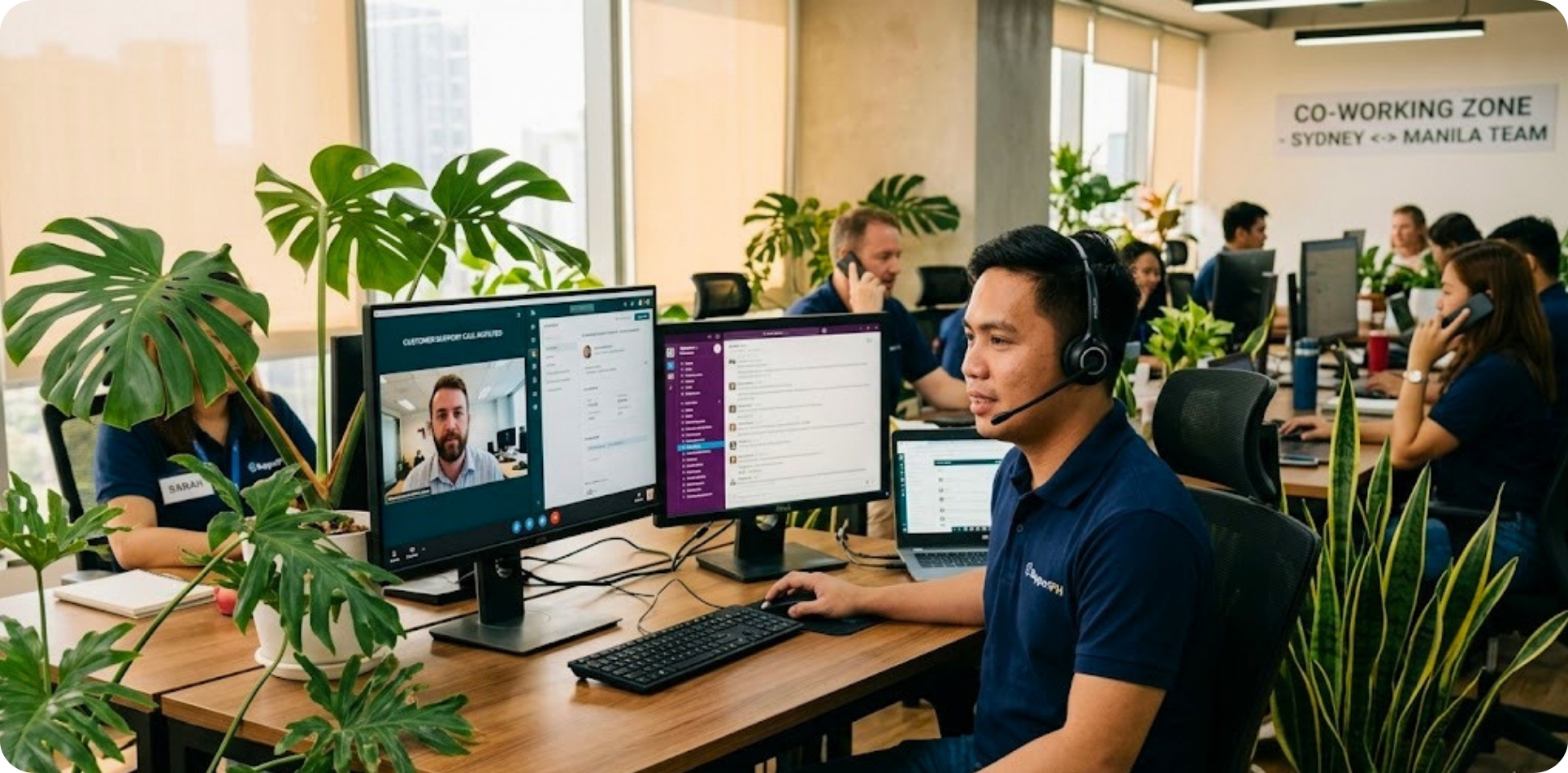
This principle becomes especially important in remote work environments common within Employer of Record Philippines teams. Digital work naturally increases task fragmentation because employees constantly receive small requests throughout the day.
Without systems for handling small responsibilities efficiently, employees often experience unnecessary cognitive overload.
Productive people understand that maintaining clarity matters just as much as completing large projects.
Part 2: Productivity Improves When Habits Reduce Friction
One reason employees procrastinate is not laziness.
It is friction.
Tasks that feel:
- unclear,
- emotionally overwhelming,
- mentally demanding,
- or difficult to start
naturally create resistance.
Behavioral science consistently shows that human beings tend to avoid actions requiring excessive activation energy.
This is why small habits work so effectively.
They reduce friction.
For example, productive employees often use habits like:
- preparing tomorrow’s task list before ending the workday,
- organizing workspaces briefly before leaving,
- opening documents before starting tasks,
- or setting clear priorities early in the morning.
These habits seem minor operationally.
Psychologically, they are significant.
Because decision-making itself consumes mental energy.
According to research on decision fatigue referenced by Harvard Business Review, constant decision-making reduces cognitive performance and increases mental exhaustion over time.
Small productivity systems reduce unnecessary decisions.
Employees who already know:
- what task to start,
- where materials are located,
- and what priorities matter most
experience less mental resistance beginning work.
This explains why productive people often appear calmer under pressure.
Not because they experience less workload.
But because their systems reduce avoidable mental friction.
Interestingly, many employees assume productivity requires constantly pushing harder.
In reality, sustainable productivity often comes from making work psychologically easier to begin.
That distinction changes everything.
Especially for employers focused on hiring in the Philippines through an Employer of Record Philippines model, understanding productivity psychology helps improve both performance and employee well-being.
Because employees do not consistently perform well through pressure alone.
They perform well when workflows feel manageable enough to maintain focus consistently.

Part 3: The Best Productivity Habits Protect Mental Energy
One of the biggest misconceptions about productivity is assuming successful people rely mainly on motivation.
In reality, highly productive professionals usually rely more on systems than emotional energy.
This distinction matters because motivation fluctuates constantly.
Some days employees feel focused and energized. Other days, even simple tasks feel mentally heavy.
Small productivity habits work because they lower the psychological barrier to action.
According to research surrounding habit formation and behavioral psychology from James Clear’s Atomic Habits research, behaviors become more sustainable when they feel easy enough to repeat consistently.
This is where the “2-Minute Rule” becomes powerful.
The concept is simple:
if a task takes less than two minutes, do it immediately.
Examples include:
- replying to a short email,
- organizing files,
- updating a calendar,
- writing down a task,
- or confirming a meeting.
At first glance, this seems almost too simple to matter.
But psychologically, it prevents small tasks from accumulating into mental clutter.
And mental clutter affects focus far more than most employees realize.
Every unfinished task quietly occupies cognitive space. Employees carry mental reminders throughout the day:
“I still need to answer that.”
“I forgot to update that document.”
“I need to schedule that meeting.”
Over time, these unfinished micro-tasks create background stress.
The 2-Minute Rule works because it reduces open mental loops before they become overwhelming.
This principle becomes especially important in remote work environments common within Employer of Record Philippines teams. Digital work naturally increases task fragmentation because employees constantly receive small requests throughout the day.
Without systems for handling small responsibilities efficiently, employees often experience unnecessary cognitive overload.
Productive people understand that maintaining clarity matters just as much as completing large projects.
What Modern Employers Need to Understand
The future of productivity is not becoming more extreme.
It is becoming more human.
Employees today are navigating work environments filled with:
- constant digital stimulation,
- communication overload,
- emotional fatigue,
- and increasing cognitive demands.
Under these conditions, productivity systems only work if they are realistic enough to sustain consistently.
This is especially important for businesses building global teams through an Employer of Record Philippines setup. Filipino employees are widely recognized for adaptability, resilience, and strong work ethic. But like employees everywhere, they still experience mental fatigue, distraction, and cognitive overload.
The most effective workplaces understand that productivity is not built through pressure alone.
It is built through systems that:
- reduce friction,
- support focus,
- improve clarity,
- and protect mental energy over time.
And often, the habits creating the biggest long-term impact are not dramatic at all.
They are the small, repeatable behaviors employees continue doing even on low-energy days.
Because sustainable productivity rarely comes from massive life overhauls.
More often, it comes from small habits repeated consistently enough to make work feel lighter, clearer, and more manageable every day.