Coworking Space Makati: 5 Proven Ways Law Firms Keep Confidentiality

Why Law Firms Are Considering a Coworking Space in Makati
The idea of a law firm operating inside a Coworking Space Makati would have sounded highly unlikely a decade ago. Legal work has traditionally been synonymous with traditional private offices, strictly controlled access, and heavy mahogany doors.
However, the workplace landscape has shifted rapidly. Today, law firms—from solo practitioners to boutique legal teams—are actively exploring coworking environments not as a compromise, but as a strategic operational model.
The practical drivers behind this shift include:
- Skyrocketing real estate costs in the Makati Central Business District (CBD).
- A growing preference for agile, flexible leases over multi-year commitments.
- Hybrid work expectations from top-tier legal talent.
- The demand for prime location prestige without the massive upfront capital expenditure.
Yet, one critical concern remains at the center of this transition: confidentiality.
Legal work is fundamentally built on trust. Client data, case strategies, contracts, and sensitive discussions require airtight, controlled environments. The real question isn’t whether coworking is convenient—it is whether it can be made secure enough for ethical legal practice.
At Zero-Ten Park Philippines, the answer depends entirely on design, architectural structure, and usage discipline. This guide breaks down how modern law firms can realistically operate inside a premium coworking space in Makati while maintaining absolute professional confidentiality standards.
1. The Market Reality: Why Coworking Is Growing in Makati
Makati remains the financial engine of the Philippines, hosting a dense mix of multinational corporations, financial institutions, and top-tier professional service providers. Within this ecosystem, choosing a coworking space Makati location has evolved from a “startup trend” into a legitimate premium office alternative for established firms.
Key Market Drivers
- Flexibility Over Rigid Leases: Traditional commercial leases in Makati often lock firms into 3-to-5-year commitments. For law firms with fluctuating caseloads or project-based legal teams, scalable workspace usage mitigates financial risk.
- Prestige Without the Overhead: Operating from a premium Makati CBD address enhances client trust. Coworking allows firms to print a prestigious business address on their letterhead without paying full-floor corporate premiums.
- Turnkey Infrastructure Readiness: Premium spaces eliminate operational downtime by providing plug-and-play access to enterprise-grade high-speed internet, IT support, ergonomic furniture, fully equipped boardrooms, and front-desk reception services.
Strategic Insight: Coworking is no longer just a cost-saving measure; it is a tool for operational efficiency and business agility.
2. The Core Issue: Confidentiality Risks in Shared Ecosystems
Despite the operational benefits, law firms hesitate because the ethical stakes are incredibly high. A breach of attorney-client privilege can jeopardize cases and destroy professional reputations.
In an unmanaged or unstructured shared workspace, risks typically fall into three distinct vectors:
| Risk Vector | Exposure Point | Legal Implication |
| Physical | Documents left on desks, visible screens in open lounges. | Accidental data leaks to competitors or the public. |
| Spatial | Thin walls, overheard conversations in open cafes or uninsulated rooms. | Compromised litigation strategies or witness identities. |
| Digital | Unsecured public Wi-Fi networks, shared printing queues. | Intercepted client data, cyber-vulnerabilities, and compliance failures. |
Strategic Insight: The risk is not the concept of coworking itself—it is an unstructured coworking environment.
3. How Premium Coworking Spaces Architect Security
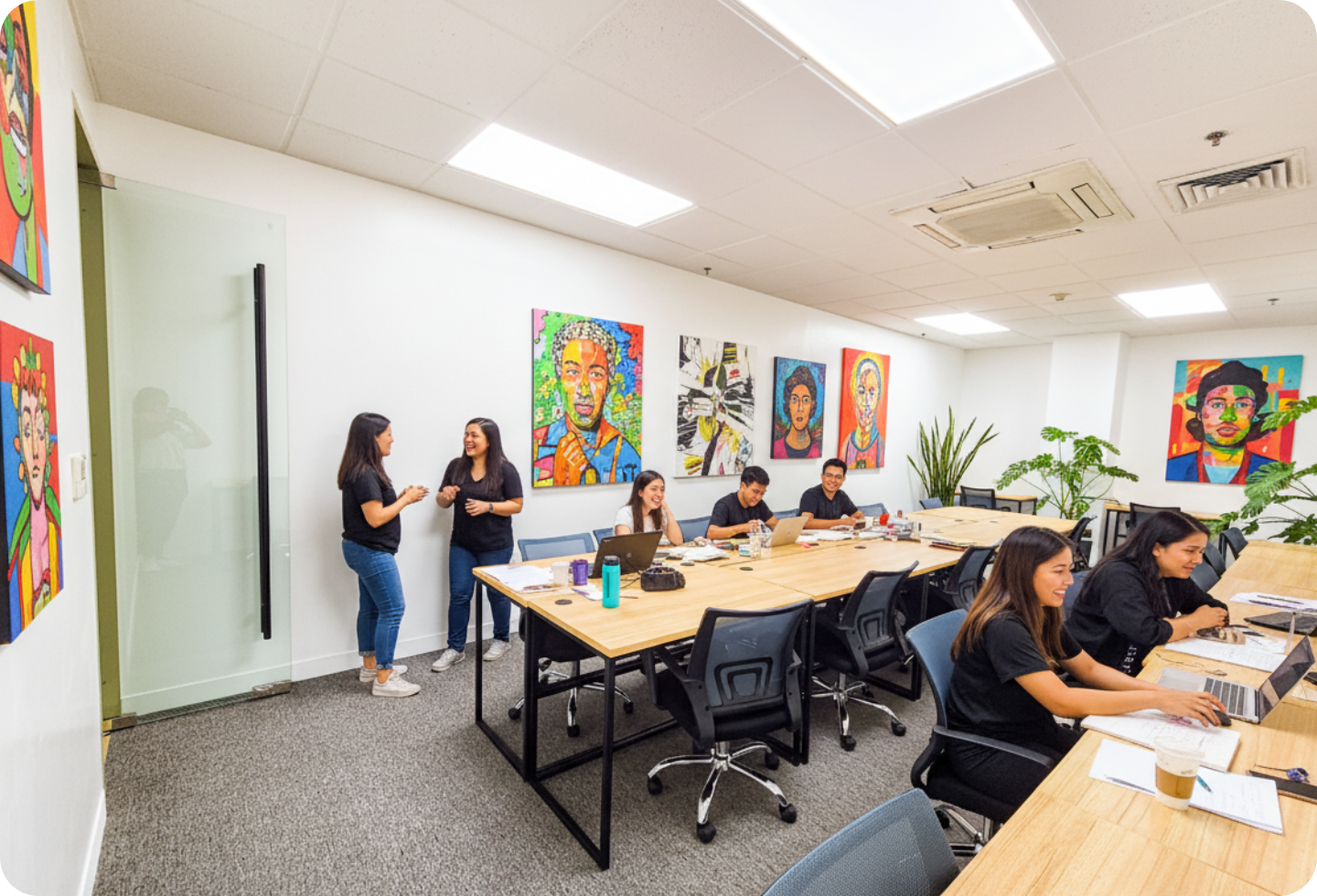
Not all coworking spaces are built equal. Premium facilities in Makati are increasingly engineered with professional service firms (legal, financial, and consulting) in mind, implementing a layered security approach: Physical + Spatial + Digital.
3.1 Private Offices Within the Ecosystem
This is the foundational requirement for any law firm. Instead of open-plan hot-desking, legal teams utilize dedicated, lockable private office suites housed inside the larger coworking facility. This provides a secure perimeter, controlled access entry, and complete isolation for daily casework.
3.3 Zoned Workspace Architecture
Thoughtful layouts enforce physical boundaries. The workspace is split into distinct zones:
- Public/Collaboration Zones: Cafes and open lounges for casual networking.
- Quiet Work Areas: Semi-private zones for focused, non-sensitive tasks.
Restricted Private Wings: Secure corridors housing private offices with badge-only access.
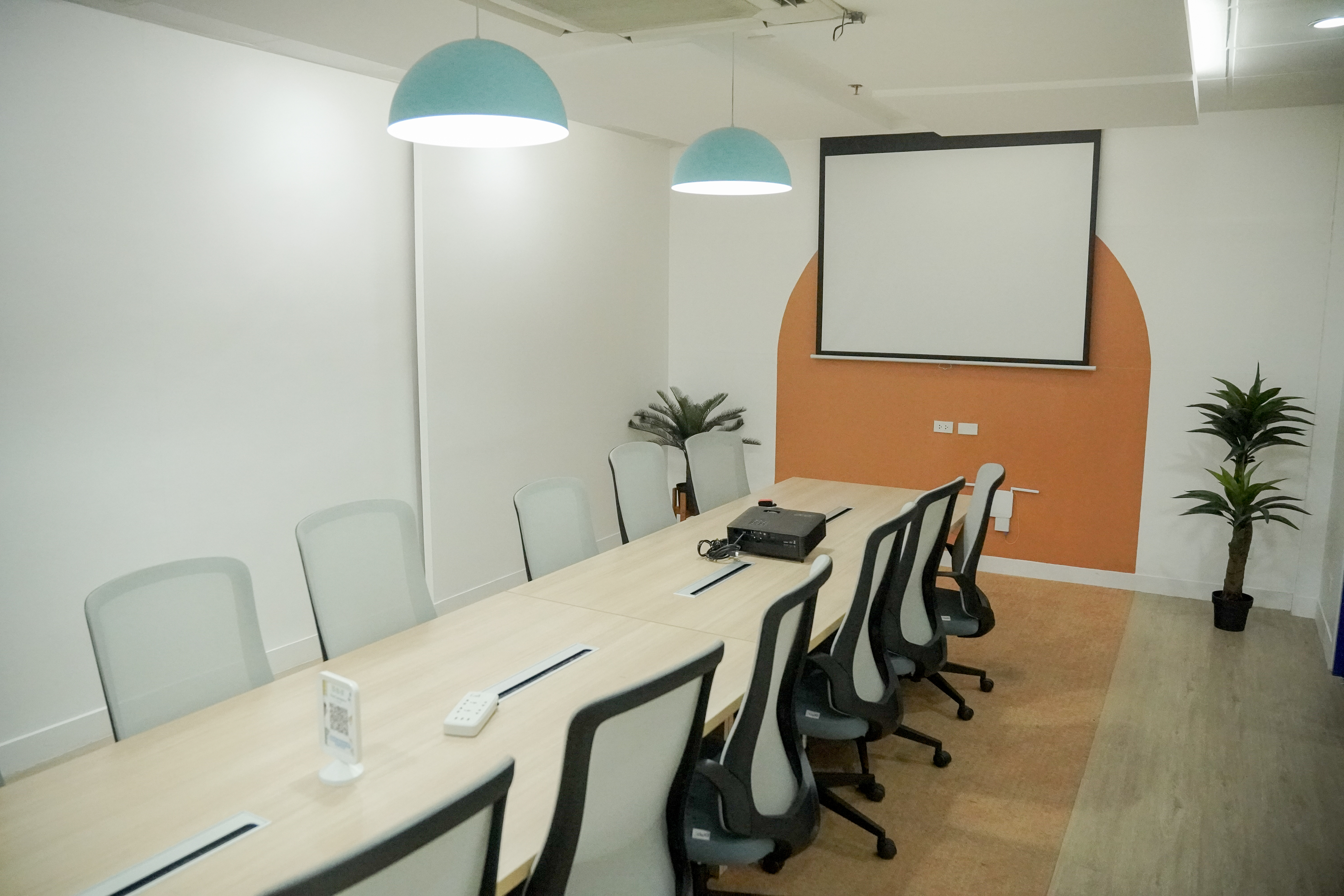
3.2 Acoustically Insulated Meeting Rooms
Client consultations, depositions, and sensitive case strategy sessions demand total privacy. Modern premium spaces feature meeting rooms built with high-STC (Sound Transmission Class) acoustic insulation, ensuring that sound does not bleed into communal hallways.
3.4 Enterprise-Grade Digital Security
Top-tier providers protect your digital footprint through:
- Custom Virtual Local Area Networks (VLANs) and private SSIDs for individual firms.
- Hardware firewalls and strict network isolation protocol.
Secure pull-printing systems where a print job is only released when the attorney taps their unique keycard or enters a PIN at the machine.
4. Internal Discipline: Non-Negotiable Legal Protocols
Even the most securely designed workspace will fail if internal operational discipline lapses. Law firms transitioning to a flexible model should enforce the following protocols:
- The “Clean Desk” Rule: All physical case files, notes, and contracts must be locked away in secure mobile pedestals or filing cabinets at the end of every day.
- Privacy Screen Protectors: Polarized privacy filters should be mandatory on all staff laptops to prevent “visual hacking” from side angles.
- Communication Hygiene: Sensitive phone calls or virtual hearings must never be conducted in open communal spaces. Attorneys should utilize soundproof phone booths or their private office suites.
Secure Cloud Infrastructure: Leverage robust, encrypted legal practice management software (e.g., Clio, MyCase) alongside mandatory multi-factor authentication (MFA) for all staff members.
5. How to Evaluate a Makati Coworking Space for Legal Practice
- Access Control: Are the private office wings protected by RFID keycards, biometric scanners, or traditional keys?
- Acoustic Check: Test the meeting room doors. Can you hear a loud conversation from the hallway outside?
- Guest Management: Is there a managed reception desk to screen visitors, or can anyone walk directly to your office door?
- IT Infrastructure: Can the provider offer a dedicated bandwidth allocation, a static IP, or a private VLAN?
- Aesthetics and Vibe: Does the space maintain a professional, corporate environment suitable for receiving high-value clients?
6. Strategic Benefits for the Modern Firm
When properly executed, a flexible workspace ceases to be a compromise and becomes a competitive edge.
7. When Coworking Is Not the Right Fit
Confidentiality and Flexibility Can Coexist
The assumption that law firms cannot operate out of shared workspaces is an outdated relic of the past.
The reality is that confidentiality does not depend on owning the brick-and-mortar building; it depends on intentional architectural design, secure digital systems, and rigorous internal discipline.
By partnering with a premium provider like Zero-Ten Park Philippines, Makati law firms can successfully capture the massive cost benefits of workspace flexibility without sacrificing an ounce of professional integrity or client trust.
FREQUENTLY ASKED QUESTIONS
No, it does not inherently violate ethical rules. The duty to maintain client confidentiality applies regardless of the physical setting. As long as the law firm takes proactive, reasonable steps to secure physical files, prevent eavesdropping, and protect its digital network, operating from a coworking space satisfies professional compliance standards under the new Code of Professional Responsibility and Accountability.
Yes, provided you choose a premium space that offers acoustically insulated, private boardrooms. It is highly recommended to inspect the room’s soundproofing beforehand. Furthermore, ensure that the booking system displays only your firm’s name or a generic “Private Meeting” label rather than the sensitive identities of the parties involved in the deposition.
Premium coworking spaces mitigate this risk through Secure Print Release systems. When you send a document to a shared network printer, the job sits encrypted in a virtual queue. It will not print out until you physically walk to the machine and scan your personal RFID access card or enter your unique PIN. This prevents documents from sitting unattended on an open tray.
A premium workspace features a dedicated, professionally staffed reception desk. Front-of-house teams act as your firm’s administrative gatekeepers. They will check in your guest, have them wait in a professional lounge area, and immediately notify you of their arrival. Guests are never permitted to wander unescorted into the private office wings.
Most premium spaces in Makati allow private office tenants to set up their own secure routers, firewalls, and network configurations. For firms requiring physical hardware infrastructure, providers often offer options to install equipment within a secure, locked server closet or allow the firm to maintain an entirely self-contained network infrastructure within their leased private suite.
Looking for a professional coworking space in Makati?