Retaining Top Philippines Tech Talent With Local EOR Benefits

Philippine engineering and operations teams are among the most skilled in Asia — yet turnover rates in the sector remain stubbornly high. The culprit is rarely compensation. More often, it is the gap between what remote employees need and what a purely digital employment model can deliver.
What People Ops leaders need to know
- Salary alone does not retain Filipino talent. Statutory compliance gaps, missing local benefits, and social isolation drive more exits than compensation shortfalls.
- De minimis benefits and rice allowances are tax-exempt perks that cost relatively little yet signal deep cultural respect — and most global EOR platforms skip them entirely.
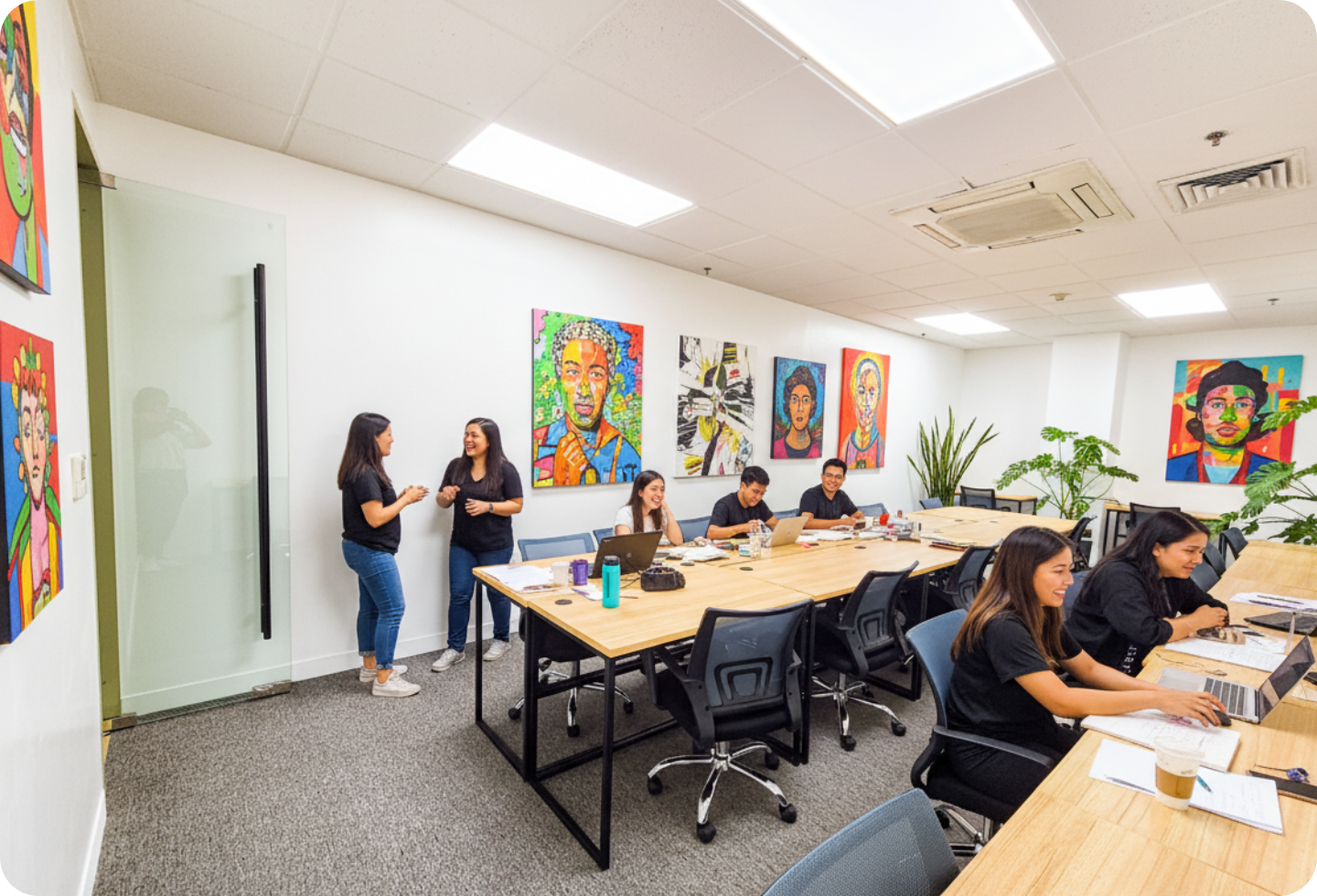
- Hybrid physical infrastructure — access to modern coworking hubs in Cebu or Makati — reduces burnout and builds team identity that fully remote setups cannot replicate.
- Family HMO coverage for dependents is the single most-requested benefit upgrade among Filipino professionals, consistently outranking base-salary increments in exit surveys.
- A local EOR with in-country People Ops support handles the statutory, cultural, and community layer so your foreign HR team does not have to reinvent the wheel.
Why Higher USD Salaries Alone Fail to Stop Churn
When a Filipino senior engineer hands in their resignation, the exit interview almost always surfaces the same phrase: "I just felt unsupported." According to labor data tracked by the National Economic and Development Authority (NEDA), voluntary attrition in the Philippines' information and communicationstechnology (ICT) sector remains a persistent challenge for foreign-headquartered employers, with mid-career professionals citing benefit gaps and administrative friction as primary push factors — often ahead of base pay dissatisfaction.
The math looks seductive from a foreign headquarters: offer a 20% salary premium over local market rates, and retention should follow. In practice, that logic breaks down quickly. A developer earning ₱90,000 a month who cannot get a straight answer on their SSS contribution status, whose HMO card does not cover their children, and who works from a cramped bedroom with no professional community nearby will still take the call from a local company offering ₱80,000 — because that company makes them feel seen.
Philippines talent retention EOR strategy, when done well, addresses the full employment experience — not just the number on the payslip. That distinction is what separates a local in-country partner from a software-first global platform that processes payroll in Manila the same way it processes payroll in Manchester.
What Statutory Layer Are Most Global EOR Platforms Missing?
Global EOR platforms automate Philippine statutory contributions — SSS, PhilHealth, and Pag-IBIG — but automation is not the same as expertise. When an employee's SSS contribution history has a gap from a previous employer, when a PhilHealth claim is disputed, or when a Pag-IBIG housing loan application requires employer certification, a software dashboard offers little comfort. These moments are where local People Ops support becomes a genuine retention asset.
For context, the three core statutory contributions work as follows (all figures are estimates — confirm current rates with the respective agencies before relying on them for payroll):
- SSS (Social Security System): Both employer and employee share monthly contributions on a tiered schedule based on monthly salary credit. The current combined rate sits at approximately 14% of monthly salary credit, with the employer shouldering the larger share.
- PhilHealth: The national health insurance contribution is set at a percentage of basic monthly salary (currently approximately 5%, split equally between employer and employee — estimate, confirm current rates), covering inpatient and outpatient services.
- Pag-IBIG (HDMF): The Home Development Mutual Fund contribution enables housing loans and provident savings. Monthly contributions are typically ₱100 from the employee and ₱100 from the employer at minimum, scaling with salary — estimate, confirm current rates.
What global platforms rarely handle is the human layer: explaining to a first-time employee why their net pay differs from their gross offer, walking a senior developer through a PhilHealth reimbursement, or certifying Pag-IBIG records for a home purchase. These touchpoints matter enormously in Philippine workplace culture, where trust is built through personal accountability rather than automated email confirmations.
People Ops note: If your current EOR cannot name a local contact who answers statutory queries within one business day, your employees are already feeling the gap. See how Zero-Ten Park's statutory compliance guide for SSS, PhilHealth, and Pag-IBIG breaks down every contribution obligation in plain language.
Beyond the three core contributions, BIR withholding tax computation is another friction point. Under the TRAIN Law, individual income tax brackets apply progressively — and errors in monthly withholding surface as painful year-end tax liabilities for employees. A local EOR that runs payroll with in-country BIR expertise prevents those surprises and, by extension, prevents the resentment that follows them.
Which Cultural Benefits Actually Move the Needle on Philippine Employee Retention?
The most effective components of a Philippines employee benefits package are not the most expensive ones — they are the most culturally resonant. Filipino professionals have grown up in a workplace culture shaped by specific norms around family, reciprocity, and community. A benefits strategy that ignores those norms will always underperform, regardless of the dollar figure attached to it.
De Minimis Benefits and the BIR Tax-Exempt Advantage
Under BIR Revenue Regulations on De Minimis Benefits (), employers may provide certain non-monetary or supplemental benefits that are exempt from income tax and fringe benefits tax, up to prescribed ceilings. These include:
- Rice subsidy: Up to ₱2,000 per month or one 50-kg sack of rice per month — estimate, confirm current BIR ceiling. This is not a luxury; rice is a staple, and providing it signals that the employer understands daily Filipino household economics.
- Clothing and uniform allowance: Up to ₱6,000 per year — estimate, confirm current rate. Even for remote workers, a clothing allowance communicates professional respect.
- Medical cash allowance to dependents: Up to ₱1,500 per semester — estimate, confirm current rate. Small in absolute terms, but meaningful as a family-care gesture.
- Laundry allowance, meal allowance, and achievement awards also fall within de minimis ceilings and can be structured as part of a total rewards package with zero additional tax burden on the employee.
Why this matters for retention: De minimis benefits are exempt from employee income tax, meaning the employee receives their full face value. A ₱2,000 monthly rice allowance costs the employer ₱2,000 and delivers ₱2,000 of perceived value — compared to a salary increment of thesame amount, which loses a portion to withholding tax before the employee ever sees it.
The 13th-Month Pay Obligation and the 14th-Month Gesture
The 13th-month pay is a statutory requirement under Presidential Decree No. 851 — not a discretionary bonus. Every rank-and-file employee in the Philippines is legally entitled to receive it no later than December 24 of each year, equivalent to one-twelfth of their total basic salary earned during the calendar year. Failing to deliver it on time, or miscalculating it, is one of the fastest ways to erode trust with an entire team simultaneously. A local EOR handles this automatically and accurately — estimate, confirm current statutory computation rules.
The 14th-month pay, by contrast, is entirely voluntary — but among top-5% tech and operations talent, it functions as a powerful signal of appreciation. Companies in the Philippines that offer a discretionary 14th-month bonus, even at a modest 50% of monthly salary, consistently report stronger retention scores in the six months following its payment. It is not legally mandated, but culturally, it speaks the language of pagpapahalaga — genuine esteem.
Family HMO Coverage: The Retention Benefit Most Foreign Employers Underestimate
In Philippine culture, family is not a peripheral consideration — it is central to an employee's sense of security and loyalty. Offering HMO coverage that extends to spouses and children is consistently ranked as the top desired benefit upgrade among Filipino professional workers, frequently cited ahead of salary increases in post-offer surveys. A local EOR with established HMO provider relationships in the Philippines can negotiate dependent coverage at group rates that an individual foreign employer cannot access independently.
This is precisely the kind of local benefit infrastructure that global EOR platforms — which process the Philippines as one jurisdiction among dozens — are structurally unable to optimise. For a deeper look at how statutory contributions interact with supplemental HMO coverage, the ZTP masterclass on SSS, PhilHealth, Pag-IBIG, and local HMO is the most complete resource available for Philippine HR teams.
Rice Allowance
Up to ₱2,000/month tax-exempt under BIR de minimis rules. High perceived value, zero income tax impact on the employee. Estimate — confirm current ceiling.
13th-Month Pay
Statutory and non-negotiable. Accurate, on-time delivery builds baseline trust. Miscalculation or delay triggers disproportionate team-wide resentment.
Family HMO
Dependent coverage for spouse and children. Ranked the #1 desired benefit by Filipino professionals. Local EORs access group rates unavailable to foreign direct employers.
14th-Month Bonus
Voluntary but culturally powerful. Even a partial discretionary bonus signals genuine appreciation and drives six-month post-payment retention gains.
De Minimis Package
Clothing, laundry, meal, and medical cash allowances structured within BIR ceilings — tax-free for the employee, predictable cost for the employer.
Performance Recognition
Achievement awards within de minimis limits carry cultural weight. Recognition in front of peers matters deeply in Philippine professional communities.
How Does Hybrid Physical Infrastructure Improve Retention in Philippine Remote Teams?

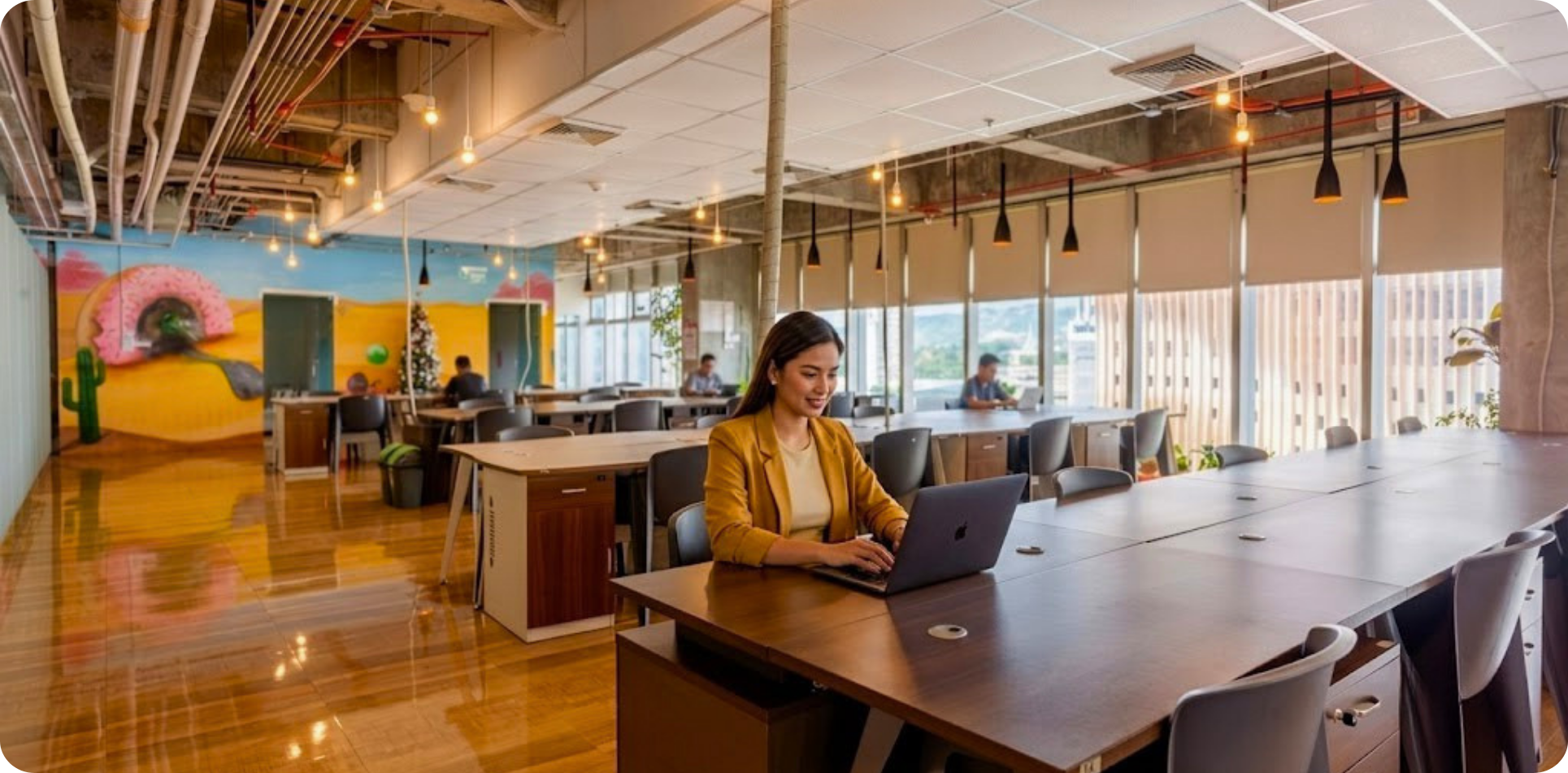
Hybrid physical infrastructure gives remote Filipino employees a professional community anchor that a fully distributed model cannot provide. When employees have access to a modern coworking hub — fast fibre internet, private meeting rooms, a coffee bar, and colleagues working in the same space — they develop a stronger sense of organisational belonging, which directly reduces the social isolation that accelerates voluntary attrition.
Zero-Ten Park operates coworking and private office locations at Cebu IT Park, Mandaue, and Makati — three of the Philippines' most active tech and operations talent clusters. For Cebu-based remote teams in particular, access to a professional hub at the IT Park addresses a specific retention risk: the feeling among senior developers and operations leads that remote work has made them invisible to their employer and peripheral to their professional community.
Cebu and Manila Remote Culture: What the Data Tells People Ops
Cebu and Manila remote culture diverges in ways that a single global HR policy cannot accommodate. Metro Manila remote workers tend to have stronger access to co-working infrastructure independently, but face severe commute pressure when required to attend physical offices — making flexible hub access a quality-of-life benefit rather than a necessity. Cebu professionals, particularly those outside the IT Park corridor, face a different challenge: geographic clustering of tech employment means that social networks tighten quickly, and an employee who feels professionally isolated will receive lateral offers through those networks faster than their Manila counterpart.
Providing Zero-Ten Park hub access as an employee benefit — even on a flexible drop-in basis — signals that the employer has thought carefully about the Cebu remote work experience specifically, rather than applying a generic global remote policy. That specificity is itself a retention signal.
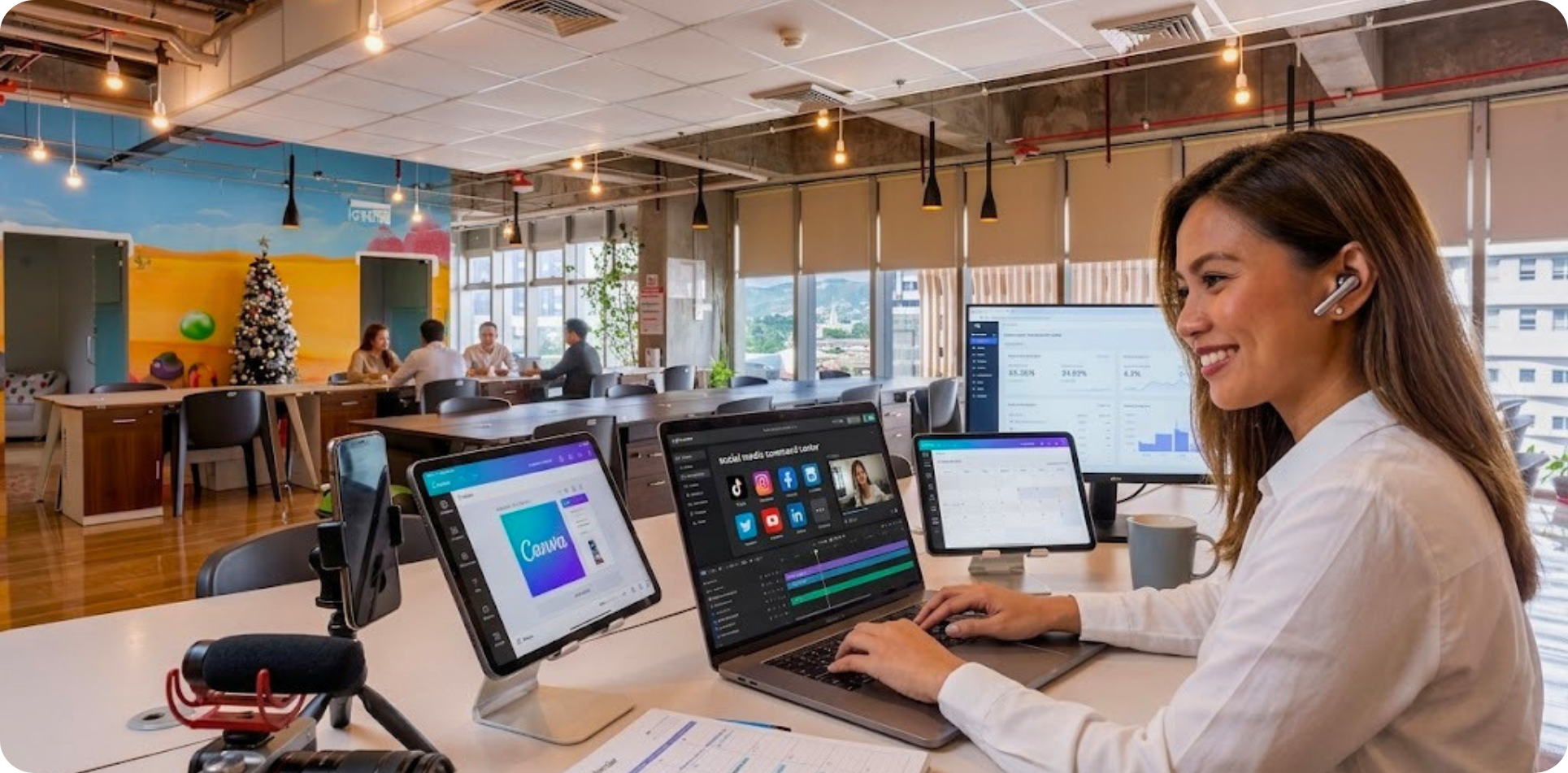
Infrastructure matters beyond connectivity: ZTP's coworking locations offer high-speed fibre, private call booths, professional meeting rooms, and a community of peers across industries. For remote employees who would otherwise work from home indefinitely, hub access is one of the highest-ROI retention investments an employer can make per peso spent.
The Isolation Risk in 100% Work-From-Home Models
Fully remote Philippine teams face a retention risk that rarely appears in engagement surveys until it is too late: professional loneliness. Filipino workplace culture places significant value on pakikisama — the sense of belonging and harmony within a group. A remote work model that offers no physical community touchpoint gradually erodes that sense of belonging, even among employees who initially preferred working from home.
The solution is not mandatory office attendance — that creates its own backlash. Instead, the most effective approach is optional hub access, funded by the employer, with no attendance requirement attached. Employees who want community can find it; those who prefer home can stay there. The mere availability of a professional space communicates that the employer has considered their professional wellbeing beyond the laptop screen.
The Retention Ledger: Visible Benefits vs. Hidden Churn Costs
Every People Ops leader needs a way to present the retention investment case to a cost-conscious CFO. The Retention Ledger below frames each local benefit as a visible monthly cost set against the hidden churn costit prevents. These figures are illustrative estimates based on typical Philippine ICT market conditions — confirm with your local EOR before budgeting.
| Retention Lever | Visible Monthly Cost (per employee) | Hidden Churn Cost if Skipped |
|---|---|---|
| Rice allowance (de minimis) | ~₱2,000 — estimate, confirm BIR ceiling | Perceived employer indifference; accelerates exit timeline among mid-career staff |
| Family HMO dependent coverage | ~₱800–₱1,500 per dependent/month — estimate, confirm with HMO provider | Top reason cited in exit interviews; losing one senior developer costs 3–6× their monthly salary in recruitment and ramp-up |
| 13th-month pay (statutory) | 1/12 of annual basic salary, accrued monthly — estimate, confirm computation | Late or incorrect payment triggers DOLE complaints and team-wide trust collapse |
| 14th-month discretionary bonus | ~0.5–1× monthly salary, paid annually | Without it, top performers benchmark against competitors who do offer it — and leave quietly |
| Coworking hub access (ZTP) | Flexible day-pass or hot-desk plan — contact ZTP for current rates | Professional isolation erodes engagement scores within 6–12 months; replacement hiring costs dwarf hub access fees |
| Statutory compliance accuracy (SSS/PhilHealth/Pag-IBIG) | Included in local EOR service fee | Contribution errors create personal financial liability for employees; resentment is immediate and rarely recoverable |
| Local People Ops support | Included in local EOR service fee | Without a named local contact, administrative friction compounds — each unresolved issue is a quiet exit in progress |
The pattern in the ledger is consistent: the visible costs are modest and predictable, while the hidden churn costs are large, unpredictable, and self-compounding. Losing a senior engineer triggers a recruitment cycle that typically takes three to five months in the Philippine ICT market, during which remaining team members absorb additional load — accelerating their own disengagement. Retention investment is, in every meaningful sense, a risk management strategy.
CFO translation: If your current global EOR charges a flat monthly fee but cannot itemise what local benefit administration, statutory compliance support, and People Ops touchpoints are included — you are likely paying for payroll processing and calling it employer of record. That distinction has a real cost, and it shows up in your attrition figures. See how local and global EOR models compare in detail at ZTP's local vs. global EOR cost breakdown.
How Does Local EOR Onboarding in the Philippines Become a Retention Event?
EOR local onboarding Philippines done well is not a compliance checklist — it is the first material proof that the employer is serious about the employee's experience. The onboarding window, typically the first 30 to 90 days, sets the psychological contract that either anchors an employee or leaves them perpetually uncertain about whether they made the right choice.
A locally rooted EOR like Zero-Ten Park structures onboarding as a retention event from day one. That means a named local People Ops contact who calls — not emails — to walk the new hire through their payslip, their statutory contribution registrations, their HMO enrolment timeline, and their hub access options. It means the employee's SSS, PhilHealth, and Pag-IBIG numbers are verified and active before their first pay cycle, not chased down three months later when a claim is rejected.
The First Payslip Moment
For many Filipino professionals joining a foreign-headquartered company through an EOR, the first payslip is the first tangible proof that the employment relationship is real and correctly structured. When that payslip arrives with accurate gross pay, correct statutory deductions, proper de minimis line items, and a named employer entity — the employee's confidence in the arrangement rises sharply. When it arrives with unexplained deductions, missing allowances, or a generic platform-generated PDF with no local contact attached, the doubt it plants rarely fully resolves.
Local onboarding also covers the cultural dimension that global platforms simply cannot script: explaining the Philippine payroll calendar, setting expectations around the 13th-month pay schedule, introducing the HMO card process, and — critically — giving the employee a direct line to a human being in the same time zone who can answer questions in Filipino or Cebuano if needed. That human layer is not a premium add-on. It is the baseline of a functioning local EOR service.
Onboarding checklist for local EOR: SSS, PhilHealth, and Pag-IBIG numbers verified ✓ — BIR TIN confirmed and withholding tax schedule explained ✓ — HMO card issued or timeline confirmed ✓ — De minimis benefits enumerated in the employment contract ✓ — Hub access options presented ✓ — Named local People Ops contact introduced ✓. If any box is unchecked at day 30, the onboarding has already created a retention risk. For a comprehensive look at how DOLE compliance intersects with onboarding obligations, see ZTP's guide to DOLE Department Order 174 and EOR compliance.
Community Integration as a Long-Term Retention Strategy
Beyond the first 90 days, retention depends on whether the employee feels they belong to something larger than a Slack channel. Zero-Ten Park's physical locations at Cebu IT Park, Mandaue, and Makati create natural community touchpoints — quarterly networking events, peer learning sessions, and informal co-working days that connect employees across different client companies without compromising confidentiality. For remote workers whose professional identity has been reduced to a video thumbnail, these moments of in-person professional community are genuinely restorative.
The philippines talent retention EOR equation, ultimately, comes down to this: the employer of record that wins on retention is not the one with the slickest dashboard — it is the one whose employees feel genuinely supported, culturally understood, and professionally connected. That combination requires local infrastructure, local expertise, and local presence that no amount of software automation can substitute.
Get ZTP's Philippine Employee Retention & Compensation Benchmark Report
Packed with current market data on salary bands, benefit expectations, HMO provider comparisons, and de minimis structuring guidance — built specifically for Heads of Remote Work and VPs of People managing Philippine teams.
Frequently Asked Questions About Philippines Talent Retention and Local EOR
What is the single most effective retention benefit for Filipino tech professionals?
Family HMO coverage — specifically dependent coverage for spouses and children — consistently ranks as the most desired benefit upgrade among Filipino ICT professionals. It outperforms base salary increments in retention surveys because it addresses the deeply family-centred values of Philippine professional culture. A local EOR can negotiate group HMO rates that foreign direct employers cannot access independently.
Are de minimis benefits in the Philippines actually tax-exempt?
Yes. Under BIR Revenue Regulations on De Minimis Benefits, specific employee perks — including rice allowances, clothing allowances, medical cash allowances to dependents, and meal allowances — are exempt from income tax and fringe benefits tax up to prescribed ceilings. These ceilings should be confirmed against current BIR issuances before structuring a benefits package, as rates are periodically updated.
Why do higher USD salaries fail to stop churn in Philippine engineering teams?
Because salary is only one dimension of the employment experience. Filipino professionals who lack statutory compliance support, family HMO coverage, local People Ops contacts, and professional community infrastructure will leave for employers who provide those things — even at a lower base salary. The feeling of being seen and supported matters more than marginal pay differences once salary crosses a professional comfort threshold.
What is the 13th-month pay requirement in the Philippines?
The 13th-month pay is a statutory obligation under Presidential Decree No. 851, requiring employers to pay all rank-and-file employees an amount equivalent to at least one-twelfth of their total basic salary earned during the calendar year, paid no later than December 24. It is not a discretionary bonus — it is a legal entitlement. Late or incorrect payment exposes the employer to DOLE complaints and severely damages team trust. A local EOR handles accurate computation and timely disbursement automatically — estimate, confirm current statutory computation rules.
How does coworking hub access improve retention for remote Philippine employees?
Coworking hub access addresses professional isolation — one of the primary drivers of voluntary attrition in fully remote Philippine teams. Filipino workplace culture values pakikisama, the sense of belonging within a professional community. Providing optional access to a modern hub like Zero-Ten Park's Cebu IT Park location gives remote employees a professional anchor without imposing mandatory attendance, combining flexibility with community infrastructure that sustains long-term engagement.
What is the difference between a local EOR and a global EOR platform for Philippine hiring?
A global EOR platform processes Philippine payroll as one jurisdiction among many, typically offering automated statutory contributions and a centralised dashboard. A local EOR like Zero-Ten Park provides in-country People Ops expertise, named local contacts, established HMO provider relationships, physical coworking infrastructure, and cultural fluency across Cebu and Manila remote work contexts. That difference shows up directly in employee experience and retention outcomes. For a detailed cost comparison, see ZTP's local vs. global EOR Philippines cost breakdown.
Is the 14th-month bonus mandatory in the Philippines?
No. The 14th-month pay is a voluntary, discretionary benefit — not required by Philippine law. However, among top-tier tech and operations professionals, it functions as a powerful cultural signal of employer appreciation. Companies that offer it, even at 50% of monthly salary, consistently report stronger retention in the six months following payment. It communicates pagpapahalaga — genuine esteem — in a way that salary increments alone do not.
How should a foreign company structure EOR onboarding in the Philippines to maximise retention?
Effective EOR local onboarding in the Philippines should include: verified SSS, PhilHealth, and Pag-IBIG registrations before the first pay cycle; accurate BIR withholding tax setup with a clear explanation to the employee; HMO enrolment with a confirmed card issuance timeline; de minimis benefits enumerated in the employment contract; coworking hub access options presented on day one; and a named local People Ops contact introduced personally. Each element reduces early-tenure uncertainty, which is the primary driver of 90-day voluntary exits.
This article is provided for general information purposes only and does not constitute legal, tax, or financial advice. Philippine statutory rates, BIR de minimis ceilings, and DOLE regulations are subject to change — always confirm current figures with qualified local advisers or the relevant government agencies before making employment or payroll decisions.