Coworking Space in Makati: 7 Smart Benefits for Designers

Creative Work Now Goes Beyond the Project
Architects and designers are no longer judged by finished outputs alone.
Clients increasingly want to understand the thinking behind the work: the design process, the rationale behind decisions, the story of a space, and the expertise of the people creating it. This is why professional visibility now matters more—through project explainers, video case studies, design commentary, podcast guesting, and polished media kits.
For creative professionals, the workspace must now support more than drafting, planning, and client coordination. It must also support presentation, communication, and brand-building.
That is where a coworking space in Makati becomes strategically useful. Beyond being a flexible place to work, it can serve as a professional base for client meetings, collaborative sessions, and content creation that strengthens credibility over time.
1. Why Architects and Designers Are Considering a Coworking Space in Makati
Makati remains one of the Philippines’ most established business districts, with a long-standing concentration of corporate headquarters, professional service firms, commercial spaces, and client-facing enterprises. For architects, interior designers, consultants, and creative studio owners, operating in Makati can help position the business within a high-trust professional environment.
A coworking space in Makati can be attractive because it offers:
1.1 A Professional Business Address
For creatives meeting corporate clients, developers, partners, and suppliers, location affects perception. A Makati base can strengthen credibility during proposals, presentations, and discovery meetings.
1.2 Flexibility Without a Heavy Lease Commitment
Not every creative practice needs a fully built-out studio every day. Flexible workspace arrangements can be useful for solo practitioners, growing design firms, and project-based teams that want access without locking into a large fixed office footprint.
1.3 Ready-to-Use Business Infrastructure
Instead of building an office from scratch, professionals can access essentials such as:
- High-speed internet
- Meeting rooms
- Private offices
- Reception or admin support, depending on the provider
- Client-ready common areas
1.4 A Central Base for Meetings and Collaboration
Makati’s accessibility and business concentration make it practical for client reviews, supplier discussions, team coordination, and presentation days.
2. The Real Shift: Creative Professionals Are Also Building Visibility
Architecture and design have always been visual industries. What has changed is the need to explain the work more publicly and more consistently.
A polished portfolio still matters, but it is no longer the only credibility asset. Architects and designers now benefit from sharing:
- Design thinking and project rationale
- Before-and-after stories
- Material or space-planning decisions
- Client education content
- Professional insights through interviews, podcasts, and short-form video
This matters because marketing for architecture and design is increasingly about building trust before the first inquiry arrives. The AIA’s 2025 guidance on firm marketing emphasizes the value of sharing expertise early so prospects understand a firm’s value before formal engagement.
This creates a dual workflow:
Project work + credibility-building content
A workspace that supports both becomes more valuable than a desk alone.
3. What Makes a Coworking Space in Makati Content-Friendly?
A content-ready workspace does not need to be a full production studio. But it should reduce friction for professionals who regularly record, present, or create client-facing materials.
3.1 Enclosed Rooms for Recording and Focused Conversations
Meeting rooms can support:
- Podcast interviews
- Voice recordings
- Client testimonials
- Design walkthrough discussions
- Short educational videos
The key is privacy, control, and fewer interruptions—not necessarily claiming full studio-grade soundproofing unless technically verified.
3.2 A Professional Visual Environment
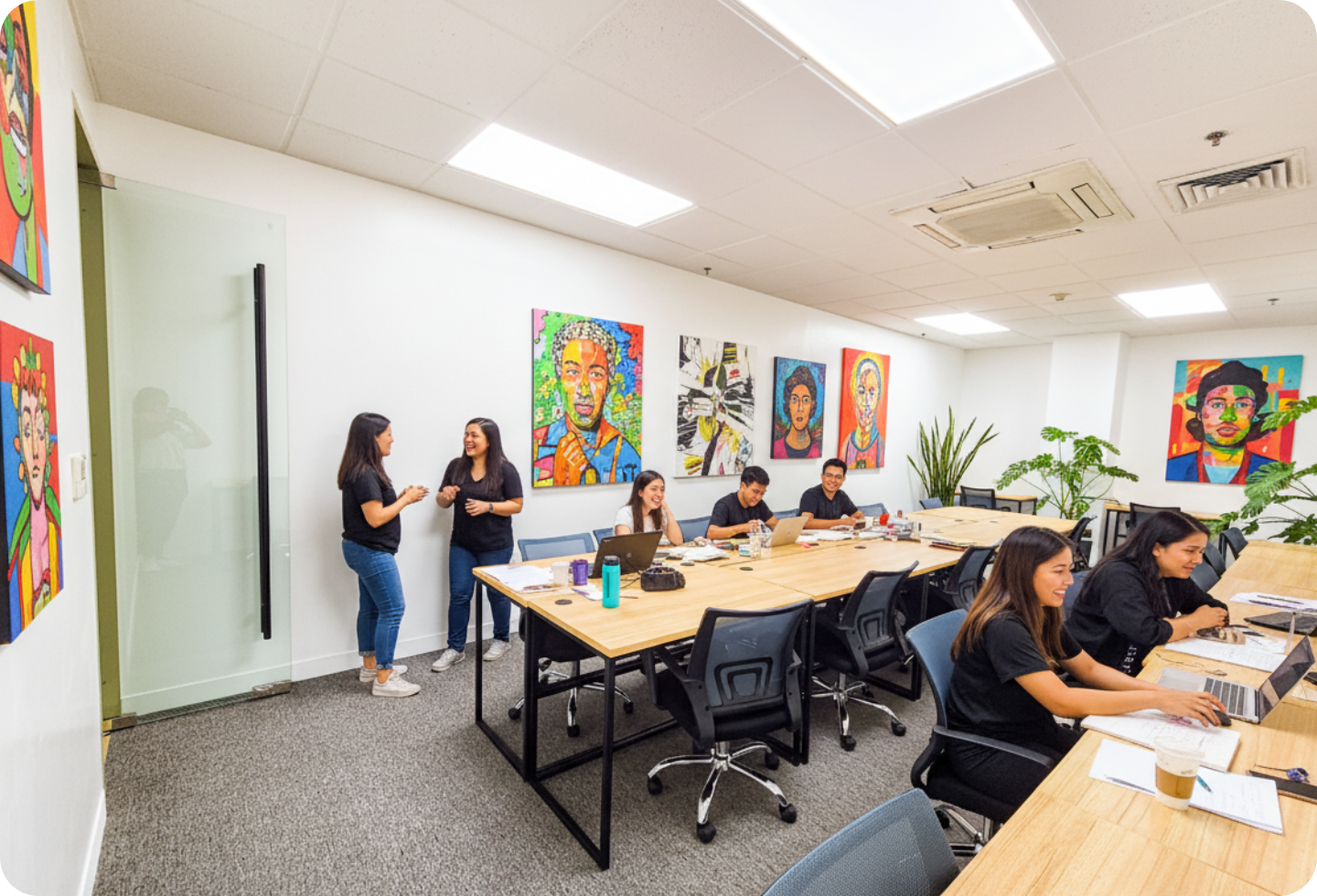
For designers and architects producing video content, the background matters. Clean interiors, well-kept meeting areas, and a polished business setting help content look more credible without requiring a custom studio build.
3.3 Reliable Internet and Power Access
Uploading project walkthroughs, hosting video calls, reviewing large visual files, and coordinating content distribution all depend on stable infrastructure.
3.4 Flexible Room Use
The same room may serve as:
- A client presentation area in the morning
- A team review space in the afternoon
- A recording corner for a short video or podcast segment later in the day
This adaptability is where a coworking space in Makati can outperform a basic café setup or improvised home office.
4. Where Media Kits Fit In
A media kit is not just for influencers. For architects and designers, it can function as a compact credibility package that supports:
- Partnership pitches
- Press features
- Speaker invitations
- Brand collaborations
- Vendor or developer introductions
- Client-facing authority building
A strong professional media kit may include:
- Brief company profile
- Design philosophy or specialization
- Selected project highlights
- Founder or principal bio
- Speaking topics or expert areas
- Press mentions, awards, or notable collaborations
- Video clips, interviews, or podcast appearances where relevant
The point is not that architects choose coworking only to build media kits. The stronger claim is that a content-friendly workspace makes it easier to create the assets that often strengthen modern media kits and professional visibility.
5. Why Makati Works as a Creative Business Base
Makati is still widely positioned as a premier business district, making it relevant not only for corporations but also for professionals whose work depends on trust, presentation, and relationship-building.
For architects and designers, this can translate into:
5.1 Better Client Meeting Context
A professional Makati setting can help support serious commercial conversations and presentations.
5.2 Access to Business Networks
Creative professionals frequently work alongside developers, consultants, agencies, corporate decision-makers, and service providers—many of whom operate in or around Makati.
5.3 A More Credible Base for Public-Facing Content
When recording thought leadership, client education, or expert commentary, a polished professional environment can reinforce the brand image being communicated.
5.4 Less Fragmented Workflow
Instead of working in one location, holding meetings in another, and recording content somewhere else, a well-equipped workspace can consolidate these needs into a more efficient routine.
6. Practical Content Uses for Architects and Designers
A coworking space in Makati can support more than meetings and laptop work. It can also help professionals create content that strengthens authority.
| Content Format | How Architects and Designers Can Use It |
|---|---|
| Podcast or audio interview | Discuss design trends, project lessons, or client education topics |
| Video case study | Break down the story behind a completed project |
| Client FAQ content | Explain timelines, fees, renovation expectations, or design processes |
| Portfolio commentary | Add professional context to visuals rather than showing images alone |
| Founder or studio profile | Create stronger media kit assets and brand storytelling |
| Collaboration content | Record conversations with suppliers, builders, or creative partners |
7. How to Choose the Right Coworking Space in Makati for Creative Work
Not every shared office will support this kind of workflow. Before choosing a space, architects and designers should assess:
7.1 Private and Bookable Rooms
Can you reserve rooms for client meetings, interviews, or quiet recording?
7.2 Visual Quality of the Space
Does the environment look professional enough for photos, reels, or video calls?
7.3 Internet Reliability
Can the workspace support large file transfers, cloud collaboration, and stable calls?
7.4 Layout Flexibility
Can spaces adapt for different work modes: solo focus, team review, presentation, and recording?
7.5 Client Readiness
Would you feel comfortable bringing a corporate client, developer, or partner into the space?
7.6 Brand Fit
Does the atmosphere match how you want your creative practice to be perceived?
This is the core decision point. The right coworking space in Makati is not only a place to sit—it is part of how the practice operates, communicates, and presents itself.
8. Who Benefits Most From This Setup?
A content-friendly coworking model may be especially useful for:
- Solo architects building a personal brand
- Interior designers presenting high-touch client work
- Small architecture firms without a permanent presentation studio
- Design consultants who meet clients frequently
- Creative founders using content to support business development
- Teams producing educational videos, thought leadership, or project case studies
For these groups, the workspace becomes a practical extension of both operations and positioning.
The Modern Creative Workspace Should Help the Work Travel Further
Architects and designers are not only creating spaces. They are also explaining ideas, building trust, attracting clients, and shaping public perception around their expertise.
That is why a coworking space in Makati can be valuable beyond flexibility. When it offers professional meeting areas, private rooms, reliable infrastructure, and a visually credible environment, it can support both:
- The work itself
- The visibility that helps the work get chosen
For creative professionals building projects and presence at the same time, the best workspace is no longer just where work happens.
It is where the work becomes easier to present, share, and grow.
At Zero-Ten Park Makati, creativity has room to grow. Book a visit today.