How US E-Commerce Brands Are Using Philippine Teams to Scale Operations

Running an e-commerce business at any meaningful scale is an operations problem disguised as a retail problem. The product might be great. The marketing might be working. But behind every order is a chain of operational functions — customer support, inventory management, listing optimisation, returns processing, data management — and those functions don’t scale by themselves.
For US e-commerce brands, the Philippines has become one of the primary answers to that scaling challenge.
The E-Commerce Operations Stack
For a US brand selling on Amazon, Shopify, or its own DTC platform, the operational workload typically covers: customer support (order queries, returns, delivery issues), marketplace management (Amazon Seller Central, Walmart, account health), product listing and content, inventory and supply chain coordination, finance and reconciliation, and data and reporting. Most brands handle this with a small US-based team early on. When they start to scale, the cost of adding US headcount to these functions becomes prohibitive — and the Philippines increasingly fills the gap.
Why the Philippines Works for E-Commerce Operations
English is the working language of e-commerce. Product listings, customer communications, marketplace policies, supplier emails — all of it runs in English. Filipino professionals don’t need a translation layer. They write customer responses that sound natural to American shoppers, craft product descriptions that convert, and communicate with US logistics partners without friction.
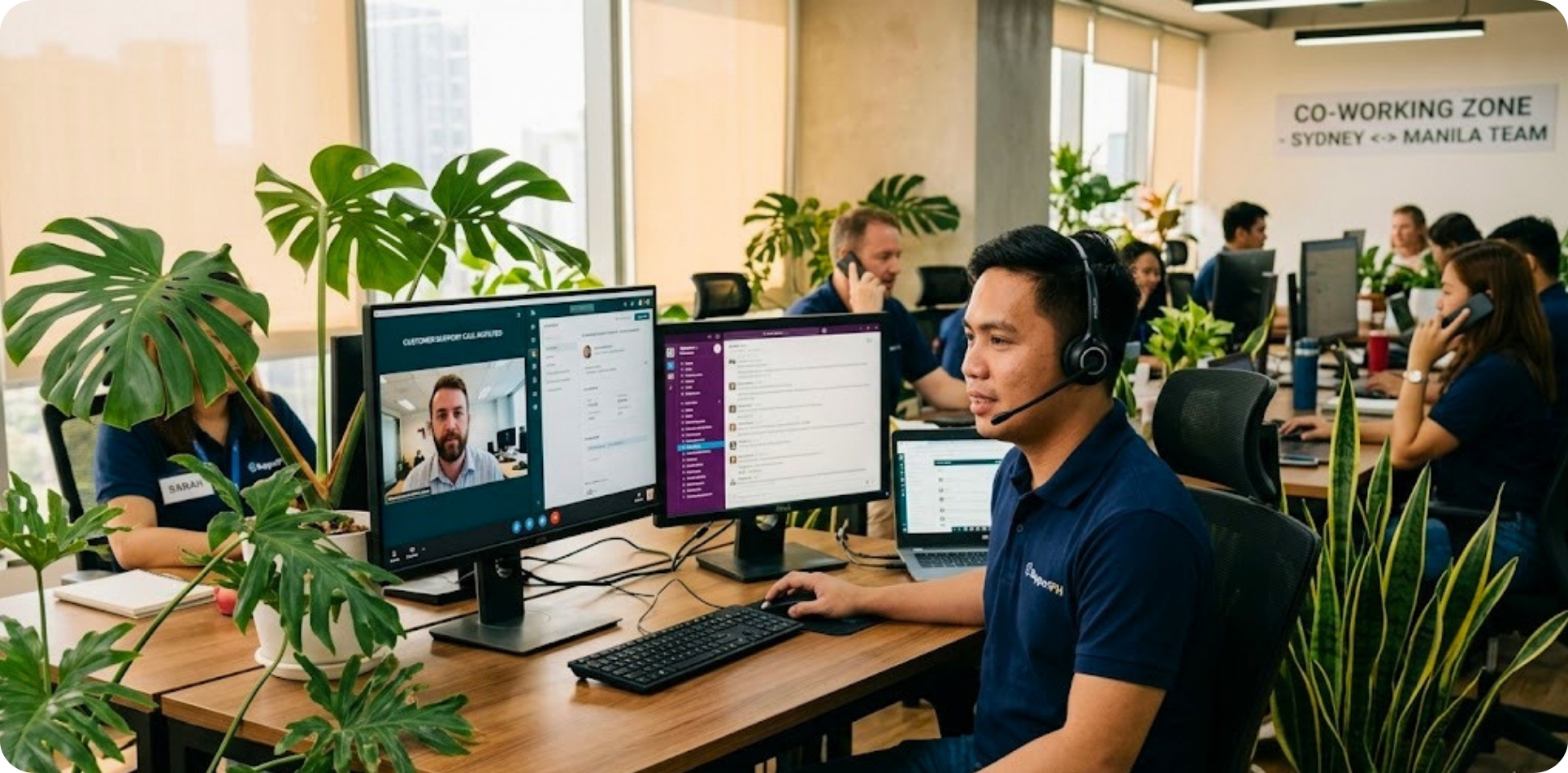
The time zone offset — 12–15 hours ahead of the US — turns into an operational advantage. Customer support tickets that arrive overnight US time are resolved before the US team starts their day. Marketplace issues that surface in the evening get handled by a Manila team on morning shift. For brands that sell 24/7, that coverage gap simply disappears.
The skill sets e-commerce operations require — Amazon Seller Central, Shopify, Gorgias, Zendesk, Klaviyo, Canva, Google Sheets — are standard tools that Philippine professionals train on and work with daily. And the cost structure works: a skilled e-commerce operations specialist in the Philippines earns $1,000–$1,800 per month. A US equivalent doing the same work costs $4,000–$6,000. For a brand that needs three or four operational hires to scale, that gap is often the difference between being able to grow and not being able to afford to.
Amazon Operations: A Philippines Connection
Amazon itself has significant operations in the Philippines. The company’s customer service, data annotation, and various back-office support functions are partly run from Manila and Cebu, where Amazon has maintained a substantial workforce for years. For US brands building Amazon-focused operational teams, this matters practically: the talent pool in Manila and Cebu includes many professionals who have worked directly with Amazon’s processes, standards, and systems.
Former Amazon employees and contractors are a significant segment of the Philippine e-commerce talent market. Hiring from this pool means onboarding people who already understand how Seller Central works, which account health metrics matter, and how Amazon’s escalation processes function. That depth of Amazon-specific experience in the Philippine talent market is one reason US e-commerce brands consistently find it easier to hire for Amazon operations roles in Manila than in almost any other offshore location.
What US E-Commerce Brands Are Actually Building
Early stage (1–3 people): One customer support specialist handling all inbound queries, and one marketplace operations coordinator who owns Amazon Seller Central and listing maintenance. Some brands start with a single person covering both before splitting them.
Growth stage (4–8 people): A customer support team of two to three specialists with a team lead, a dedicated marketplace manager, a product listing specialist, and a data/reporting coordinator. At this stage, the Philippine team is running a meaningful portion of the brand’s operational infrastructure independently.
Scale stage (8+ people): Full operational functions across customer support, marketplace management, content, and finance. Some brands also bring supply chain coordination and influencer/affiliate management into the Philippine team at this stage.
Office vs Remote for E-Commerce Teams
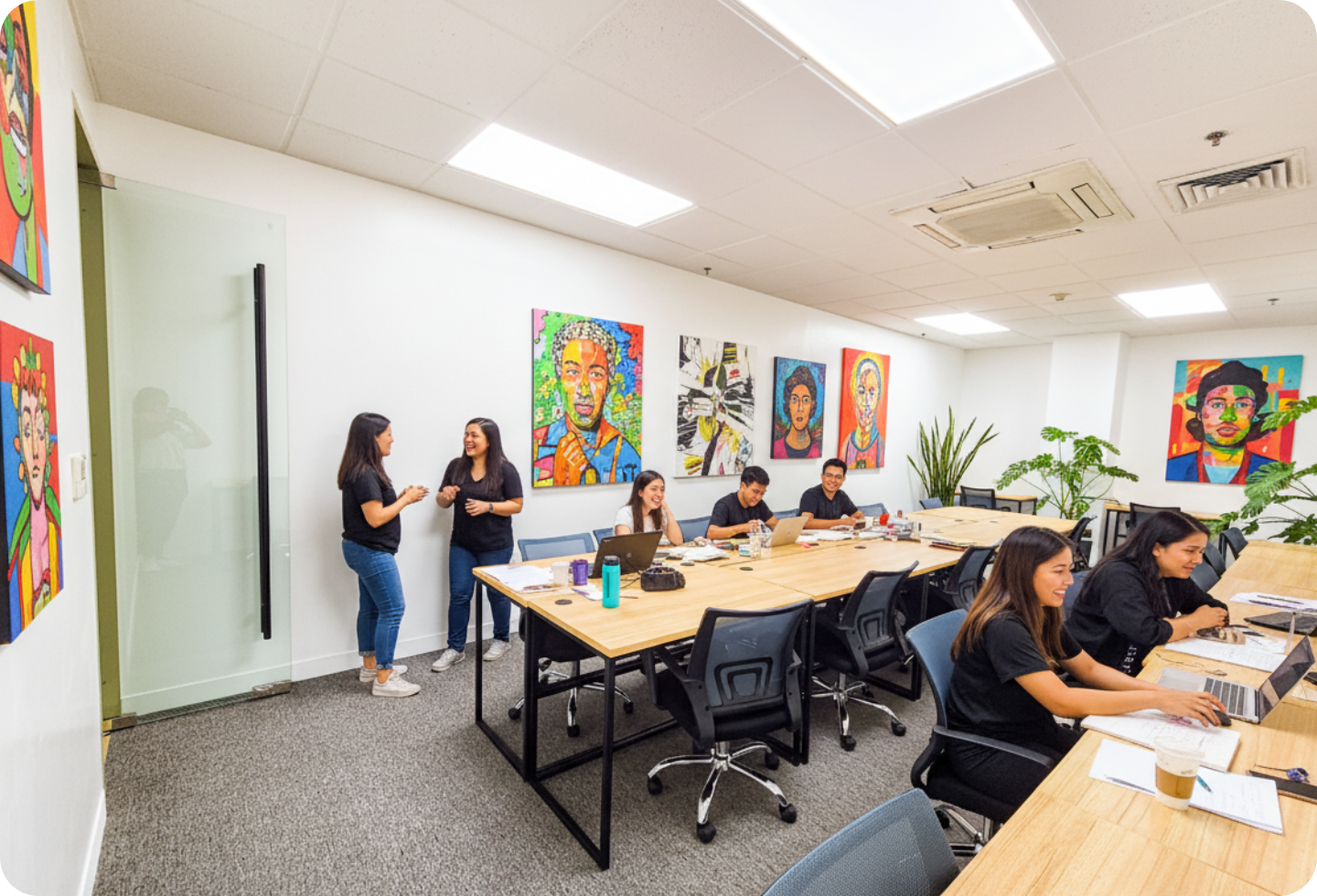
Customer support teams that share a physical space can calibrate responses to emerging issues together — when a shipping delay affects hundreds of orders, a co-located team adapts in real time in a way a distributed remote team can’t. Marketplace managers who sit together coordinate listing changes and tests more efficiently. Onboarding into an established physical environment is substantially faster than onboarding into a remote setup.
The practical infrastructure issues also matter. Philippine residential internet is unreliable enough that a professional office with dedicated connectivity and backup power isn’t a luxury for an operations team — it’s a reliability requirement. Managed office solutions in Manila (Makati, BGC) and Cebu (IT Park, Mandaue) give US brands a reliable base without the overhead of managing an office lease from overseas.
Getting Started
The typical path: define the roles, align on Philippine market compensation benchmarks, recruit through someone who knows the e-commerce talent pool in Manila and Cebu, and employ through an EOR to avoid the complexity of a local entity. From decision to first hire typically takes four to six weeks. Most brands that make the move wish they’d done it earlier.
The Company provides EOR employment and managed office space in Manila and Cebu for US e-commerce brands building Philippine operations teams. Get in touch and we’ll walk you through what makes sense for your operation.