The Truth About The 6-Month Itch: Why Traditional IT Park Tenants are Switching to Flex

The Office Was Perfect Until It Wasn’t
Traditional IT Park tenants often start their lease journey with optimism. A growing company signs a contract in Cebu IT Park believing they’ve found the perfect space for the next several years. The location is prestigious, the address adds credibility, and the office feels like a symbol of progress and commercial success.
A growing company signs a contract in Cebu IT Park believing they’ve found the perfect space for the next few years. The location is prestigious, the address looks impressive on business cards, and the office feels like a tangible sign that the company is moving forward. For many founders, managers, and business owners, securing a traditional office is viewed as a milestone. It represents stability, legitimacy, and long-term economic growth.
For the first few months, everything usually works exactly as expected. Teams settle into their daily routines. Operations become more structured. Employees enjoy having a dedicated, permanent workplace to call home. Leadership feels confident that they’ve made a smart, predictable long-term financial decision.
Then something interesting starts happening around the six-month mark.
The office that once felt like an operational advantage begins creating small, persistent frustrations. The rigid physical layout no longer matches the team’s shifting collaborative needs. Hiring moves significantly faster than expected, causing desk shortages. Conversely, empty desks begin appearing because of hybrid work schedules, making the space feel hollow and inefficient. Meeting rooms become difficult to manage, schedule, and maintain. Operational expenses start creeping higher than originally anticipated.
None of these problems seem significant on their own. But together, they compound to create what many modern businesses now experience as the “6-Month Itch.” It’s the moment when leadership begins asking a completely different set of questions. Not simply, “Can we afford this office?” but rather, “Is this office still actively helping us grow?” Across Cebu IT Park, more traditional IT Park tenants are reaching that exact realization. They aren’t necessarily leaving because they dislike the location or the vibrant economic hub. In fact, most still actively want to remain inside IT Park to retain prestige and talent access. What they’re leaving behind is the absolute rigidity that often comes with conventional, long-term commercial office leases.
The structural shift isn’t about abandoning IT Park. It’s about adopting a highly responsive workspace model that better reflects how modern businesses actually operate in an unpredictable economy.
Why Traditional Office Leases No Longer Match Modern Business Growth
Traditional office leases were explicitly designed for a completely different era of commercial work. Companies used to operate with relatively predictable organizational structures. Headcount growth was gradual, linear, and mapped out years in advance. Employees worked from the physical office every single day, from nine to five. Business plans remained largely unchanged for five to ten years at a time. Under those specific socio-economic conditions, signing a long-term, multi-year lease made perfect sense.
But today’s companies operate very differently.
Startups can double their workforce within a single quarter after a funding round. Business Process Outsourcing (BPO) firms can gain or lose major multi-million dollar client contracts in a matter of weeks. Remote and hybrid work have fundamentally altered how teams use physical square footage. Even established, conservative businesses are constantly adjusting team structures, internal workflows, and localized operational strategies to stay competitive.
The core challenge is that conventional office leases remain entirely fixed while modern businesses become increasingly dynamic. This creates a severe operational mismatch that many companies don’t fully appreciate until they’re already locked into a rigid, long-term legal commitment.
What looked like the perfect office during the blueprint and planning stage struggles to keep pace with the chaotic realities of day-to-day corporate growth. The final result is that traditional IT Park tenants frequently find themselves paying heavily for a level of structural permanence that no longer aligns with the way modern organizations organically evolve.
Many of the same frustrations experienced by traditional IT Park tenants are explored in our guide, Why Scaling Teams Regret Their Private Offices in IT Park Cebu in 6 Months.
Growth Happens Faster Than Office Space Can Adapt
One primary reason traditional IT Park tenants explore flexible workspaces is because modern corporate hiring rarely follows a predictable, linear timeline. When companies first lease a conventional commercial office, they are forced to make grand assumptions about future headcount. They estimate how many employees they’ll have six months, one year, or three years into the future.
But true economic growth is rarely that clean or predictable.
-
The Startup Surge: A technology startup might suddenly secure Series A funding and instantly need ten to twenty additional engineers.
-
The BPO Shift: A BPO provider might unexpectedly land a new international enterprise account requiring dozens of fully equipped seats almost overnight.
-
The Hybrid Gathering: A remote-first company might decide to bring decentralized teams together more frequently for intensive sprints, requiring immediate, large-scale collaborative spaces.
The traditional office, however, remains exactly the same size. Walls don’t magically move. Floor plans don’t seamlessly expand on demand. Lease agreements don’t automatically adjust down or up based on your monthly payroll.
This creates a high-friction situation where businesses are forced to adapt their operational goals to the limitations of the office, rather than the office adapting to the goals of the business. Many traditional IT Park tenants discover that scaling their core operations becomes infinitely harder when their physical workspace lacks structural flexibility. Instead of focusing entirely on revenue, product development, and market expansion, leadership spends valuable time solving logistical space-related problems that shouldn’t exist in the first place.
The Hidden Cost of Office Ownership Mentality
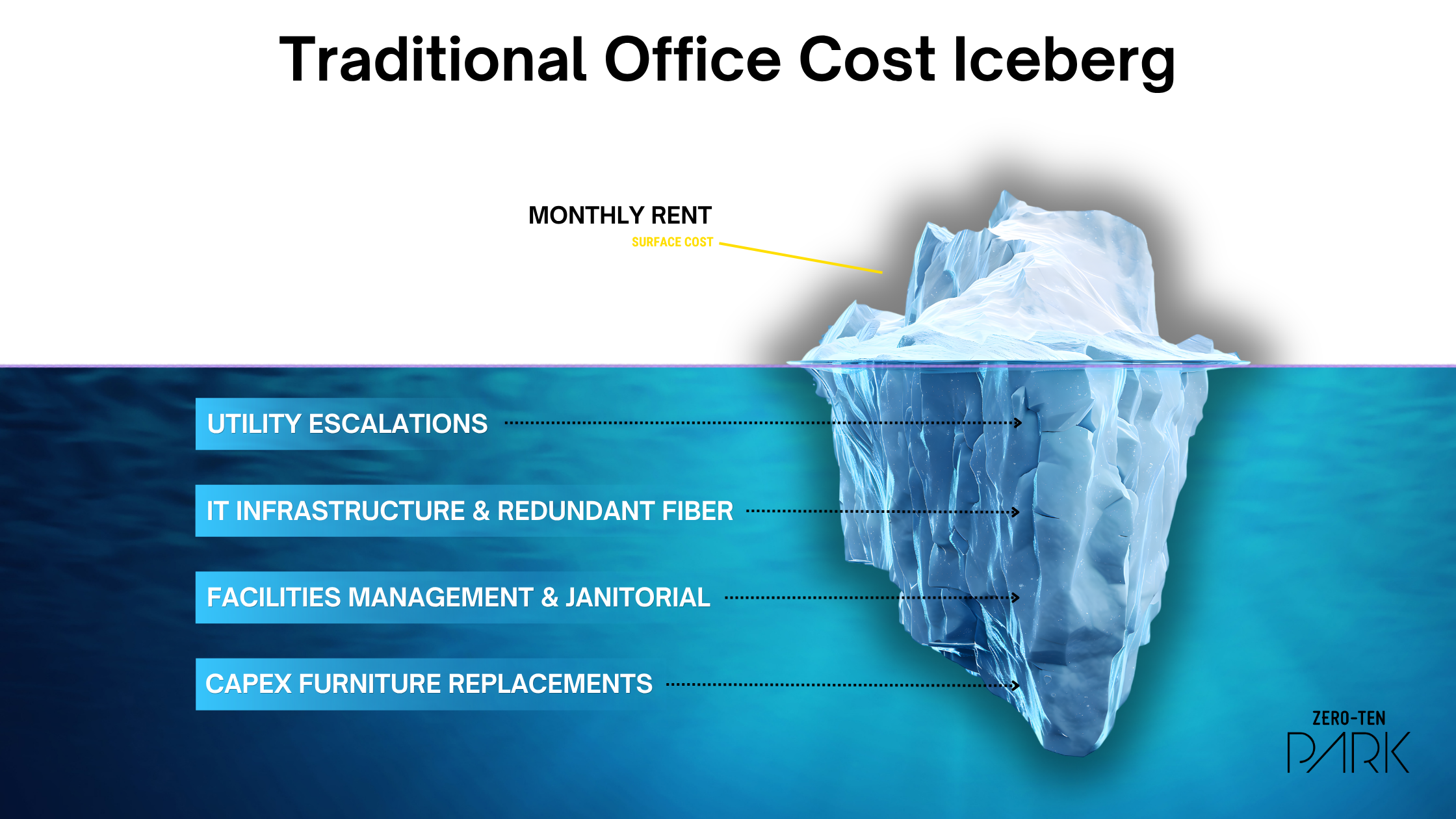
Most businesses evaluate office lease decisions based primarily on face-value monthly rent per square meter. What often gets completely overlooked are the massive operational costs that quietly appear after move-in. Electricity expenses skyrocket as computing needs and team headcounts grow. Internet bandwidth requirements become significantly more demanding, requiring dedicated, expensive leased lines and redundant backup links. Furniture upgrades become necessary as wear and tear takes its toll.
Maintenance concerns—such as air conditioning failures, plumbing issues, and electrical faults—appear unexpectedly and require immediate capital output. Meeting room AV equipment needs constant updates and troubleshooting. Security personnel, receptionist salaries, and general administrative requirements increase over time.
Individually, these minor operational costs may seem manageable on a spreadsheet. Collectively, they create a much larger financial commitment than many businesses originally anticipated.
According to workplace research from CBRE, companies are increasingly shifting toward flexible workspace models because they provide greater cost predictability while reducing operational complexity. The core issue isn’t simply that traditional offices cost a lot of money; it’s that many of these costs remain completely hidden until businesses begin actively operating within the physical space.
It’s that many of the costs remain hidden until businesses begin actively operating within the space. By the six-month mark, leadership teams often realize they’re spending more time and resources managing office infrastructure than they initially expected. Many traditional IT Park tenants initially focus on rent while overlooking the operational costs that emerge after move-in.
Hybrid Work Changed Everything
Few workplace trends have reshaped modern corporate office strategy more permanently than the global stabilization of hybrid work. Before 2020, empty desks were often viewed as a sign of organizational inefficiency or poor hiring management. Today, empty desks are a normal, intentional component of an agile corporate culture.
Employees increasingly split their weekly time between their homes, the central office, client sites, and localized collaborative work environments. Teams rarely operate at full physical capacity simultaneously every single day. Yet, many companies continue paying for massive, permanent office footprints designed around 100% daily physical occupancy. This creates a significant structural efficiency problem. Organizations may only utilize a minor fraction of their rented space on any given Tuesday or Friday, while continuing to absorb the full financial cost of cooling, lighting, securing, and maintaining it. The office transforms from an empowering asset into an expensive, underutilized liability.
Organizations may only utilize a fraction of their space on any given day while continuing to absorb the full cost of maintaining it. The office becomes an expensive asset that is only partially used. According to workplace insights from JLL Workplace Research, companies are increasingly prioritizing workplace flexibility because employee expectations and utilization patterns have fundamentally changed. The businesses adapting fastest to these changes are often the ones moving toward flexible workspace models that allow them to scale usage based on actual demand rather than outdated assumptions.
Talent Expectations Have Evolved
Workplace design decisions are no longer made solely around raw operational efficiency or keeping overhead low. They also directly influence recruitment velocity, employee retention rates, and overall day-to-day employee satisfaction. Today’s highly competitive workforce evaluates prospective employers drastically differently than previous generations.
Modern professionals increasingly care about the holistic workplace experience, geographical accessibility, daily convenience, and the overall aesthetic and wellness environment. A top-tier professional isn’t just evaluating a base salary package anymore; they’re deeply evaluating the entire physical and psychological work experience.
What Modern Talent Demands:
-
Commute Convenience: Proximity to primary transit hubs, affordable dining, and lifestyle choices.
-
Collaborative Opportunities: Dedicated spaces for cross-functional brainstorming rather than rows of isolated cubicles.
-
Wellness Considerations: Natural lighting, ergonomic furniture, and spaces to step away from screens.
-
Workspace Quality: High-speed, seamless connectivity and modern, well-maintained amenities.
According to research published by Harvard Business Review, physical work environments continue playing an incredibly critical role in driving employee engagement, cross-functional collaboration, and overall organizational performance. For many businesses, this means the physical office has evolved from being purely operational infrastructure into a highly strategic talent attraction asset. The specific companies consistently attracting top-tier talent are those creating premium workplace experiences that align with modern expectations, rather than simply providing cold desks and sterile meeting rooms. Traditional IT Park tenants tied to older, uninspiring build-outs frequently struggle to match the vibrant, hospitality-driven environments found in modern flexible workspaces.
Why More Companies Are Choosing Flex
The rapid rise of flexible workspaces across major economic zones isn’t happening because traditional offices suddenly stopped working entirely. It’s happening because fundamental business priorities have shifted toward survival through agility. Companies today need premium corporate environments that can scale quickly, adapt easily, and completely eliminate daily operational friction. They want instant access to world-class professional infrastructure without committing themselves to years of immutable, high-risk financial arrangements. Flexible workspaces provide exactly that bridge.
Organizations gain seamless, immediate access to soundproofed meeting rooms, expansive collaborative areas, enterprise-grade fiber internet, professional corporate business environments, and instantly scalable office configurations without carrying the immense operational burden of managing every single aspect of the real estate themselves. The ultimate value isn’t simply flexibility in terms of desk count. It’s organizational freedom.
- Freedom to grow aggressively when the market expands.
-
Freedom to adapt strategies on the fly without severe real estate penalties.
-
Freedom to respond immediately to sudden market opportunities without being constrained by heavy physical infrastructure.
That specific operational freedom has become increasingly valuable as global business cycles accelerate and workplace expectations continue to rapidly evolve.
The Agility Gap Traditional IT Park Tenants Didn't See Coming
One of the biggest, most disruptive reasons traditional IT Park tenants begin questioning their long-term office strategy is what many prominent workplace experts now call the agility gap. This organizational phenomenon happens when a company’s operational needs, client demands, and headcount evolve drastically faster than its physical, leased workspace can adapt.
In the past, businesses could reasonably predict their growth vectors over a five-year horizon. Teams expanded gradually, daily office attendance was highly consistent, and long-term commercial leases aligned neatly with long-term corporate planning. Today, that predictability has completely disappeared from the global market.
Startups can double in size within months following a pivot. BPOs can win massive international accounts overnight. Remote-first organizations can suddenly require expansive physical collaboration hubs for localized project launches, intensive hackathons, and client workshops.
The core problem is that traditional office leases remain largely unchanged regardless of these events. A company may be growing rapidly, but the office footprint remains stubbornly fixed. Additional workstations require expensive, disruptive construction and remodeling.
New departments require extensive wiring and furniture reconfigurations. Expanding often means breaking a lease prematurely or relocating the entire enterprise at an immense cost.
For many traditional IT Park tenants, this creates a deeply frustrating situation where the business is completely ready to move forward into new revenue streams, but the office itself becomes the primary operational bottleneck. Instead of actively supporting growth, the workspace starts creating massive operational drag.
This is one of the primary reasons flexible workspace IT Park Cebu solutions continue gaining massive momentum. Companies increasingly recognize that extreme organizational agility is no longer an optional luxury—it has become a core competitive advantage.
Why Traditional IT Park Tenants Are Rethinking Office ROI
For decades, commercial office decisions were measured and judged primarily by a single metric: cost per square meter. Businesses diligently compared basic rent, utility baselines, and initial fit-out expenses to determine overall value. Today, that conversation has shifted toward a more holistic view of asset utilization.
The most successful, hyper-growth organizations now evaluate physical office space based on a trio of modern metrics: Return on Experience (ROX), Return on Flexibility (ROF), and Return on Productivity (ROP).
| Legacy Office Metrics | Modern Flex Metrics |
| Cost Per Square Meter | Return on Experience (ROX) |
| Fixed Long-Term Overhead | Return on Flexibility (ROF) |
| Attendance Tracking | Return on Productivity (ROP) |
| Sunk Capital Expenditure (CapEx) | Predictable Operational Expense (OpEx) |
Traditional IT Park tenants often discover that a lower base rental rate does not necessarily create better bottom-line value if the physical office space creates massive operational inefficiencies elsewhere. Long commutes without lifestyle amenities, heavily underutilized square footage, expensive out-of-pocket maintenance, and limited physical scalability all dramatically reduce the actual return on investment. According to workplace research from Harvard Business Review, physical environments significantly influence employee engagement, organic collaboration, and long-term performance. The office is no longer simply a static place where work happens. It directly affects how work happens, how fast communication flows, and how valued employees feel.
This philosophical shift is forcing many traditional IT Park tenants to completely rethink what true office ROI means. Rather than asking, “How much does this office cost us per month?” forward-thinking businesses are increasingly asking, “How much measurable organizational value does this office create for our teams daily?” Those are two fundamentally different questions that lead to drastically different real estate choices.
The Hidden Cost of Staying Too Long
Many conservative businesses automatically assume that moving offices is inherently disruptive to daily operations. What they often fail to consider is that staying too long in the wrong, outdated office environment can be exponentially more disruptive to long-term profitability and corporate culture. Traditional IT Park tenants sometimes remain stuck in physical spaces that no longer fit their needs simply because the logistical process of relocation feels inconvenient or intimidating to administration.
Over time, however, small systemic inefficiencies accumulate silently:
-
Meeting rooms become chronically overcrowded and double-booked, delaying client presentations.
-
Departments become physically fragmented across different floors or disconnected corners.
-
Spontaneous team collaboration suffers as people retreat to siloed spaces.
-
Hybrid teams struggle to use the space effectively due to poor integrated AV setups.
-
Employees begin questioning whether the management actually supports modern workflows.
None of these issues create immediate, catastrophic corporate crises. Instead, they operate as a slow leak, steadily reducing overall operational effectiveness, employee morale, and output velocity over time. By the time leadership finally decides to take action, significant productivity losses may have already been quietly draining the organization’s bottom line for months or even years. The most forward-thinking traditional IT Park tenants recognize that physical office strategy must evolve in lockstep with macro business strategy. Waiting until a lease expires while suffering from operational constraints often creates far larger hidden costs than making proactive, agile adjustments earlier.
Workplace design also plays a role, as discussed in 7 Proven Benefits of Ergonomic Coworking Space IT Park Cebu for Productivity.
Why Flexible Workspaces Feel Different After Six Months
One of the core reasons premium coworking space IT Park Cebu environments continue to steadily attract established, highly structured businesses is because they systematically eliminate the daily administrative frustrations associated with traditional commercial office models. The defining difference isn’t just short-term flexibility—it is absolute operational simplicity. Instead of dedicating valuable internal personnel to managing disparate internet providers, auditing complex utility bills, dealing with landlord maintenance concerns, scheduling office cleaning, sourcing furniture upgrades, and handling ongoing facility issues, companies can focus 100% of their operational energy and capital on core business growth and market execution.
This structural shift becomes particularly apparent and valuable precisely after the six-month mark, when the initial novelty of a new office wears off and the grinding realities of daily office facility management become highly visible. Traditional IT Park tenants often discover that running an enterprise-grade office requires far more daily administrative attention and overhead than initially projected on paper. While none of these baseline facility tasks individually seem significant, collectively they consume massive amounts of leadership attention—attention that could be far better directed toward revenue-generating activities, client acquisition, and product innovation. Modern flexible workspaces completely remove this operational burden from your balance sheet and your daily schedule. The result is a workplace experience that feels significantly lighter, faster, and infinitely more adaptable to market changes.
Businesses evaluating alternatives can also read 9 Powerful Insights on Why Businesses Outgrow IT Park Cebu (2026 Guide).
Why Zero-Ten Park IT Park Fits the Way Modern Teams Work
Perfect Address. Absolute Flexibility. Seamless Scale.
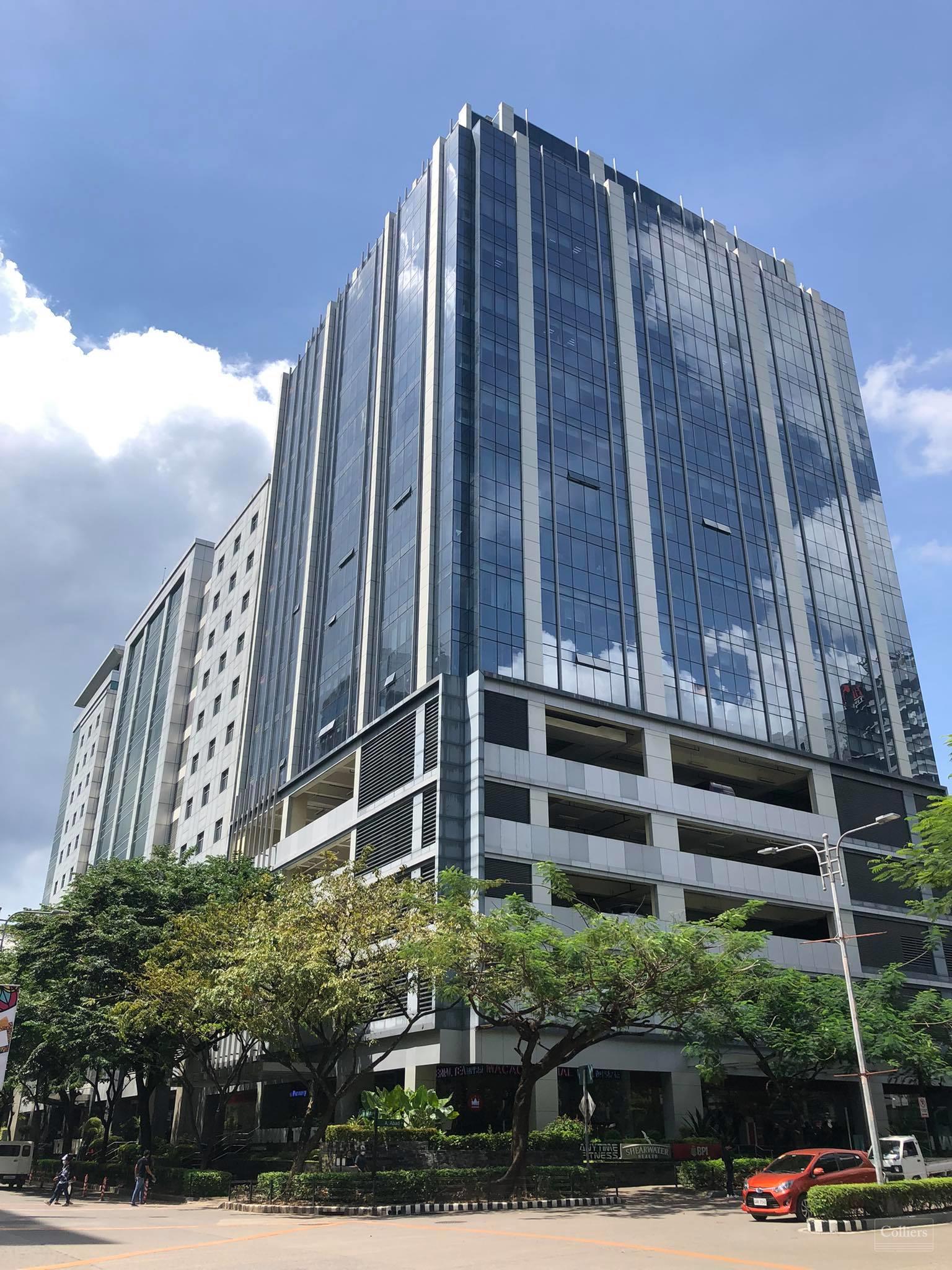
Located prominently on the 6th Floor of Mabuhay Tower, Zero-Ten Park IT Park was meticulously engineered from the ground up around how high-performing, modern businesses actually operate in today’s landscape.
Rather than forcing scaling companies, international teams, and local enterprises into rigid, unforgiving commercial office structures, this premium workspace natively supports sustainable growth through hyper-flexible workspace solutions. Teams gain immediate access to enterprise-grade coworking memberships, private office suites, dedicated desks, fully equipped meeting rooms, and professional business infrastructure without any of the heavy capital expenditures or multi-year legal limitations that accompany traditional commercial leases.
Perhaps more importantly, businesses remain firmly positioned at the absolute center of Cebu IT Park’s thriving commercial ecosystem, enjoying premium corporate branding while gaining the fluid ability to instantly adapt their spatial footprint as their daily needs evolve. Whether you are a fast-moving tech startup building out your very first engineering team, a scaling BPO expanding operations into new international territories, or an established enterprise successfully navigating the permanent realities of hybrid work, spatial flexibility at Zero-Ten Park has become a core strategic advantage rather than just a simple workplace perk.
Final Thoughts
The single biggest lesson most scaling businesses learn after their first six months in a new space isn’t that they necessarily chose the wrong physical building or location. It’s that they drastically underestimated how quickly their own company would change, pivot, and scale in response to the market. Real business growth creates unpredictable demands. Teams evolve rapidly. Workplace cultural expectations shift. Strategic business priorities move significantly faster than traditional, multi-year commercial office agreements were ever structurally designed to accommodate.
That is precisely why more traditional IT Park tenants are actively making the strategic transition to premium flexible workspaces. They aren’t doing it because they want less out of their workspace; they are doing it because they need significantly more adaptability to survive and win.
In today’s highly accelerated business environment, the most valuable office asset isn’t necessarily the biggest, the most permanent, or the most expensive lease. It is the one that grows dynamically alongside your business instead of slowing it down.
Ready to Rethink Your Workspace?