Employer of Record Philippines: 7 Reasons Australian Companies Are Expanding Teams with Filipino Talent

In an increasingly interconnected global economy, Australian companies are moving beyond traditional borders to solve pressing operational challenges. Facing a combination of rising domestic labor costs, persistent skill shortages, and an urgent need for business agility, organizations across Australia are rethinking how they build, manage, and scale their teams.
One workforce strategy has emerged as a clear frontrunner for sustainable international growth: leveraging a professional Employer of Record (EOR) in the Philippines.
An Employer of Record model allows Australian enterprises—ranging from fast-growing startups and small-to-medium enterprises (SMEs) to established corporations—to legally hire top-tier Filipino professionals without the massive financial and administrative burden of setting up a local foreign entity. While the Employer of Record handles the granular complexities of local employment laws, payroll calculation, taxes, and mandatory statutory benefits, the Australian company retains 100% operational control over day-to-day tasks, performance management, and team culture.
This comprehensive guide explores why this specific talent corridor between Australia and the Philippines has become a powerhouse for strategic expansion, and how utilizing an established Employer of Record structure transforms cross-border hiring from a compliance headache into a seamless competitive advantage.
Understanding the Employer of Record Framework in the Philippines
Before diving into the strategic macroeconomic drivers, it is essential to understand exactly how an Employer of Record functions, particularly within the strict regulatory landscape of the Philippines.
In a standard legacy outsourcing setup or traditional Business Process Outsourcing (BPO) model, client companies often hand over entire departments or functions to a third party, losing granular control over who handles the work and how it is executed. Partnering with a specialized Employer of Record flips this paradigm completely.
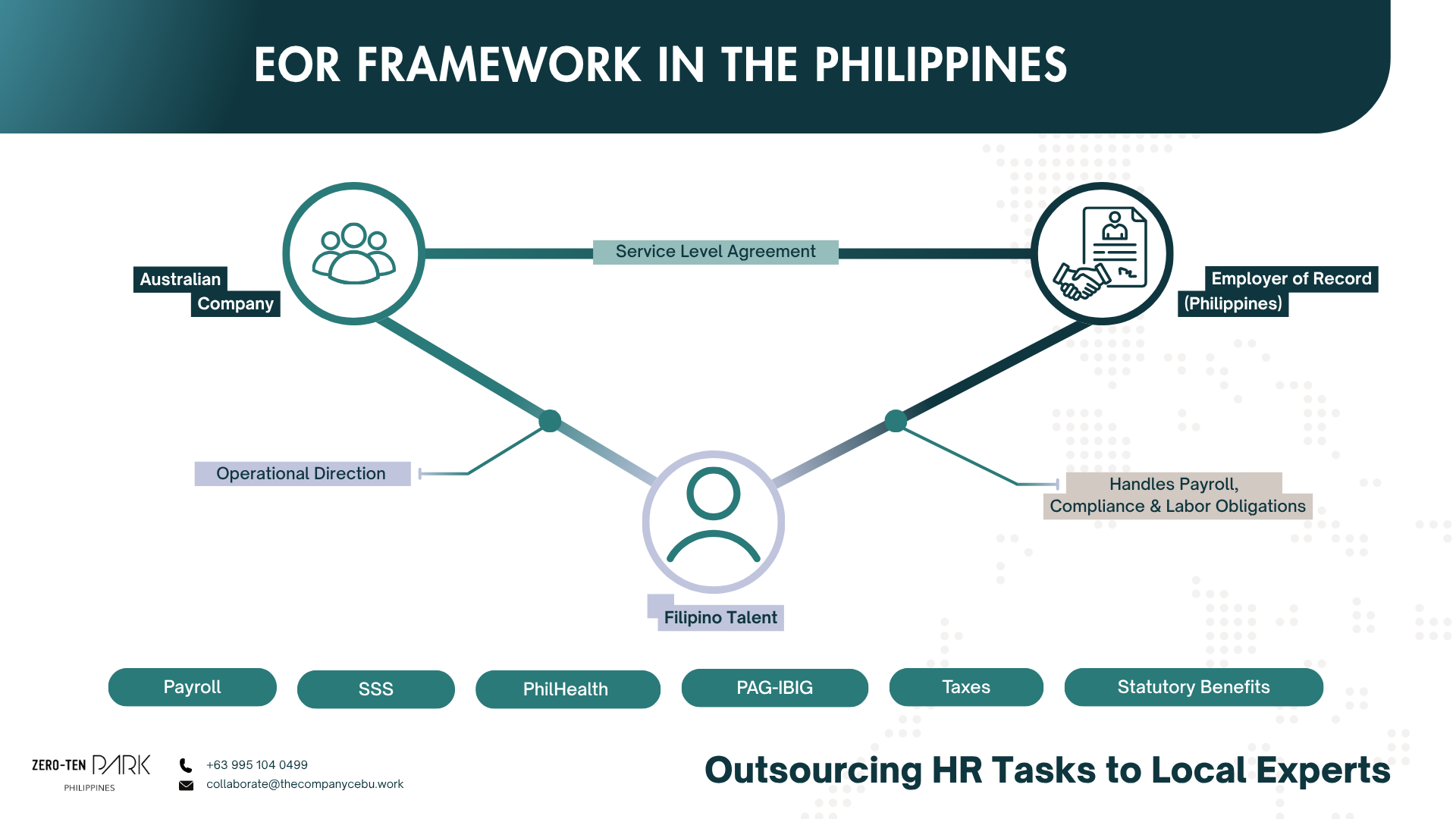
When you partner with an Employer of Record provider, you identify the exact talent your business needs. The Employer of Record then steps in as the official legal employer on paper, hiring the employee through their pre-established Philippine corporate entity, managing local labor code compliance, administering required healthcare benefits, and running monthly payroll.
This tripartite relationship ensures that your business remains fully compliant with the Department of Labor and Employment (DOLE) in the Philippines, while your onshore management team retains direct, day-to-day oversight of the employee’s output.
For a deeper dive into the specific mechanics of this global talent arrangement, read our comprehensive structural breakdown on How Employer of Record Works in the Philippines.
7 Reasons Australian Companies Choose an Employer of Record in the Philippines
1. Mitigating Rising Labor Costs in Australia
The financial reality of operating a business in Australia has grown increasingly challenging over recent fiscal quarters. With successive increases in the national minimum wage, rising superannuation guarantee percentages, and escalating state payroll taxes, the baseline cost of maintaining a full-time domestic workforce is at an all-time high.
According to data from the Australian Bureau of Statistics (ABS), average weekly ordinary time earnings for full-time adults continue to climb, pushing average annual salaries beyond AUD $100,000 across professional white-collar sectors. However, a domestic salary package is rarely just the base wage. When you factor in:
-
Superannuation: Steadily marching toward its scheduled 12% legislative target.
-
Workers’ compensation insurance: Mandatory premiums (such as WorkCover) that scale directly with your payroll footprint.
-
Annual leave loading: The standard 17.5% premium paid on top of base pay during rest periods.
-
Operational friction: Public holiday penalties, sick leave entitlements, and mounting office space overheads.
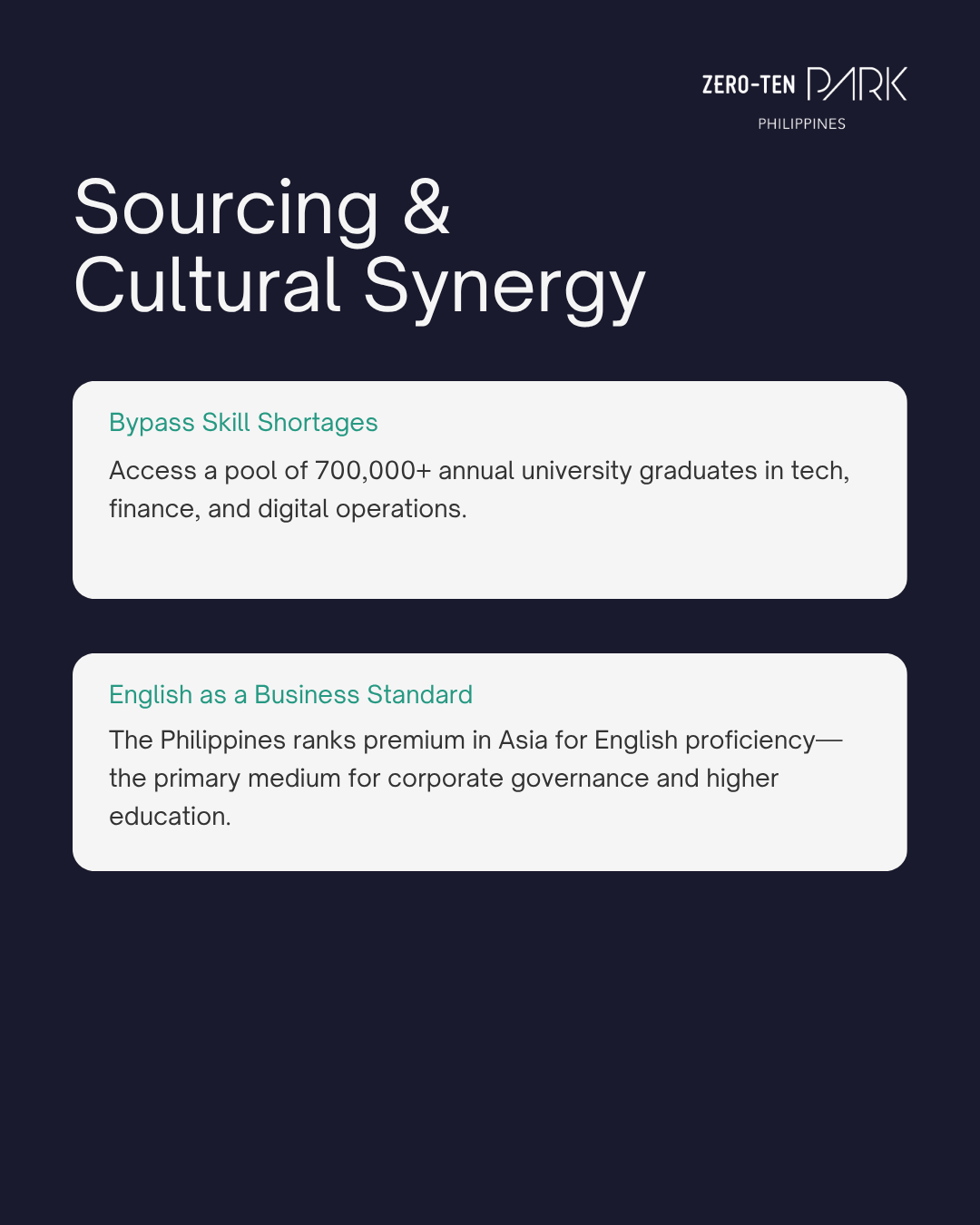
The true cost of an internal Australian hire typically sits anywhere from 1.2 to 1.4 times their baseline salary.
By utilizing an international Employer of Record solution, Australian businesses can access highly qualified professionals at a total employment cost that is typically 60% to 70% lower than an equivalent domestic hire. Because the cost of living in the Philippines is structurally lower, Australian companies can offer highly competitive, top-of-market salaries locally—attracting premium talent—while still realizing substantial bottom-line savings.
Role Type
Software Engineer
Digital Marketer
Financial Accountant
Customer Support Lead
Average Australian Annual Cost (AUD + Benefits)
$120,000 – $160,000
$85,000 – $110,000
$95,000 – $130,000
$75,000 – $95,000
Average Philippines EOR Annual Cost (AUD Equivalent)
$35,000 – $55,000
$28,000 – $42,000
$22,000 – $35,000
$18,000 – $26,000
Average Savings Percentage
~68%
~70%
~74%
~69%
Crucially, using an Employer of Record is not a compromise on quality. The cost differential is purely a reflection of macroeconomic purchasing power disparities, allowing businesses to safely redirect capital into product development, local marketing, and scaling initiatives.
To see a granular breakdown of these financial figures, explore our detailed analysis on the True Cost of Opening an Entity in the Philippines.
2. Solving Chronic, Structural Skill Shortages
Australia’s talent drought is no longer a temporary post-pandemic blip; it is a structural economic reality. Organizations nationwide are facing severe friction when trying to source specialized talent locally. The critical priority lists from Jobs and Skills Australia consistently highlight deep deficits across critical technical and operational domains.
The sectors experiencing the most severe bottlenecks include:
-
Technology & Engineering: Cloud architects, full-stack developers, cybersecurity specialists, and data analysts.
-
Finance & Commerce: Certified accountants, bookkeepers, payroll administrators, and financial analysts.
-
Digital Operations: SEO strategists, pay-per-click (PPC) managers, UI/UX designers, and content specialists.
-
Project Management & Administration: Agile scrum masters, executive assistants, and legal intake specialists.
When local talent pools dry up, recruitment cycles stretch from weeks to months. Vacant roles lead directly to project delays, burnt-out domestic staff, and missed revenue opportunities.
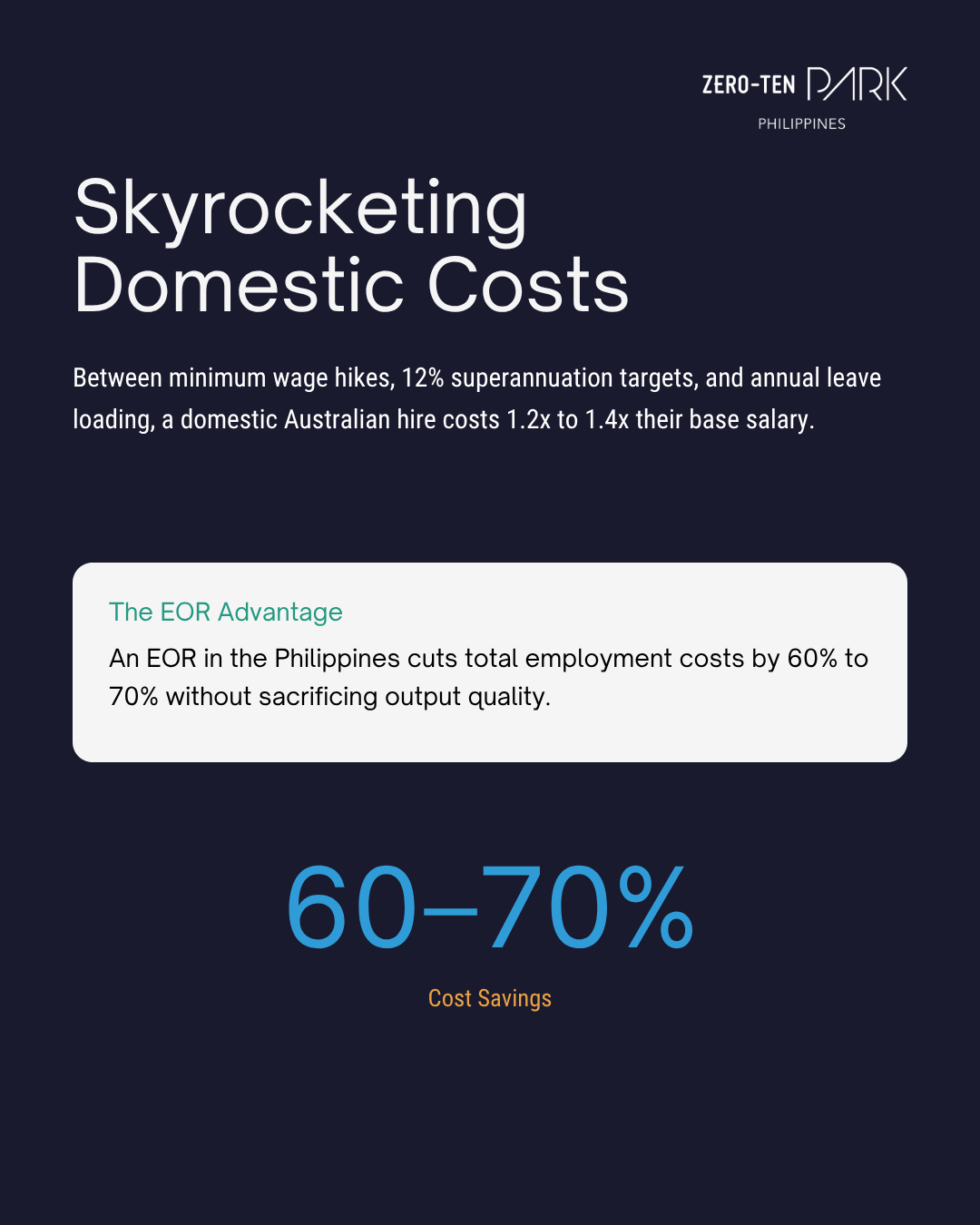
Engaging an Employer of Record opens the floodgates to an immense, highly educated talent ecosystem. The Philippines graduates over 700,000 university students annually, creating a deep pool of ambitious, technically proficient professionals who are eager to build careers with international firms. By casting a wider net through an Employer of Record, Australian companies bypass local supply constraints completely.
For more insights on navigating these labor market dynamics, check out our guide on Building Remote Philippine Teams: The Full Guide to Direct Hiring and Entity Setup in the Philippines.
3. Accessing a Premium, Culture-Aligned English-Speaking Workforce
A common hesitation for businesses exploring global hiring is the potential for communication friction and cultural misalignment. This is precisely why the Philippines stands out as the premier destination for an Australian company choosing an Employer of Record.
The country is recognized globally as an administrative powerhouse, consistently ranking near the top of Asia in the EF English Proficiency Index (EF EPI). English is not merely a second language in the Philippines; it is an official language, the primary medium of instruction in higher education, and the baseline standard for corporate business, legal proceedings, and governance.
Beyond linguistic fluency, there are deep cultural synergies that make integration into Australian teams incredibly smooth when managed via an Employer of Record:
-
Customer-Centric Empathy: Renowned for their hospitality and interpersonal warmth, Filipino team members excel in client-facing, support, and account management roles, maintaining high customer satisfaction metrics.
-
Westernized Corporate Standards: The Filipino educational and corporate systems are closely modeled on Western frameworks. Professionals are deeply familiar with standard corporate practices, KPIs, and workplace etiquette.
-
Technological Literacy: Filipino professionals are highly adept at utilizing modern remote work toolkits, including Slack, Jira, Confluence, Asana, Microsoft Teams, and the Google Workspace ecosystem.
When an Australian business hires through an Employer of Record, they are not just adding remote hands; they are onboarding communicative, collaborative team members who align naturally with existing company values.
4. Capitalizing on Time Zone Synchronicity (GMT+8)
One of the greatest operational friction points in international hiring is managing significant time zone disparities. Working with talent in Eastern Europe or Latin America often means that when your domestic team is logging on, your remote team is logging off. This leads to a fragmented “asynchronous-only” workflow where simple operational questions take 24 hours to resolve.
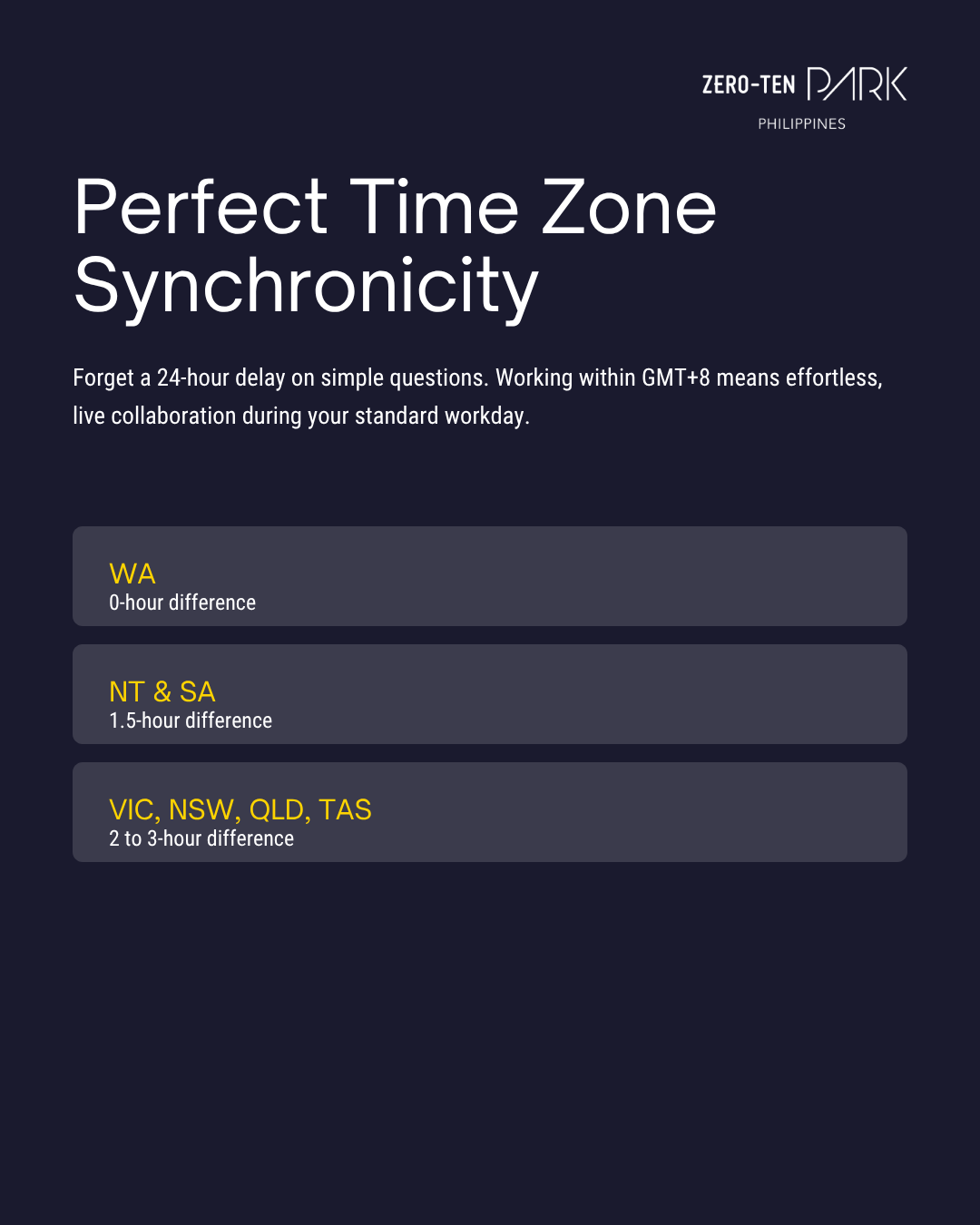
Deploying an Employer of Record in the Philippines provides an extraordinary operational advantage for Australian organizations because the country operates on Philippine Standard Time (PST), which is GMT+8:
-
Western Australia (AWST): Perfect 0-hour time difference. Teams work identical business hours.
-
Northern Territory & South Australia (ACST): A negligible 1.5-hour time difference.
-
Eastern Seaboard (AEST – NSW, VIC, QLD, TAS): A highly manageable 2-hour time difference (which adjusts to 3 hours during Daylight Saving Time).
This close alignment enables real-time collaboration. Your Australian managers can host morning huddles, conduct live training, jump on spontaneous Zoom calls, and collaborate inside live documents alongside their Filipino colleagues hired through the Employer of Record.
Tasks are executed on the same business day, handovers are seamless, and clients experience no latency in service delivery. For fast-paced industries like software development, financial services, and live customer operations, this real-time overlap makes the Employer of Record model invaluable.
5. Completely Eliminating Local Entity and Legal Complexity
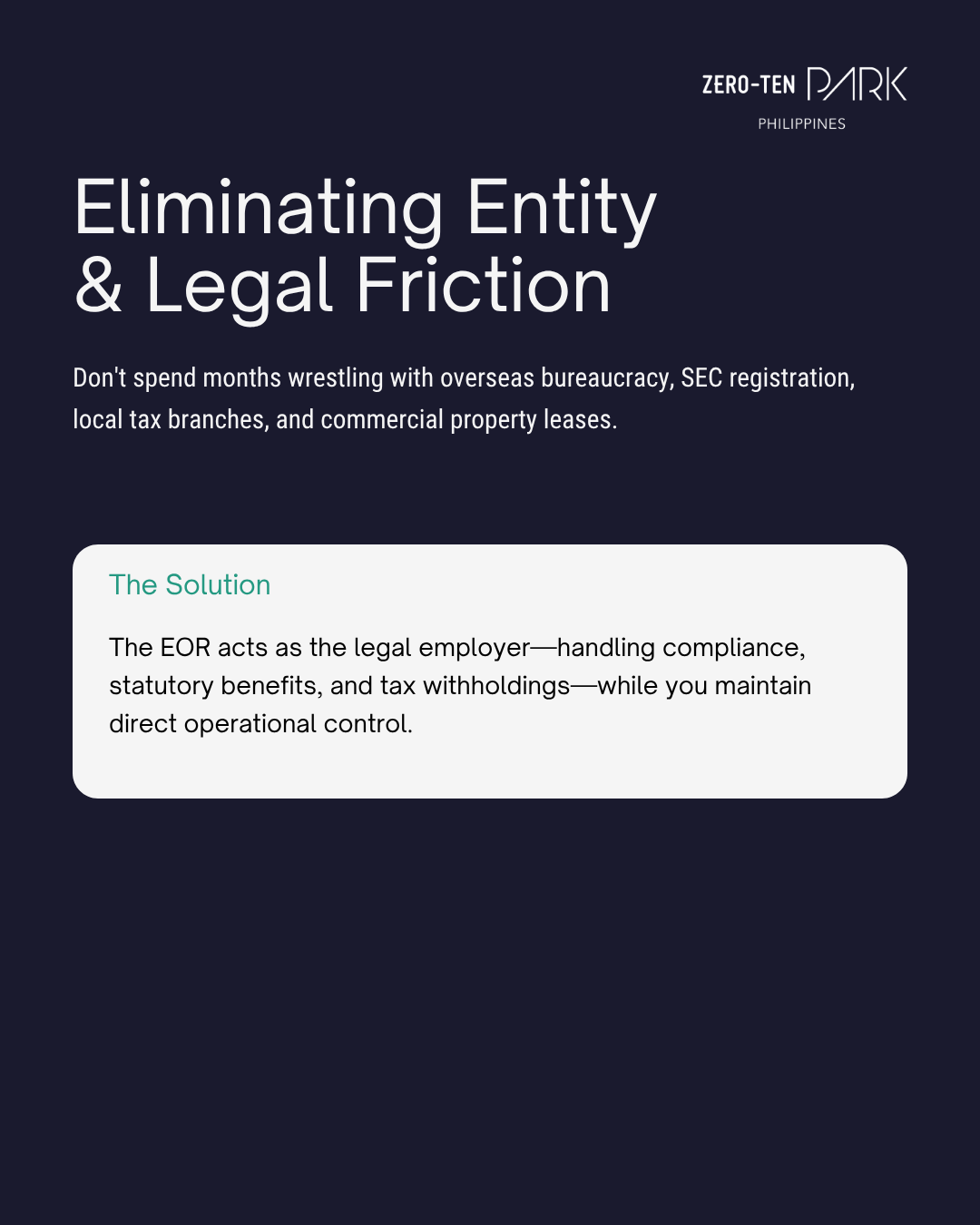
Setting up a legal business entity in a foreign country is a complex, time-consuming, and highly capital-intensive process. In the Philippines, establishing a domestic subsidiary or branch office requires navigating multiple layers of bureaucracy, including the Securities and Exchange Commission (SEC), the Bureau of Internal Revenue (BIR), and various local government units (LGUs).
The regulatory requirements can be daunting:
-
Securing minimum paid-in capital allocations.
-
Leasing physical commercial real estate to satisfy strict local registration rules.
-
Appointing resident directors, corporate secretaries, and compliance officers.
-
Opening complex corporate bank accounts locally.
-
Building internal HR systems to manage intricate local labor laws.
For most small to mid-sized Australian companies, this overhead is commercially unjustifiable, especially when testing new markets or scaling a pilot team.
By utilizing an Employer of Record, you bypass this entire runway. The Employer of Record provider already holds the necessary licenses, infrastructure, and legal status.
- How it works in practice: The Employer of Record acts as the legal employer, taking full responsibility for statutory compliance, tax withholdings (such as BIR Form 2316), and mandatory government contributions including Social Security System (SSS), PhilHealth, and Pag-IBIG (HDMF) funds.
- Your position: Your company enters into a straightforward business-to-business (B2B) service contract with the Employer of Record. You get all the benefits of a dedicated local team, with none of the entity overhead.
6. Achieving Unprecedented Speed to Market and Team Agility
In modern business, speed is a critical competitive advantage. If an Australian company wins a major new client contract or secures a round of funding, they need to deploy execution capacity immediately—not six months down the line.
The process of finding, hiring, and onboarding a new employee within Australia can easily take 60 to 90 days, given long notice periods and tight talent pools. If you couple that with the time required to set up an independent foreign legal entity, your growth plans could be delayed by up to a year.
ENTITY SETUP ROUTE:
[Decide to Expand] ──> [Legal/Tax Advisory (Months)] ──> [Entity Registration] ──> [Local Recruitment] ──> [Go Live: 6-9 Months]
EMPLOYER OF RECORD ROUTE:
[Decide to Expand] ──> [Partner with EOR (Days)] ──> [Accelerated Recruitment] ──> [Go Live: 2-4 Weeks]
An Employer of Record structure compresses this entire timeline into weeks. Because the employment infrastructure is already built, you can move directly to talent sourcing and onboarding through the Employer of Record.
The Employer of Record provider’s local HR teams can quickly run localized recruitment campaigns, screen candidates, issue compliant employment agreements, and set up payroll templates. This agility allows Australian leaders to scale teams up or down in response to real-time market shifts and client demands.
7. Optimizing Capital Allocation for Scalable Growth
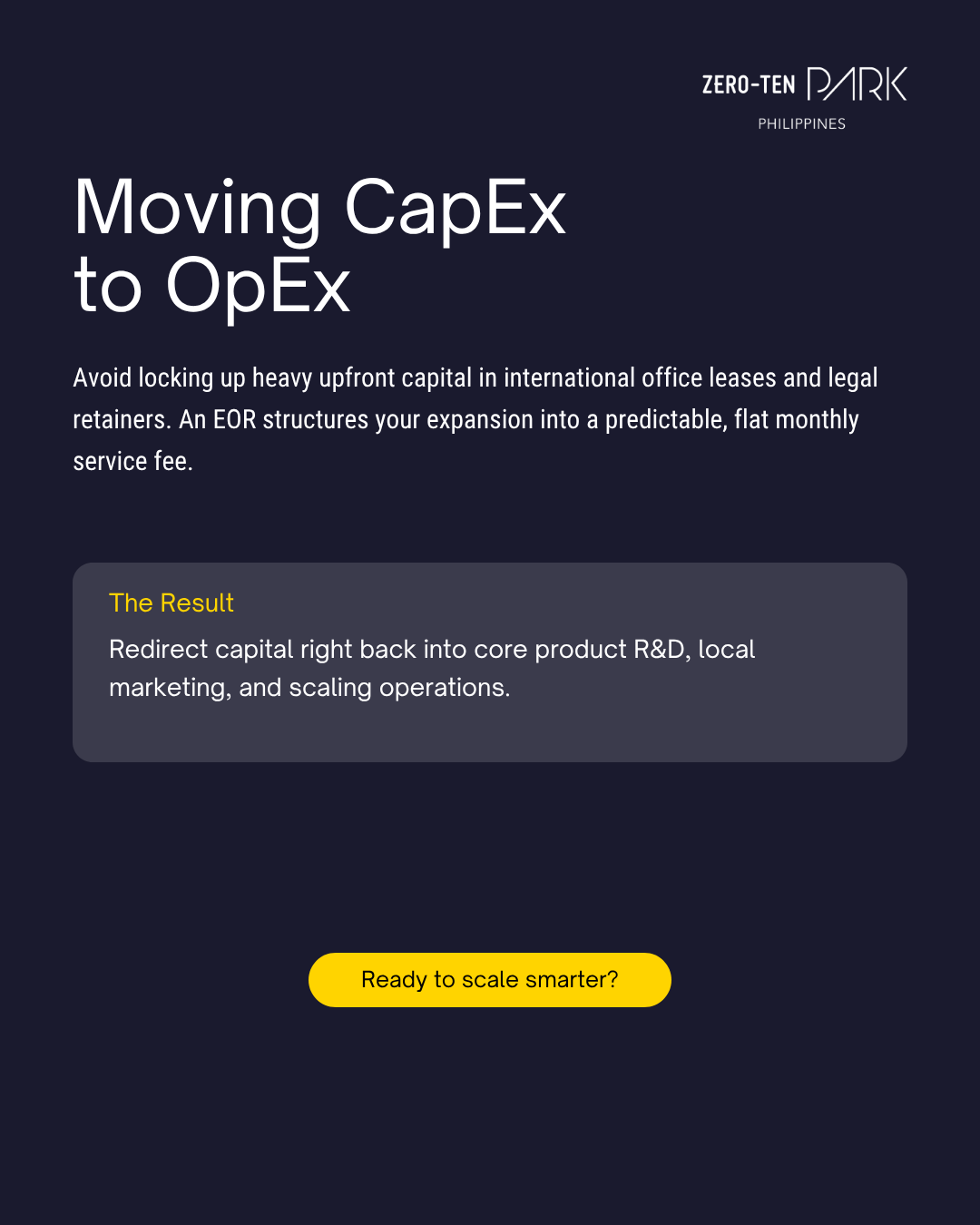
Beyond direct salary savings, the Employer of Record model fundamentally changes how an organization allocates its capital. It shifts capital expenditure (CapEx) into predictable, scalable operational expenditure (OpEx).
When expanding teams locally or building infrastructure overseas, significant upfront capital is locked up in fixed overheads—such as commercial office leases, IT infrastructure, legal retainers, and specialized HR personnel. This limits liquidity and elevates financial risk if market conditions shift unexpectedly.
With an Employer of Record provider, these costs are consolidated into a transparent, predictable monthly fee structure (typically a flat fee per employee or a small percentage of payroll). This allows corporate finance teams to project cash flows with pinpoint accuracy.
Savings generated from this optimized Employer of Record model can be reinvested into growth levers, such as:
-
Expanding digital marketing budgets to capture market share.
-
Funding core R&D and product development initiatives.
-
Strengthening high-value onshore leadership and strategy roles.
-
Boosting overall business runway and financial health.
This transforms global hiring from a complex compliance task into a powerful strategic lever for long-term equity growth.
Navigating Compliance: The Core Value of an Employer of Record
The regulatory landscape governing employment in the Philippines is highly protective of workers’ rights. The Labor Code of the Philippines mandates strict rules regarding termination, security of tenure, working hours, and compensation structures.
For an unassisted foreign business, accidental non-compliance can result in severe legal penalties, labor disputes, and reputational damage. An experienced Employer of Record serves as your compliance shield, expertly managing several key areas:
The 13th-Month Pay Requirement
Under Philippine law (Presidential Decree No. 851), all rank-and-file employees are entitled to a mandatory “13th-month pay” bonus. This payment must be distributed to employees on or before December 24th each year and is equivalent to $\frac{1}{12}$ of the employee’s basic annual salary. A professional Employer of Record structurally accounts for this within your monthly billing cadence, ensuring there are no budgeting surprises at year-end.
Statutory Benefits Administration
The Employer of Record manages all monthly calculations, deductions, and government remittances for mandatory social programs:
-
SSS (Social Security System): Provides disability, retirement, maternity, and death benefits.
-
PhilHealth: The national health insurance corporation, ensuring medical coverage.
-
Pag-IBIG Fund: The Home Development Mutual Fund, focused on housing loans and public savings.
Night Differential and Overtime Laws
If your operational model requires Filipino team members to work outside standard daytime hours (for example, if supporting early-morning Western Australian shifts or late-night coverage), the Philippine Labor Code dictates specific night shift differential premiums (typically an additional 10% for work performed between 10:00 PM and 6:00 AM). The Employer of Record calculates these tracking variables automatically through localized automated timekeeping software.
Strategic Blueprint: Selecting Your Secondary Core Strategy
While adopting an Employer of Record partner is a powerful first step, maximizing its value requires aligning it with a complementary workforce strategy. Depending on your organization’s maturity and operational goals, consider combining your Employer of Record framework with one of these secondary strategies:
Strategy A: The “Hub-and-Spoke” Hybrid Model
In this model, your Australian office serves as the corporate “Hub”—housing executive leadership, strategic decision-makers, and high-touch client relationship managers. The Philippines team operates as the “Spoke,” executing high-volume, highly analytical, or technically demanding operational tasks under the administrative umbrella of the Employer of Record. This preserves localized client intimacy while drastically lowering the overall cost of delivery.
Strategy B: Continuous Operational Coverage
For businesses that require 24/7 responsiveness—such as managed IT service providers (MSPs), e-commerce brands, or SaaS platforms—the tight alignment of Australian and Philippine business hours can be leveraged alongside a late-shift schedule. This allows you to construct a rolling support desk that covers early Australian mornings right through to the end of the global business day without relying on expensive domestic shift work, entirely managed by your Employer of Record.
Conclusion: Driving Competitive Growth with an Employer of Record Partnership
The decision to expand a team into the Philippines using an Employer of Record structure is no longer just an experimental tactic reserved for tech startups; it is a mature, mainstream business strategy deployed by Australia’s most agile companies.
By neutralizing the risks of entity setup, guaranteeing bulletproof local compliance, and offering direct access to an exceptionally skilled, English-speaking workforce operating practically in your time zone, an Employer of Record removes the friction points traditionally tied to international expansion.
This model allows you to maintain a lean, highly strategic domestic footprint while simultaneously scaling an efficient, high-output engine offshore. In an economic environment where operational efficiency and capital preservation are paramount, choosing an Employer of Record path offers a clear, compliant, and highly profitable way forward.
Ready to Optimize Your Talent Acquisition?