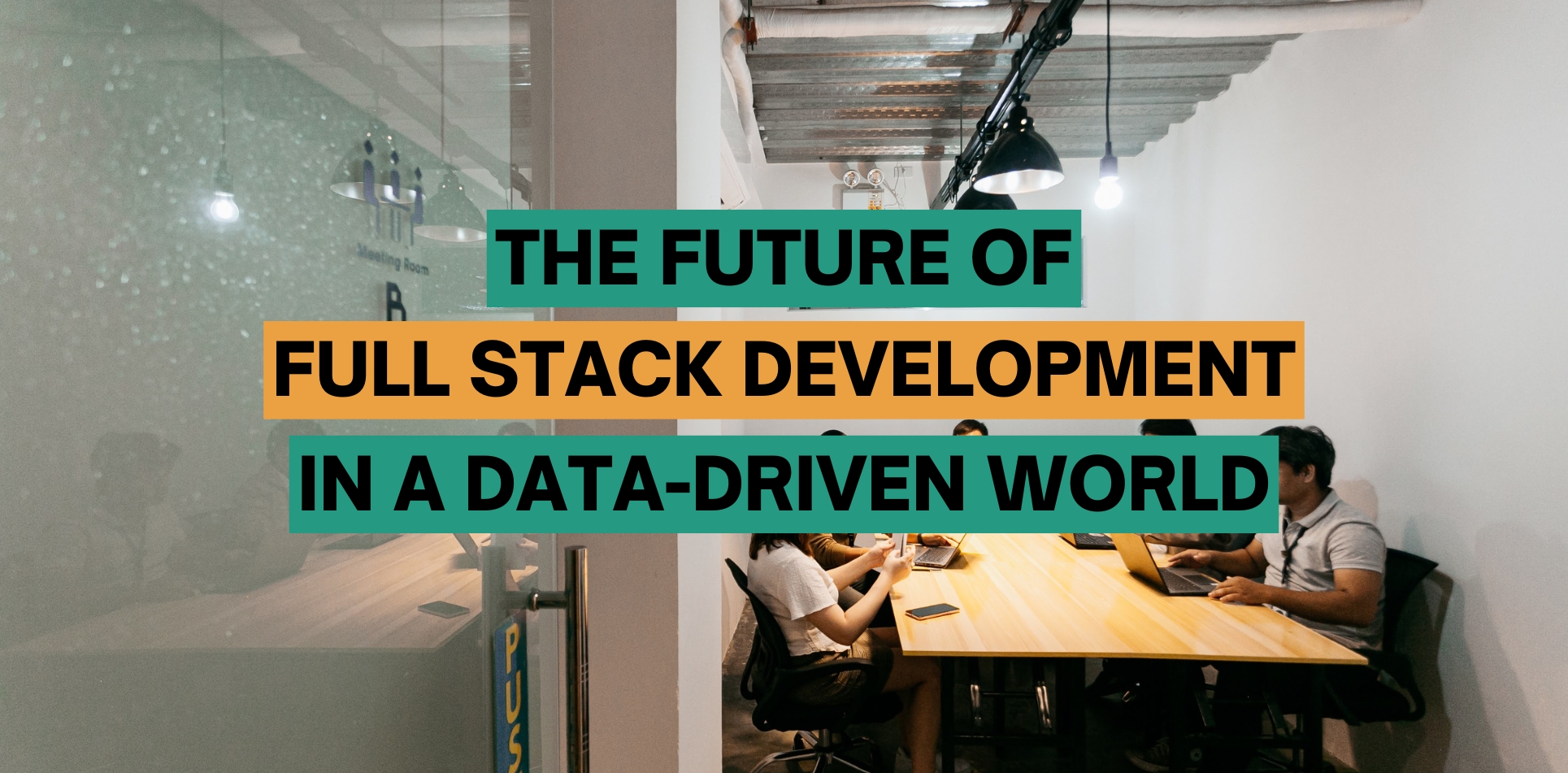
The Future of Full Stack Development in a Data-Driven World

Not long ago, a Full Stack Developer’s primary responsibility was to build applications.
Today, that’s only part of the story.
Businesses now generate enormous amounts of data every day—from customer interactions and sales transactions to operational metrics and performance reports. As organizations become increasingly data-driven, they’re looking for developers who can do more than build software. They need professionals who can transform information into solutions.
The future of Full Stack Development isn’t just about creating applications.
It’s about helping businesses make better decisions.
So what do high-performing customer service professionals do differently?
The Shift From Building Features to Solving Problems
Many people associate software development with writing code.
But businesses don’t invest in software because they want more code. They invest in software because they have problems they want solved.
Maybe a leadership team lacks visibility into company performance.
Maybe employees spend hours creating manual reports.
Maybe customer information exists across multiple disconnected systems.
These aren’t technology problems alone—they’re business problems.
Modern Full Stack Developers help bridge that gap by creating applications, integrations, and reporting tools that make information easier to access and act upon.
Why Data Skills Are Becoming More Valuable
Every application relies on data.
Whether it’s customer information, financial records, inventory management, or operational reporting, data sits at the center of nearly every business process.
That’s why skills such as SQL, database management, reporting, and data integration continue to be highly valuable.
A Full Stack Developer with strong data expertise can:
- Build efficient applications
- Create meaningful reports and dashboards
- Improve data accuracy
- Automate repetitive processes
- Support better business decisions
In many cases, the most valuable feature isn’t a new screen or workflow—it’s giving people access to the right information at the right time.
Automation Is Changing the Way Businesses Operate
One of the biggest opportunities for developers today is automation.
Many organizations still rely on manual processes for reporting, data entry, and information sharing.
A Full Stack Developer can use technologies like SQL Server, APIs, ETL processes, and cloud platforms to automate these tasks and improve efficiency.
The result?
Less time spent on repetitive work and more time focused on strategic decisions.
Good software doesn’t just make tasks faster. It allows people to focus on work that creates greater value.
AI Won't Replace Developers—But It Will Change Their Role
Artificial Intelligence is becoming part of the modern development toolkit.
AI can generate code, assist with troubleshooting, and speed up development workflows.
However, businesses still need developers who can:
- Understand requirements
- Solve complex problems
- Design scalable systems
- Validate data accuracy
- Communicate with stakeholders
The ability to think critically and understand business needs will continue to be just as important as technical expertise.
As AI handles more routine tasks, human judgment becomes even more valuable.
Why Communication Matters More Than Ever
The stereotype of developers working in isolation is becoming increasingly outdated.
Today’s Full Stack Developers regularly collaborate with:
- Business stakeholders
- Project managers
- Designers
- Operations teams
- End users
Technical skills may get a developer hired, but communication skills often determine their long-term success.
The best developers don’t just understand technology.
They understand people, processes, and business goals.
What This Means for Future Developers
As businesses become more data-driven, the most successful developers will likely be those who combine technical expertise with a deeper understanding of data and business operations.
This means continuing to build skills in:
- SQL and database development
- Reporting and analytics
- Data integration
- Cloud technologies
- Automation
- Communication and collaboration
Developers who can connect technology with business outcomes will remain highly valuable regardless of how tools and technologies evolve.
Final Thoughts
The future of Full Stack Development is about more than building software.
Organizations increasingly need developers who can understand data, automate processes, integrate systems, and help people make better decisions.
The developers who stand out won’t necessarily be the ones who know the most programming languages. They’ll be the ones who can use technology to solve real business problems.
For professionals looking to grow their careers, developing strong SQL, data, and problem-solving skills isn’t just a technical advantage—it’s an investment in a future where data drives nearly every business decision.

Interested in a role where you can apply these skills?
We’re currently hiring a Full Stack Developer (SQL-Focused) to help build data-driven solutions, reporting systems, integrations, and business applications that support not-for-profits and small-to-medium businesses. If you enjoy solving problems with technology and turning data into meaningful insights, we’d love to hear from you.